Slapchop Metals, Globadiers, and the Joy of Learning Hobby Tricks Online
We kicked off the new year with one of our favourite kinds of hobby chat: someone tests a painting idea, someone else falls into a YouTube rabbit hole, and suddenly we all come away with a couple of new tricks to try.
This time it started with Globadiers and a question that probably sounds familiar to a lot of speed painters: how do you make metallics work in a slapchop-style workflow?
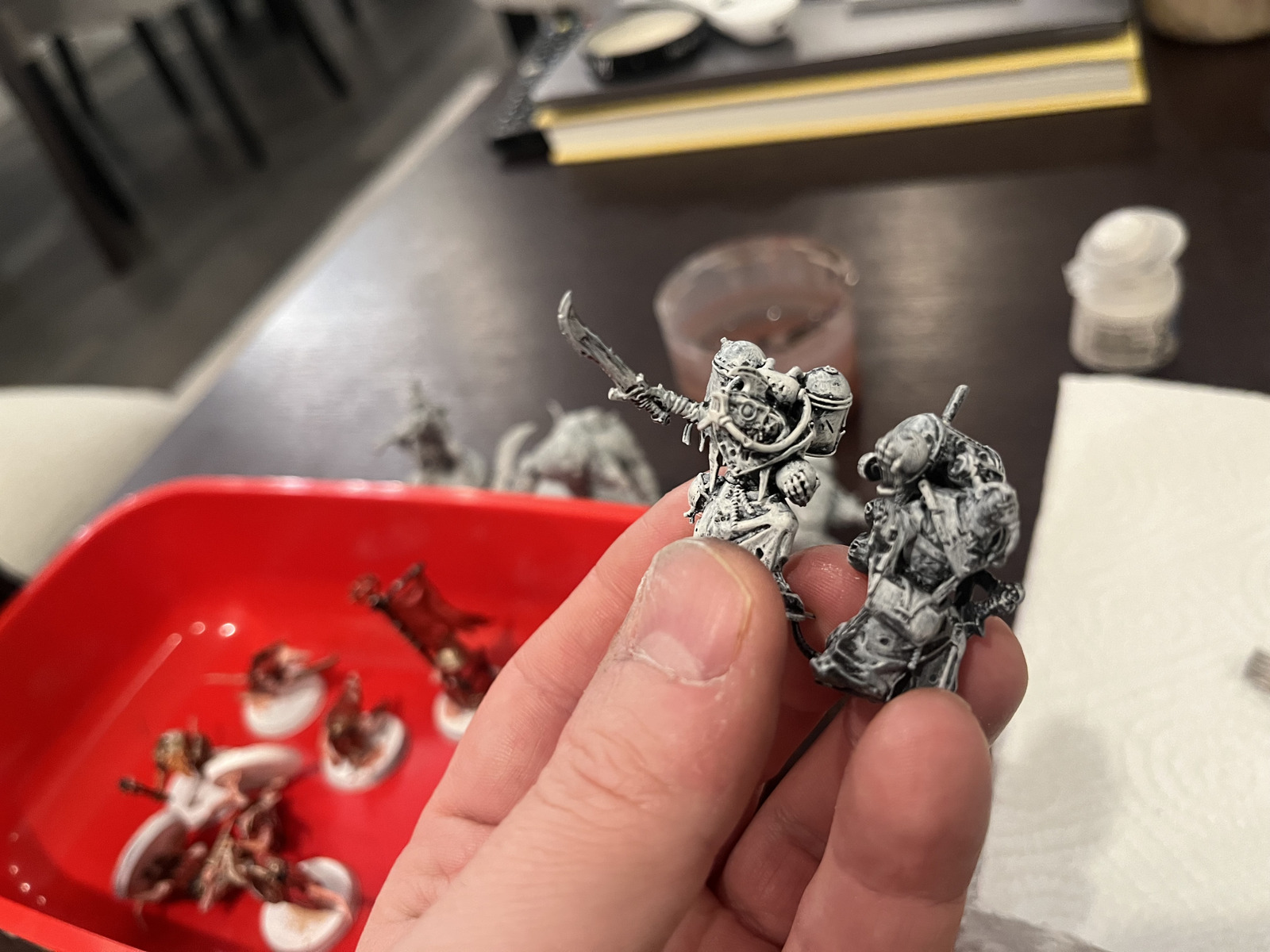
Michał was working on priming his Globadiers and started wondering how to approach a “slapchop metal” effect without breaking the whole quick-paint rhythm. The idea he found was wonderfully simple: paint the area that is supposed to read as metal with a regular contrast-style colour first — grey, yellow, orange, whatever tint suits the final look — and then drybrush silver metallic over the top.
Honestly, that sounds like one of those techniques that feels almost suspiciously easy until you see it work. But the logic is solid: you keep the tonal variation and colour mood from the contrast layer, then let the metallic drybrush catch the raised detail and do the heavy lifting.
Why this caught our attention
A lot of us treat metallics as a separate stage with their own rules. Basecoat, wash, highlight, maybe some weathering, done. But this approach fits much better into a fast army-painting workflow, especially if you are already in slapchop mode and don’t want your metal parts to suddenly demand a completely different process.
It also opens up some fun possibilities:
- warm underpainting under silver for grimy brass-ish or worn steel vibes,
- cool grey underpainting for cleaner steel,
- orange or brown tones underneath for a dirtier, more weathered result.
We haven’t turned this into a grand scientific test yet, but it definitely feels like a technique worth stealing.
The modern hobby cheat code: YouTube
At the same time, Dubry had been watching videos from MiniEmporium Samiego on YouTube and had the extremely relatable thought that hobby learning has changed completely.
Years ago, if you wanted to know how to paint better, strip models, drybrush properly, or fake worn leather, you more or less needed a friend, a club, or that one mysterious hobby veteran who knew everything. Now? You type in “drybrush” and within minutes you have tutorials, demonstrations, product comparisons, and a guy casually repainting an old Skaven miniature from the Warhammer Fantasy Battle era.
And honestly, even if you’re not the biggest fan of painting itself, watching someone who really knows what they’re doing can be ridiculously enjoyable.
The video that came up in our chat was this repaint of an old Skaven model:
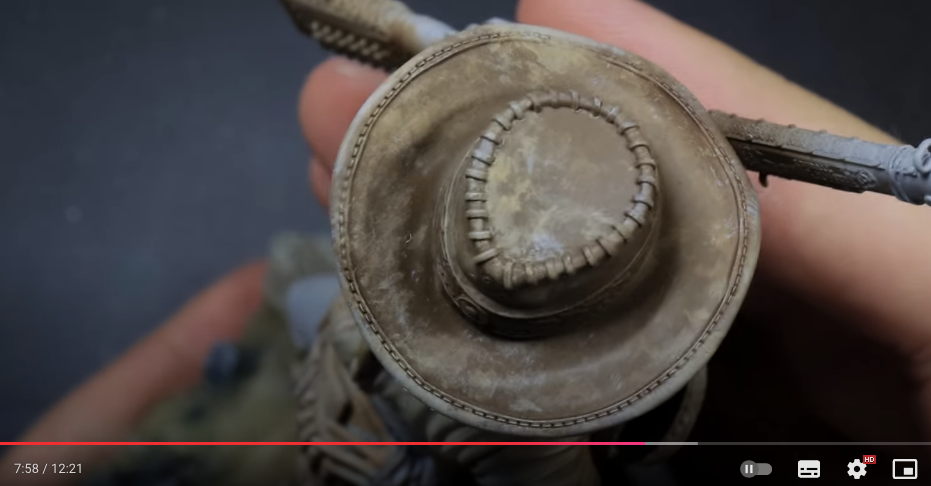
That one led us further into technique videos, including one where he explains drybrushing and stippling, and shows how to make a leather hat look slightly worn and used:
That kind of thing is always dangerous for hobby motivation. You start by “just watching one video” and end up wanting to repaint half your collection.
Old Warhammer vs newer kits
One interesting point from the video discussion was a comment that, despite years of painting experience, the creator still feels that Age of Sigmar miniatures are generally better, more detailed, and better produced than old Warhammer Fantasy kits.
That definitely caught our attention.
There’s a lot of nostalgia wrapped around old Fantasy models, and rightly so — they have tons of charm. But charm and sculpt quality are not always the same thing. Newer kits often give painters more texture, cleaner detail, and more opportunities for techniques like drybrushing, stippling, glazing, or contrast-heavy workflows to really shine.
That doesn’t make the classics worse in spirit. It just means modern sculpting gives us different tools to work with.
Also: paint stripping envy is real
Another thing that came up in the discussion was a stripping product shown in one of the videos that seemed to remove paint really well. Better than the solvent Michał had on hand, apparently — and of course, once you see something work perfectly online, you immediately start looking up the price and wondering whether you now need half a litre of miracle fluid in your life.
That’s hobbying in 2025.
What we’re taking away from this
A few nice reminders from one short conversation:
- simple painting ideas are often the most useful ones,
- metallics don’t have to break a speed-paint workflow,
- YouTube is an absurdly good hobby teacher,
- old Skaven still look cool,
- and seeing a really well-executed drybrush or stipple job can make us all feel like complete beginners again.
We love these moments, because this is exactly how hobby progress happens in a group: one person experiments, another finds a video, someone else notices an interesting comment, and suddenly we all have new things to test on the next batch of models.
If we end up trying that contrast-under-metallic trick ourselves on more models, we’ll definitely report back.