From the End Times to Eternals: our late-night thoughts on WFB and Age of Sigmar
We had one of those very good hobby evenings recently: somebody watches one video, drops a “kuuuuuurde” on chat, and suddenly we are all knee-deep in big questions about Warhammer Fantasy Battles, Age of Sigmar, lore, model design, and whether modernizing a setting has to mean losing its soul.
This post grew out of exactly that kind of conversation.
A film that hit a nerve
Dubry found a video about the fall of WFB and the rise of Age of Sigmar, and it clearly landed hard. The immediate reaction was not subtle: he loved it, and not just as a Warhammer piece. In his words, it felt like the kind of material that could just as easily live outside a hobby bubble too — something about business, brand decisions, changing audiences, and what happens when a company tries to reinvent a world people are emotionally attached to.
And honestly, that is probably why this topic keeps coming back. The shift from Warhammer Fantasy Battles to Age of Sigmar was never just about rules. It was also about identity.
The “problems” of WFB looked different when we were kids
One of Dubry’s most interesting observations was also the simplest one: many of the issues people listed as reasons WFB was struggling were basically invisible when we were younger and just playing with friends.
That really resonates with us.
When you’re a kid, or just playing in a small local bubble, you do not experience a game the same way as someone deeply plugged into the competitive scene, release cycles, army completion, or product stagnation. If you never had the money to own everything, then the complaint that “nothing changes because I already have the whole army” barely exists. Your collection is always unfinished. Every new unit is exciting. Every converted standard bearer feels important. The scale of the problem is simply different.
That does not mean those structural issues were fake. It just means that hobby experience depends a lot on where you stand. Looking back at WFB through adult eyes is not the same as living in it as a kid with a few regiments and a kitchen table.
WFB vs AoS and the Star Wars comparison
Then came a comparison we immediately found spicy but surprisingly useful.
At first glance, the transition from WFB to AoS can look a bit like old Star Wars vs new Star Wars. The argument goes something like this: a new owner or new creative direction decides not to be constrained by the old framework, tears down some established rules, and aims for a broader, more casual audience rather than the deeply invested lore veteran.
That feeling is real, and we think a lot of people had exactly that reaction when Age of Sigmar first appeared.
But the more interesting part of the conversation was what came next: Dubry’s take was that, unlike the sequel trilogy, Age of Sigmar seems to have grown into something genuinely strong in its own right. Not just commercially successful. Not just visually louder. Actually good — as a game, as a setting, and as a miniature range.
That is a huge distinction.
Because there are really two separate questions here:
- Was replacing WFB a painful break with something beloved?
Very possibly yes. - Did AoS become a worthy thing on its own terms?
Also, increasingly, yes.
Those two ideas can coexist, and maybe they have to.
Age of Sigmar winning us over, one model at a time
The conversation drifted, naturally, toward miniatures — because in Warhammer, lore arguments eventually crash into sculpt quality.
And here the verdict in chat was pretty clear: the more Dubry looked into AoS and then back at WFB, the more Age of Sigmar just seemed to go unbelievably hard.
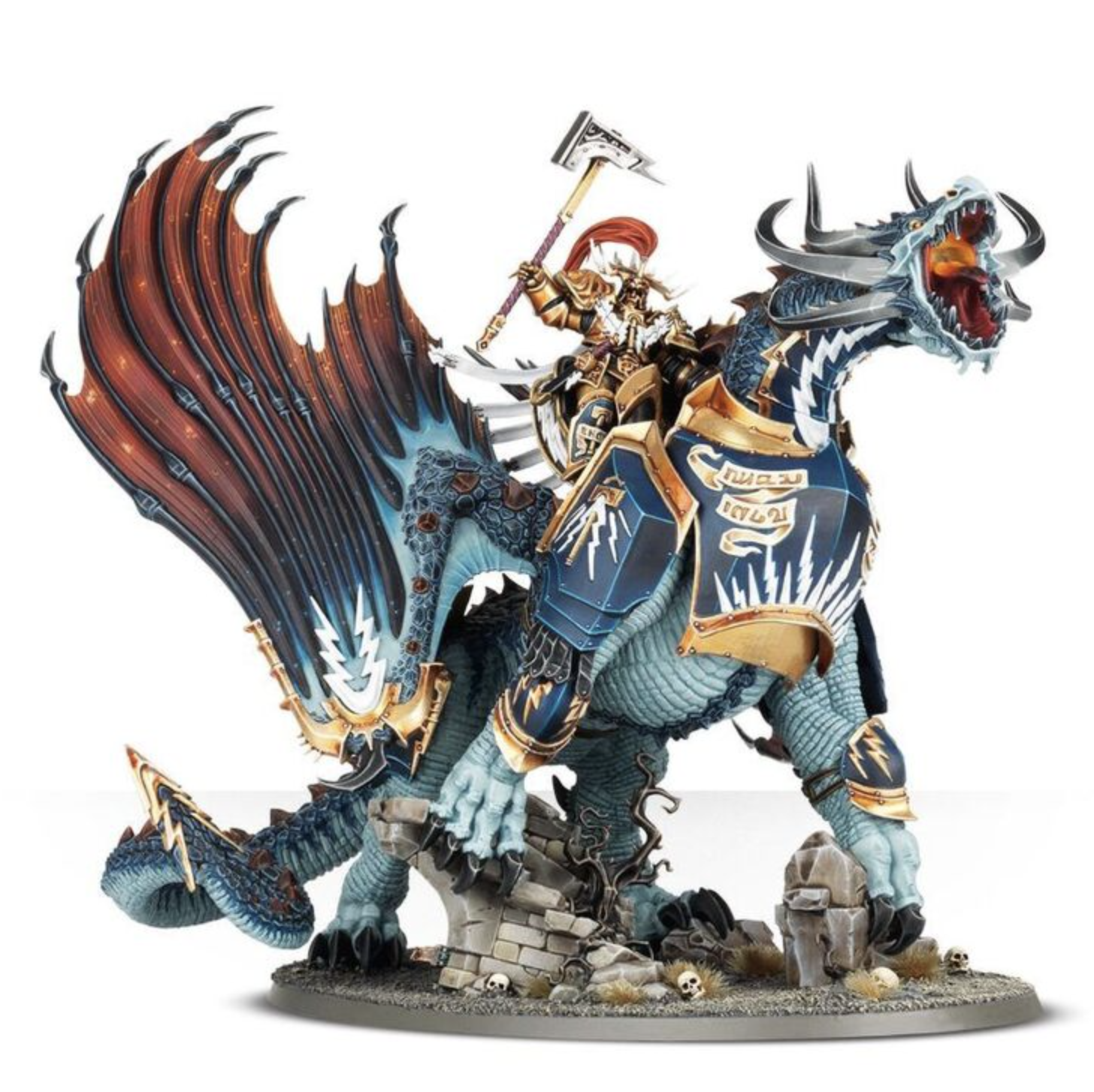
That is hard to deny. Whatever one thinks about the setting shift, AoS has produced some absolutely wild model design. It is confident, weird, theatrical, and often much more visually distinct than classic rank-and-file fantasy ranges. Sometimes that means it feels less grounded. Sometimes it means it feels unforgettable.
Michal also admitted that after the film he looked more kindly at the Stormcast Eternals and liked them more than before. Which is a very real hobby phenomenon: sometimes a faction only clicks once you understand the idea behind it, or once you see how it fits into the wider setting.
Modern Warhammer and the lower barrier to entry
Another point that came up was change itself: new editions, new rules, new systems, and the constant need to relearn things.
That can absolutely be exhausting.
There is a real downside to perpetual motion in modern tabletop gaming. If the ground keeps shifting, then mastery becomes temporary, and long-term attachment can turn into homework. We have all felt that with one game system or another.
But at the same time, there is a strong counterargument: some of Games Workshop’s newer formats really do lower the cost and commitment needed to start playing. In the chat, Warcry and Spearhead came up as examples of games where you do not need to spend a fortune or build a giant collection before getting meaningful games in.
And that matters.
Because one of the old barriers to fantasy mass battle was precisely that it could feel enormous before you even rolled your first die. If modern GW is better at giving people a smaller, cleaner on-ramp, then that is not just a business move. It is also a genuinely better way to get people into the hobby.
The eternal hobby oath: no more buying until we paint what we have
No hobby discussion is complete without at least one promise that everyone knows is spiritually noble and materially doomed.
Michal solemnly swore that he would not buy a single new miniature until he had painted every unpainted model at home.
We would like to officially state that this is a beautiful principle, a sign of maturity, and a statement with approximately the same durability as New Year’s gym memberships.
Still, we respect it. Deeply. From a safe distance.
And then Slaanesh entered the chat
As if to prove how fragile anti-purchase discipline really is, a few minutes later Dubry announced that he had found a new favorite miniature.
It turned out to be a Slaanesh model, and the reaction was immediate: what a boss. We learned that a painted version was available on eBay for roughly two and a half thousand, which is exactly the kind of information that is both useless and instantly fascinating.
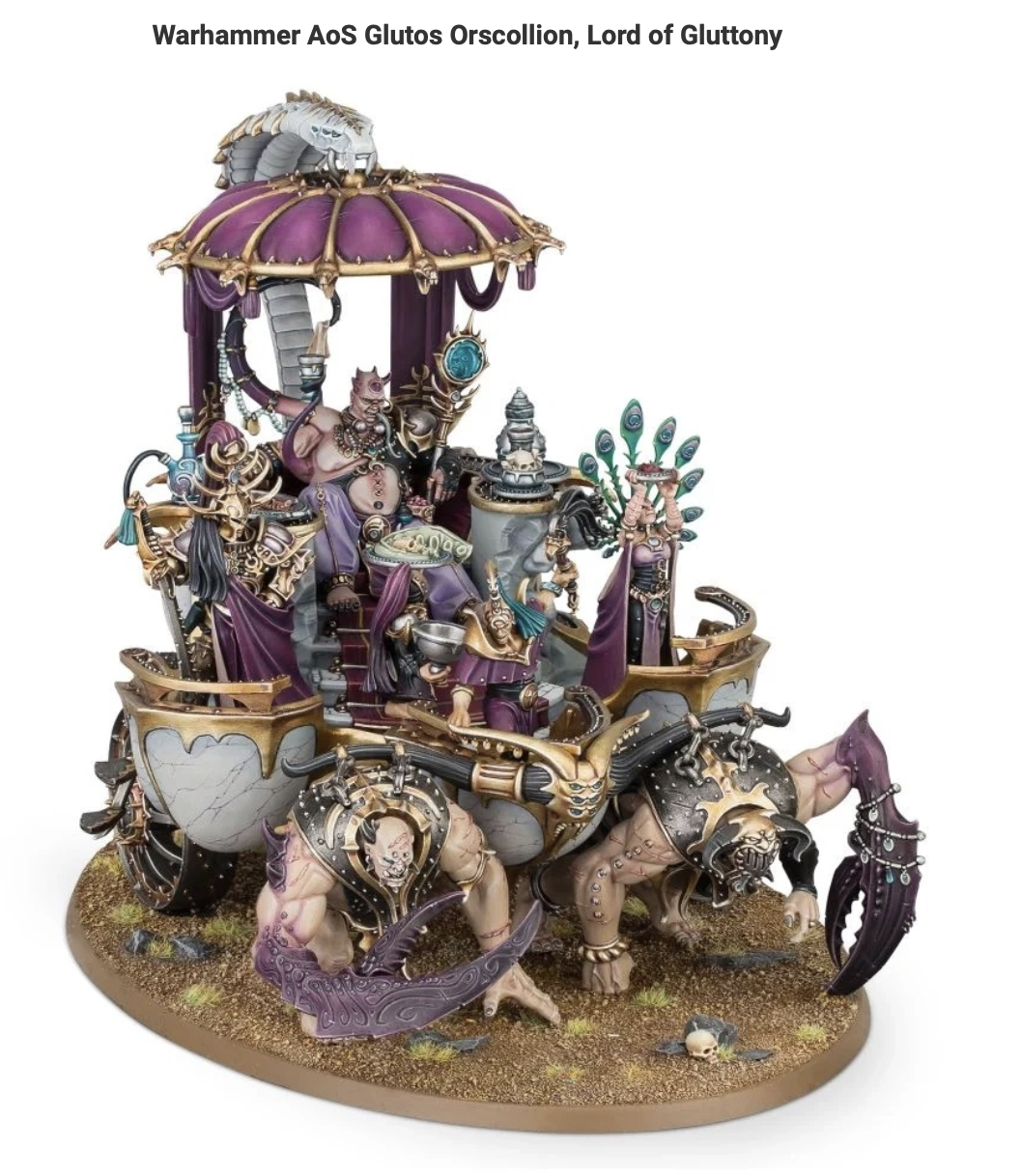
Michal’s first guess was Nurgle, which only improved the moment. Then came the offer that every hobby friend understands perfectly: if you buy it, I’ll gladly paint it for you.
This is, in our experience, one of the purest forms of enabling.
The final image we did not expect
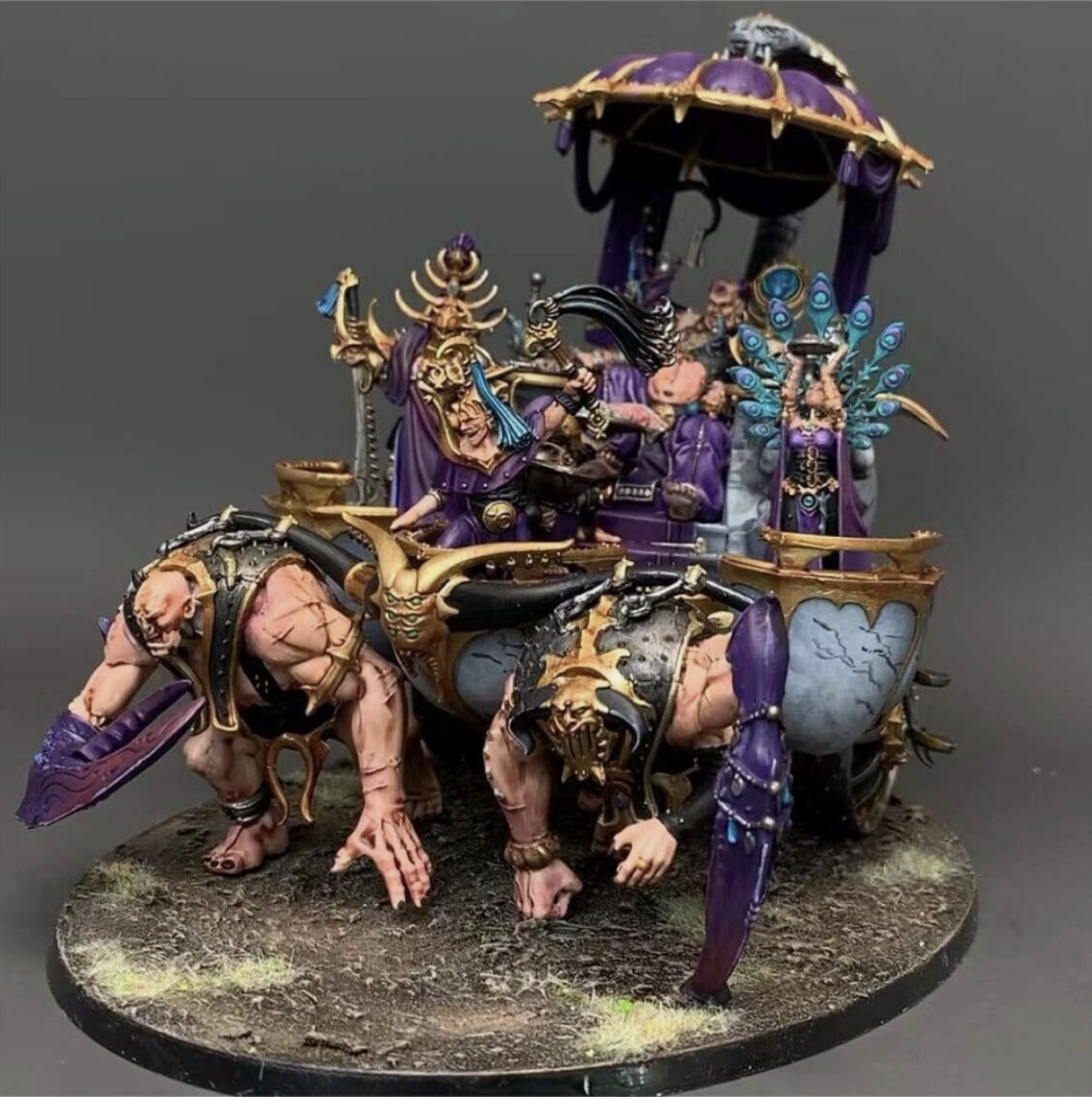
And because no late-night Warhammer discussion should ever end in a reasonable place, the chat closed on an entirely different visual association: Dubry posted another image and declared that this was exactly how he imagined P-true riding to work at Biedronka in the morning.
We will not over-explain that joke. The people who get it, get it.
So where do we land?
Probably here:
- WFB was meaningful partly because of when and how many of us experienced it.
- Some of its deeper problems were real, but not equally visible to everyone.
- Age of Sigmar may have started as a rupture, but it increasingly looks like a successful reinvention rather than a hollow replacement.
- Modern GW can be frustrating in its pace of change, but it also seems better at making entry easier through formats like Warcry and Spearhead.
- And yes, AoS miniatures are often absurdly good.
Maybe the most interesting part is that this does not have to be a culture-war choice between “old good, new bad” or “new good, old obsolete.” We can miss what WFB was, respect why people still love it, and still admit that AoS has become something genuinely compelling.
Honestly, that feels like the healthiest way to look at a hobby that keeps changing under our feet.
And if all else fails, we can at least agree on one thing: we definitely should not browse expensive Slaanesh models late at night.