Balcony Priming Lessons: When the Zenithal Goes Too Bright
We love these little hobby check-ins because they capture a very specific kind of Warhammer energy: “I did this yesterday evening on the balcony, there was no light, and I may have overdone it.” Honestly, relatable.
This time Stas shared a photo of a model he worked on the night before, primed and pre-shaded in less-than-ideal conditions. The whole thing was done on a balcony without lighting, which already sounds like a challenge run for painting prep. On top of that, the grey used for the zenithal turned out to be slightly bluish, simply because there wasn’t another option in the shop.
And you know what? That is also extremely relatable.
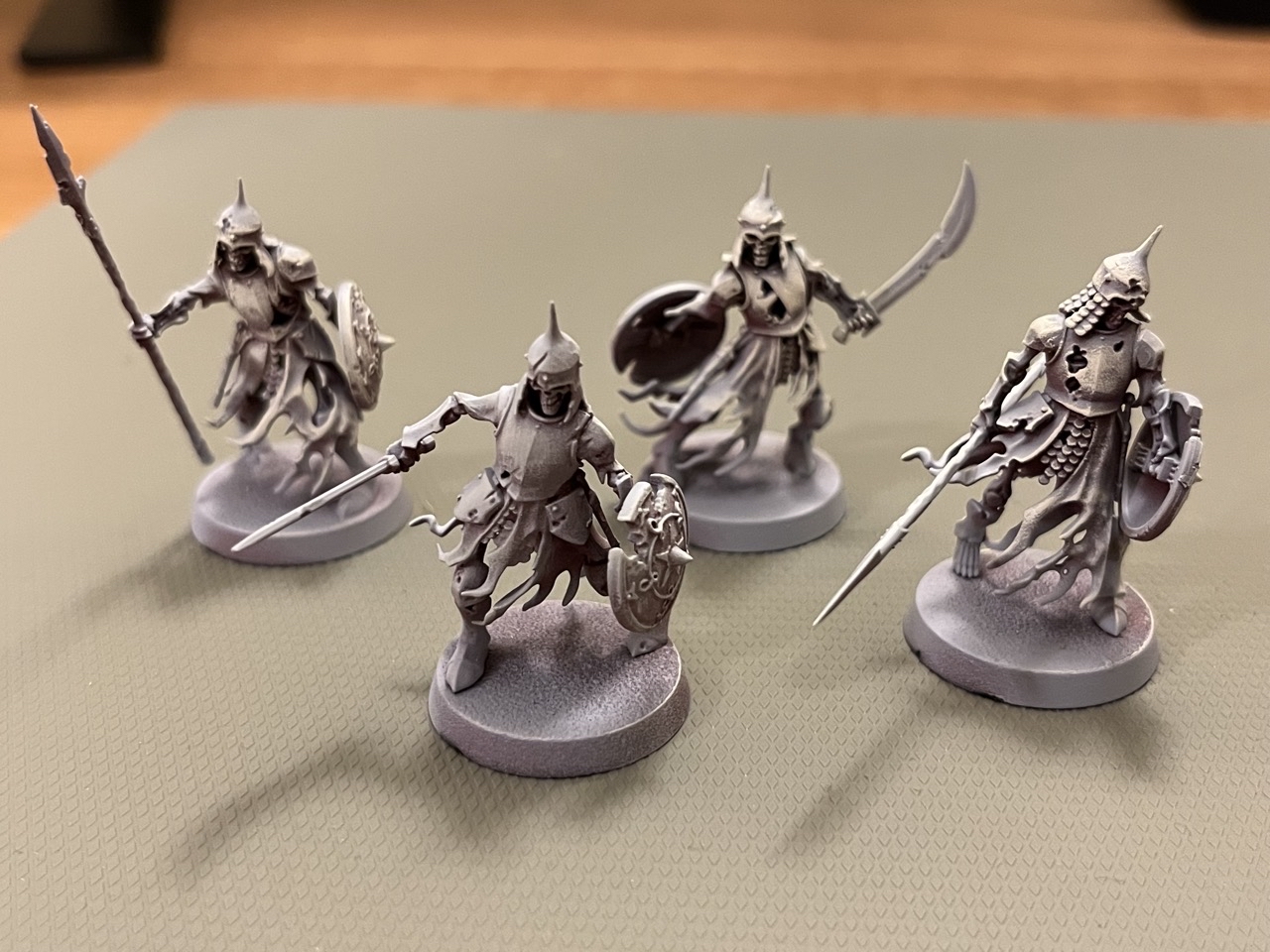
According to Stas, the main issue is that the zenithal probably ended up too bright. Because of that, the white drybrush doesn’t really show up the way it should. That is one of those classic painting moments where every step made sense at the time, and then in daylight the whole sequence reveals its own logic a bit too clearly.
A light, slightly blue-grey from above can still be useful, especially if the next layers are going to be translucent, cold-toned, or built up with contrast between recesses and raised areas. But if the goal was to make the white drybrush read clearly, then yeah — a very pale zenithal can flatten that effect fast.
What we like about this kind of stage, though, is that it’s rarely a disaster. It’s more often just information. Now Stas knows that this particular grey reads brighter than expected, and that balcony lighting at night is maybe not the most trustworthy painting assistant in the world.
We’ve all had versions of this:
- using the only spray available because the shop had nothing else,
- checking a model under terrible lighting and calling it “probably fine”,
- discovering later that the highlight step disappeared into the undercoat.
That’s just hobby life.
If anything, this is a good reminder that prep coats matter a lot more than they seem to when we’re spraying them in the cold, in the dark, or while telling ourselves we’re definitely just doing one quick thing before bed.
So this post is less about a finished result and more about a very honest painting checkpoint: testing materials, learning what a specific grey actually looks like on the miniature, and noticing when the value contrast isn’t doing what we wanted.
We are very much in favor of sharing these moments too, not just the polished final shots. Half the fun of the hobby is comparing notes after a slightly questionable idea seemed perfectly reasonable the night before.
If Stas revisits this with a darker zenithal or a stronger drybrush pass later, we’ll gladly compare the results. For now, this one goes into the growing folder of useful hobby lessons learned in real conditions rather than ideal ones.