30 of 80 Done: When the Bases Make the Unit
30 of 80 Done: When the Bases Make the Unit
Painting progress update time: Michał has the first one and a half units finished, which puts the count at 30/80 done. And honestly, this is exactly the kind of milestone we like the most on Wiatry Magii — not the dramatic final reveal, but that very real moment when a force starts to look like an actual army.
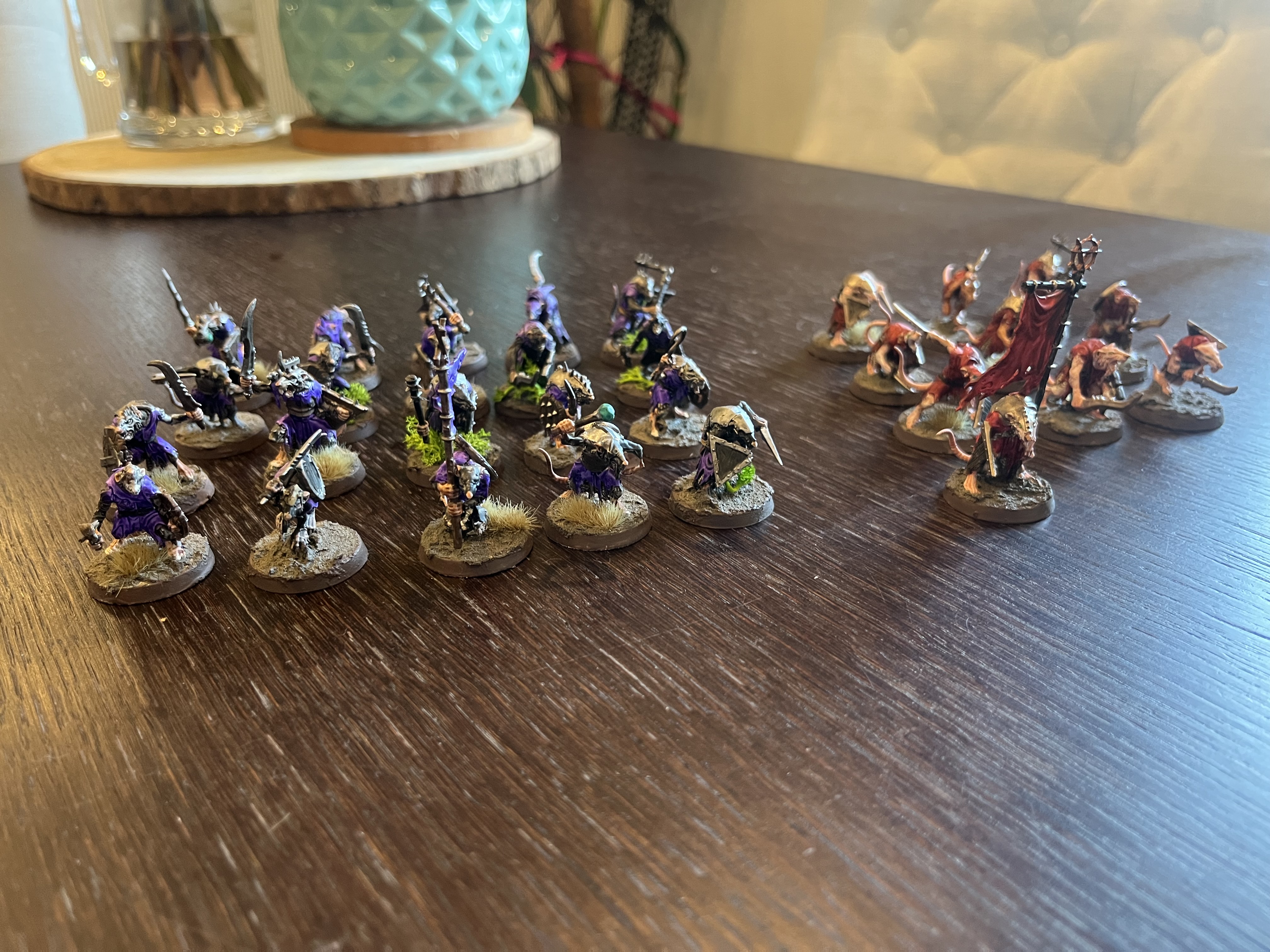
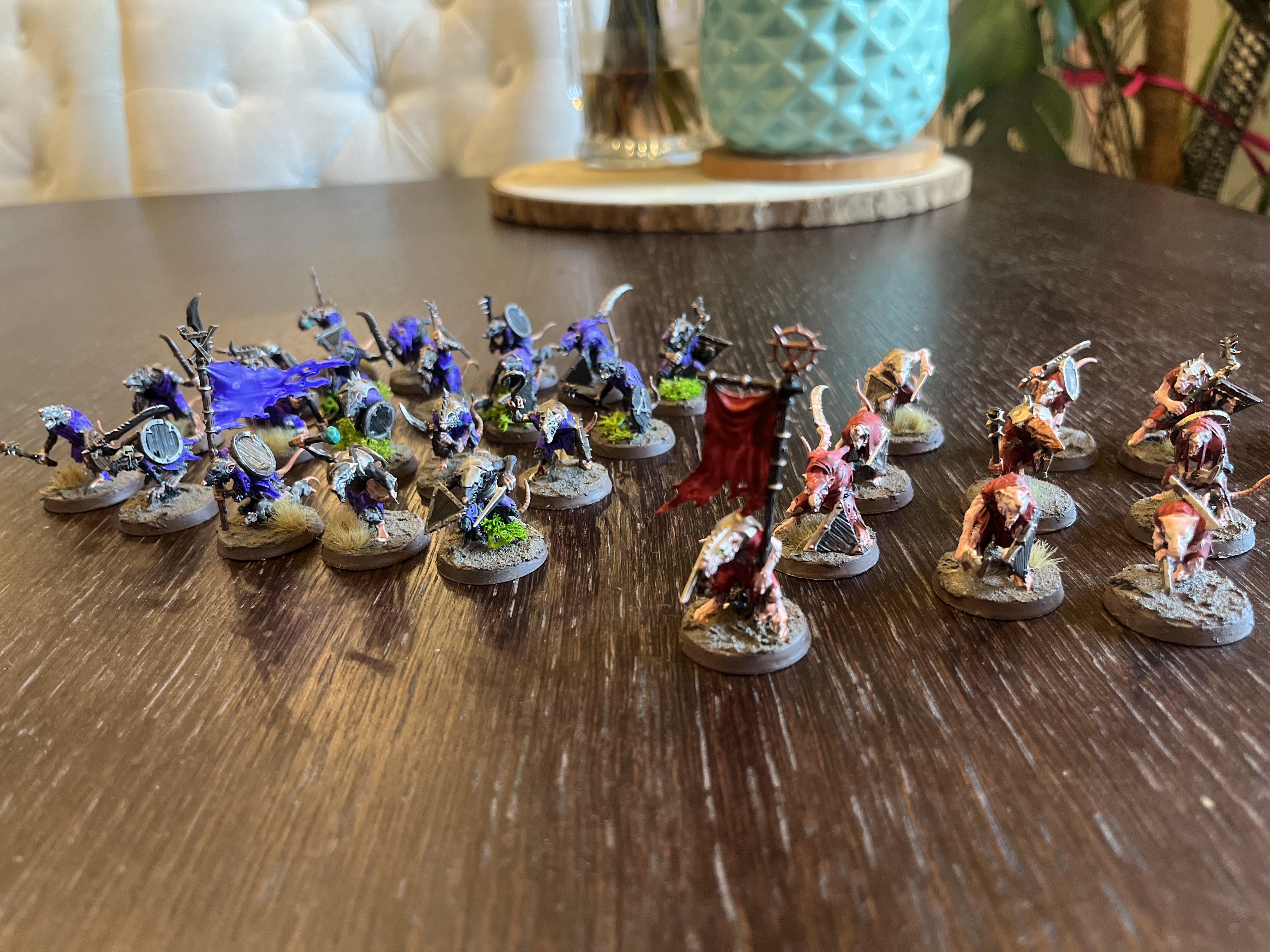
The best part of the whole exchange was how quickly the conversation went from “nice, more models painted” to a very familiar hobby truth:
the bases do so much work when you look at a whole group of miniatures together.
Dubry called it out immediately — grass, bushes and stones may sound like tiny details, but across a ranked-up unit they completely change the effect. And Michał put it perfectly: sometimes you paint the miniatures and think they look rough, then you finish the bases and suddenly it all clicks.
That really is a bit of hobby magic.
The base is not just the base
We all know that feeling. A model on its own, under a lamp, from ten centimeters away? Easy to judge harshly. Every missed highlight, every messy transition, every shortcut is visible. But once the miniature gets a finished base, and especially once it stands next to twenty others, the whole perspective changes.
The scene starts to matter as much as the paint job.
A bit of texture, some scattered stones, tufts, little patches of greenery — none of that is flashy on its own, but together it ties the army together and gives it presence. It stops being “a bunch of painted figures” and starts becoming “a force”.
A happy accident on the green stone
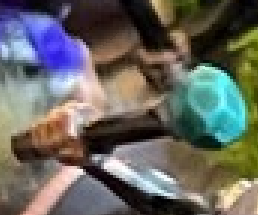
One specific detail that came up in the chat was the green stone effect. Dubry asked how Michał got that light/dark transition, and the answer was wonderfully honest: it came out only so-so, because at that stage he was still figuring out how to do it.
The method was:
- first paint the whole stone a light green,
- then apply a dark green Contrast paint,
- the Contrast ran off the edges,
- and stayed more on the flatter surfaces.
So the final effect was partly planned, partly accidental — which, if we are being honest, describes a lot of miniature painting.
Michał also said that if he was doing it today, he would approach it differently:
- prime the stone dark grey,
- drybrush it white,
- then paint it with a single green.
That sounds like one of those great hobby lessons that only show up after you have already done the harder version once. More work than necessary, maybe — but still a result that looks good on the table.
And that is another thing we like about these progress moments: not every technique needs to be perfect to be worth sharing. Sometimes the first version already works, and the improved version can wait for the next batch.
Inspiration is dangerous when you still have 50 models left
Naturally, no painting conversation is complete without somebody finding reference art or a painted example online and immediately deciding: yes, this is what we are aiming for now.
Michał found a really strong color scheme reference for future rat ogors and immediately got excited about trying something along those lines when he adds more of them.
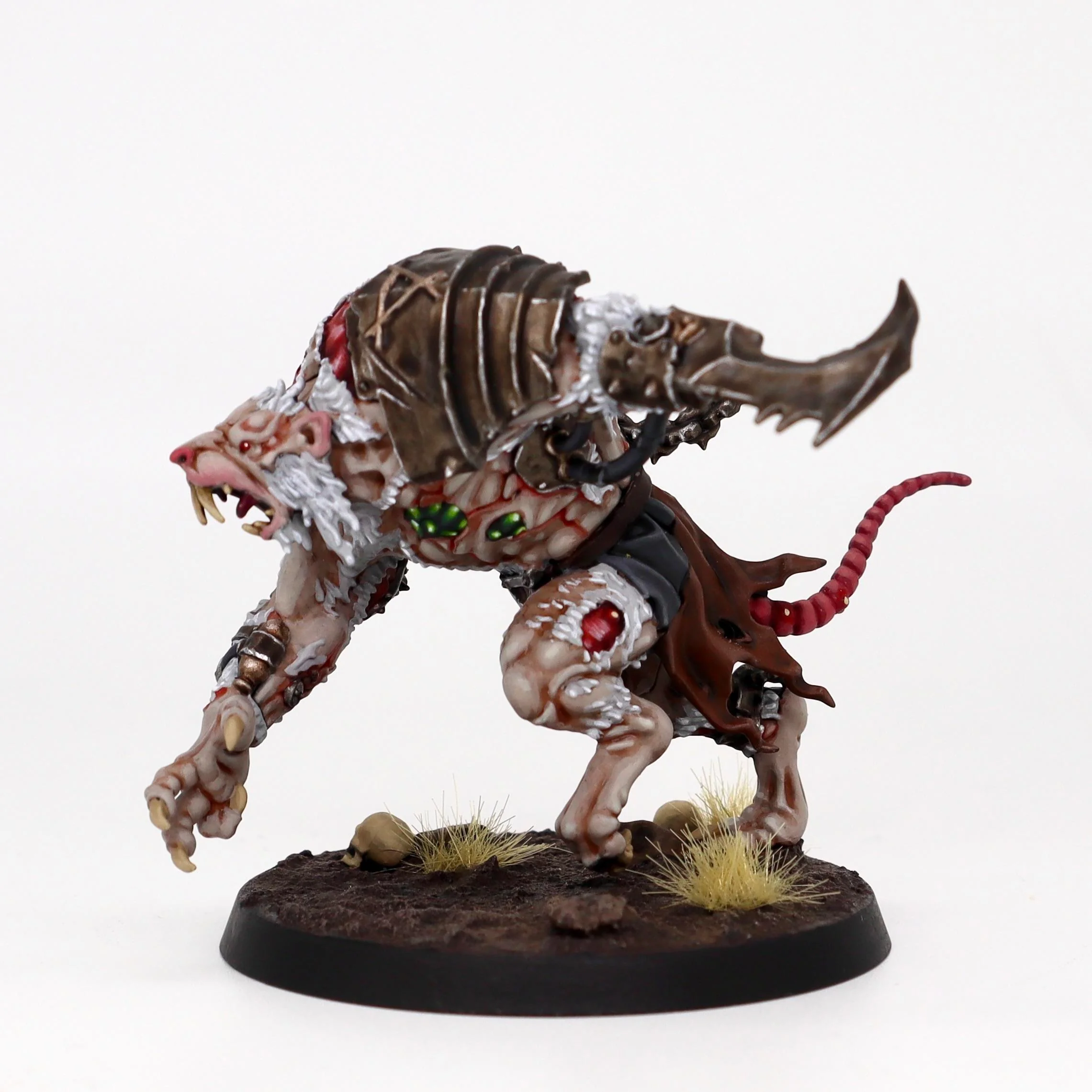
Then came the equally relatable follow-up: sure, matching that level of detail exactly may not happen — but you need something to aim at.
That is probably one of the healthiest ways to look at hobby inspiration. Not as a standard that kills motivation, but as a direction. You do not need to reproduce every tiny detail to learn something from a scheme, a texture, or a color choice.
And with 30 models already finished, there is clearly momentum here.
The fun part: the army is starting to exist
This is the stage we love most. The pile of plans is becoming a collection of actual painted miniatures. There is still a lot left to do, obviously, but 30/80 is no longer “just started”. That is a proper chunk of the project done.
More importantly, the visual identity is already emerging:
- the units are getting finished,
- the bases are tying everything together,
- experiments are turning into repeatable methods,
- and future additions already have some inspiration lined up.
That is how armies get built in real life — not in one perfect burst, but through batches, small discoveries, accidental successes, and a lot of “okay, next time we’ll do this smarter.”
We are very much here for that energy.

Final thoughts
Big congrats to Michał for getting the first one and a half units over the line. The paint count is moving, the bases are doing exactly what good bases should do, and the next ideas are already brewing.
Sometimes the biggest hobby boost is simply seeing a group of finished models together and realizing: yeah, these are actually cool.
And yes — sometimes that feeling starts with a few tufts of grass and some rocks on the base.