Black in the Recesses, Red on the Armor: chatting through Chaos paint schemes
We recently had one of those very relatable hobby conversations that starts with a tiny painting detail and somehow ends with full-on army scheme planning.
This time it began with a simple point from Michał: sometimes you really don’t need to paint every hidden recess. If the model is primed black, and a spot naturally sits in deep shadow, leaving that black primer in place can actually make the miniature look more believable.
“It’ll look like it’s dark in there anyway.”
And honestly, that is one of those bits of practical painting wisdom we love. Not everything needs to be forced into visibility. On some models, especially big Chaos monsters with layered anatomy, horns, armor plates, weapons, and limbs covering each other, the black undercoat does a lot of heavy lifting.
Michał gave the example of a Verminlord: under the horns, around the arm, in places where the shape itself creates a shadow, he just leaves the black primer alone. It saves effort, but more importantly, it works visually.
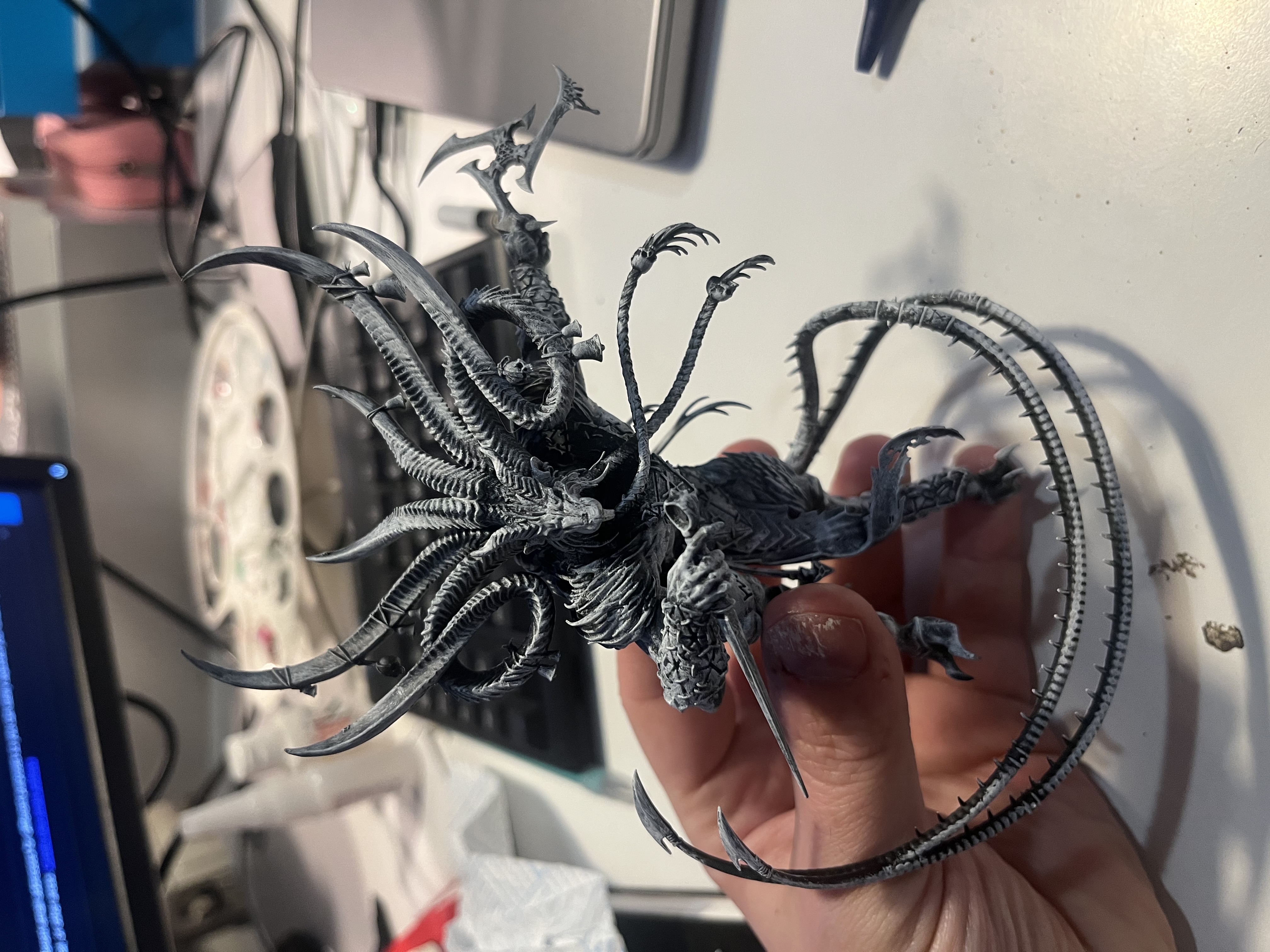
That kind of approach is easy to underestimate when we’re staring at a model from 10 cm away under a lamp. On the table, though, strong readable contrast matters way more than whether we painted into every impossible corner.
Looking for alternative schemes… and usually coming back to the classics
The conversation then drifted toward alternate paint schemes, especially for Chaos. Pegi asked the very fair question: are there actually good places to browse unusual schemes? Because once you move beyond the obvious studio look, it can be surprisingly hard to find a lot of solid inspiration gathered in one place.
And that led us to the eternal Chaos truth: the classic schemes are classic for a reason.
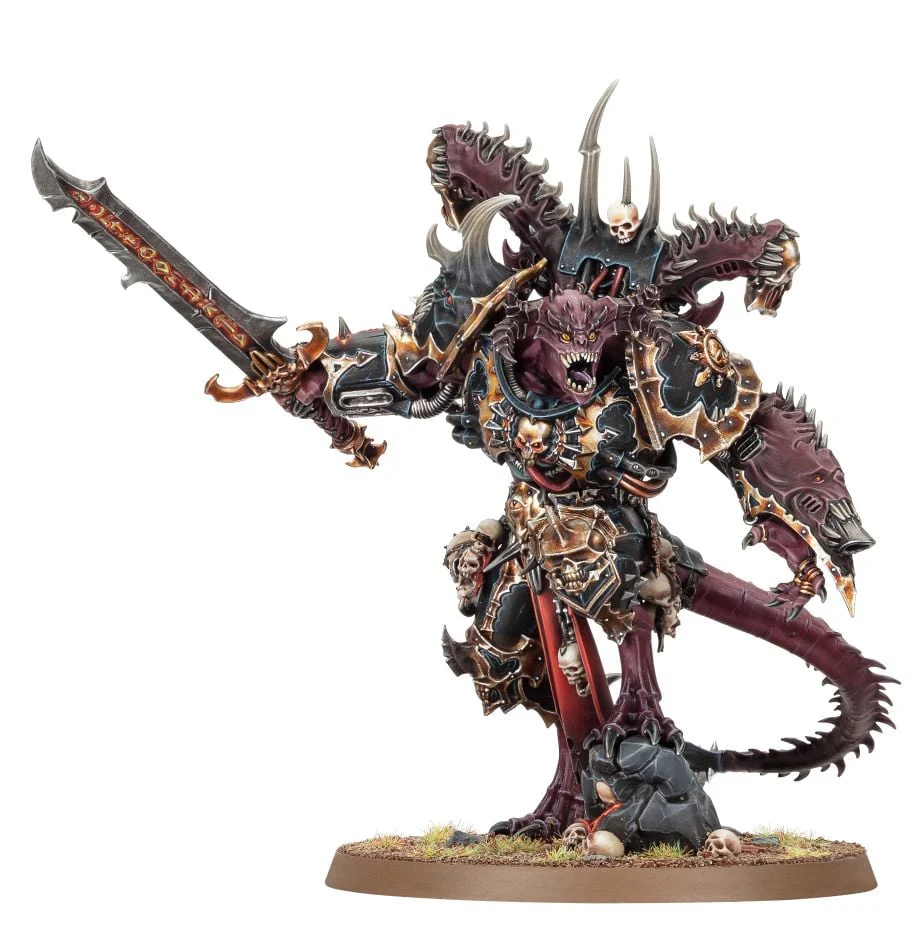
For Khorne-aligned models, red with gold trim just works. Michał summed it up perfectly: they sit so beautifully in red that it almost feels wrong to fight it too hard.
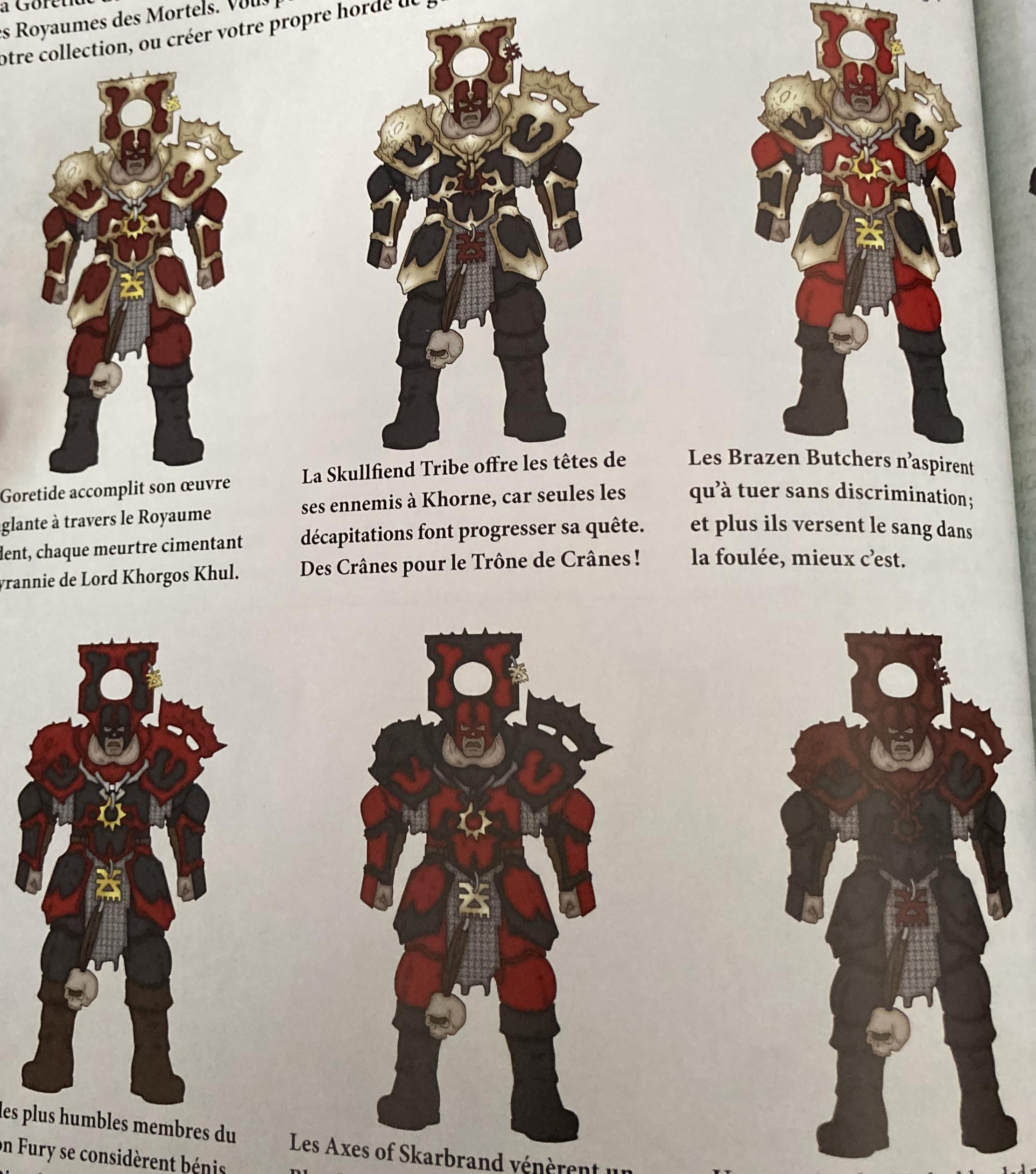
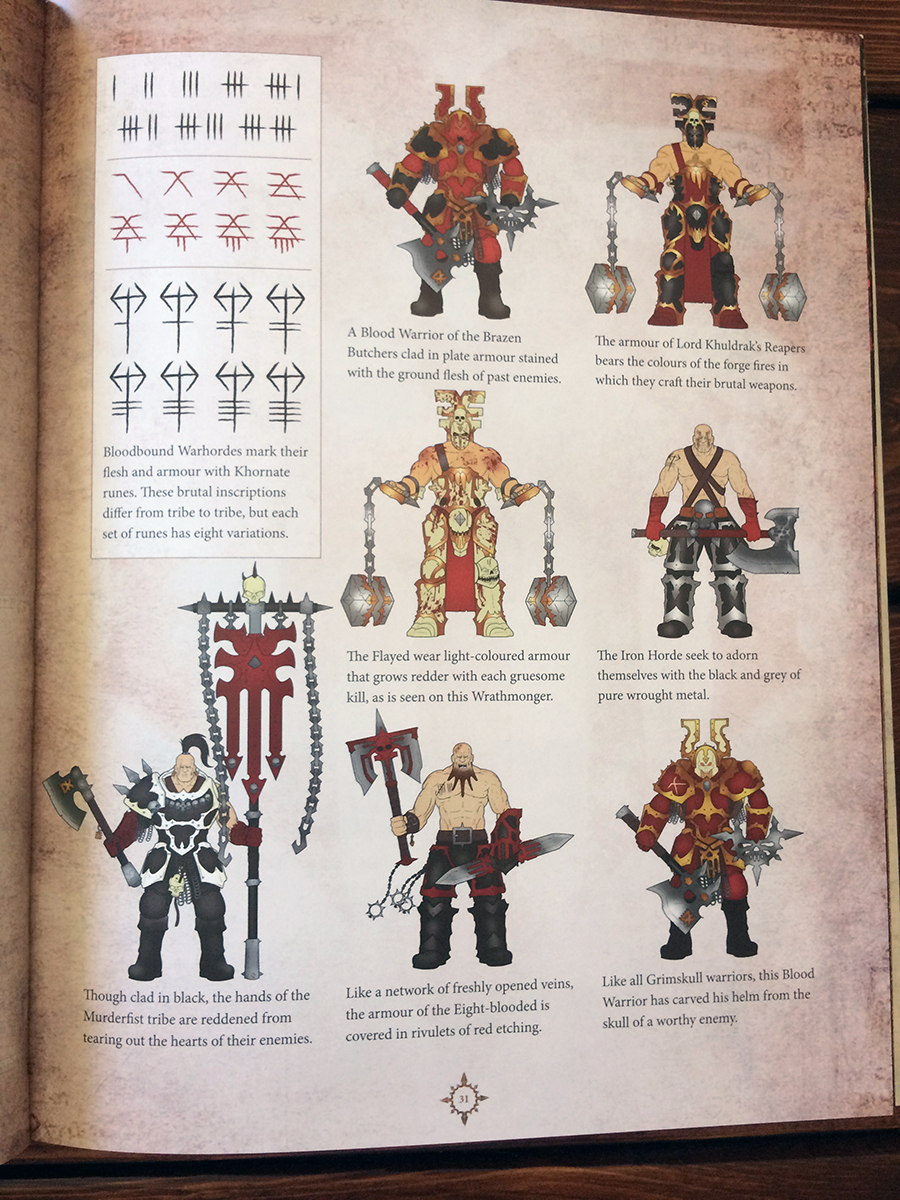
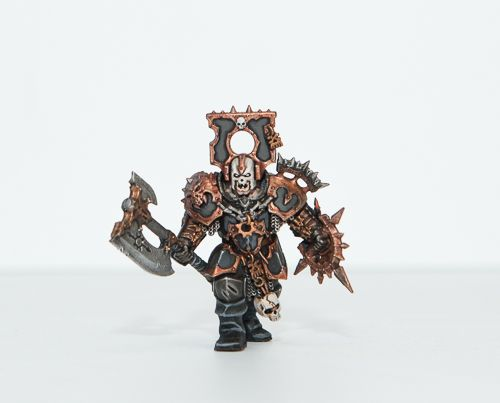
Still, there are some great alternatives worth considering. Black and gold has that very iconic, broad Chaos feel, and depending on how much red you add, you can push it toward something more brutal, more regal, or more corrupted.
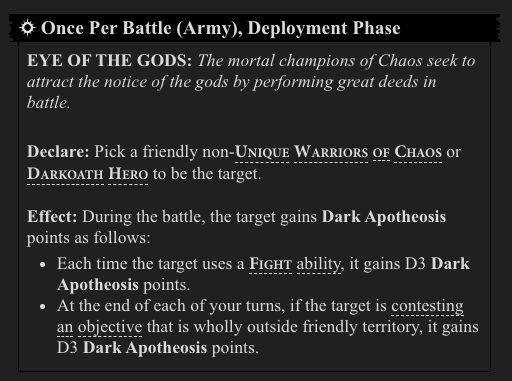
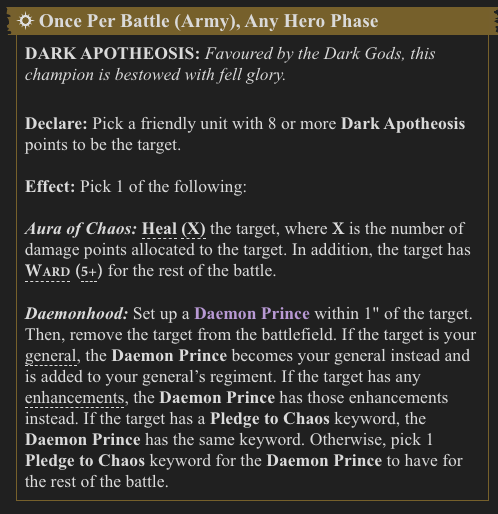
Here are a few references that came up in the discussion:
Analysis paralysis is real
One of the funniest and most accurate hobby observations in the chat came from Ender: the more alternate Kharadron schemes he looked at, the less he knew what he actually wanted. In the end, the decision became gloriously simple:
“I like green, screw it.”
That is, honestly, a fantastic lesson.
At some point, reference hunting stops being helpful and starts becoming a trap. There are always more galleries, more Instagram posts, more YouTube videos, more Pinterest boards, more studio armies, more commission paint jobs. If we keep looking forever, we can easily paint nothing at all.
Sometimes the right answer is not the most original one. Sometimes it’s not even the most “correct” one. Sometimes it’s just the one that makes us excited to pick up the brush.
One army, many schemes? Also valid
Michał also mentioned a method we like a lot for big collections: split variation by regiment.
He couldn’t decide between four Clanrat schemes he liked, so instead of forcing a single answer, he painted four units of twenty, each in a different style. With Skaven, that kind of variety makes perfect sense anyway. It adds character, breaks up repetition, and lets us try multiple ideas without feeling like we’ve ruined the cohesion of the army.
That approach won’t fit every faction equally well, but for ragged hordes, warbands, cults, and chaotic forces? It’s brilliant.
And, let’s be honest, when the miniatures are cheap enough to justify experimentation, it gets even easier to just go for it.
Probably the best advice from the whole chat
For anyone stuck between “classic” and “custom”, the most practical tip of the evening was this:
paint the first unit in the canonical scheme, then experiment later.
That gives us a few advantages:
- there are usually the most tutorials for the official scheme,
- it helps us actually get started,
- we learn the model range before inventing our own version,
- and once the first unit is done, it’s much easier to judge what we want to change.
This feels especially useful for armies like Slaves to Darkness or Khorne-flavoured Chaos forces, where the classic look is strong enough to stand on its own, but also flexible enough to support black-red-gold hybrids, weathered metallics, or even more historical inspirations.
And then came the hussar idea
Because of course it did.
Pegi dropped a cavalry inspiration image and admitted that a hussar-flavoured take was looking very tempting.
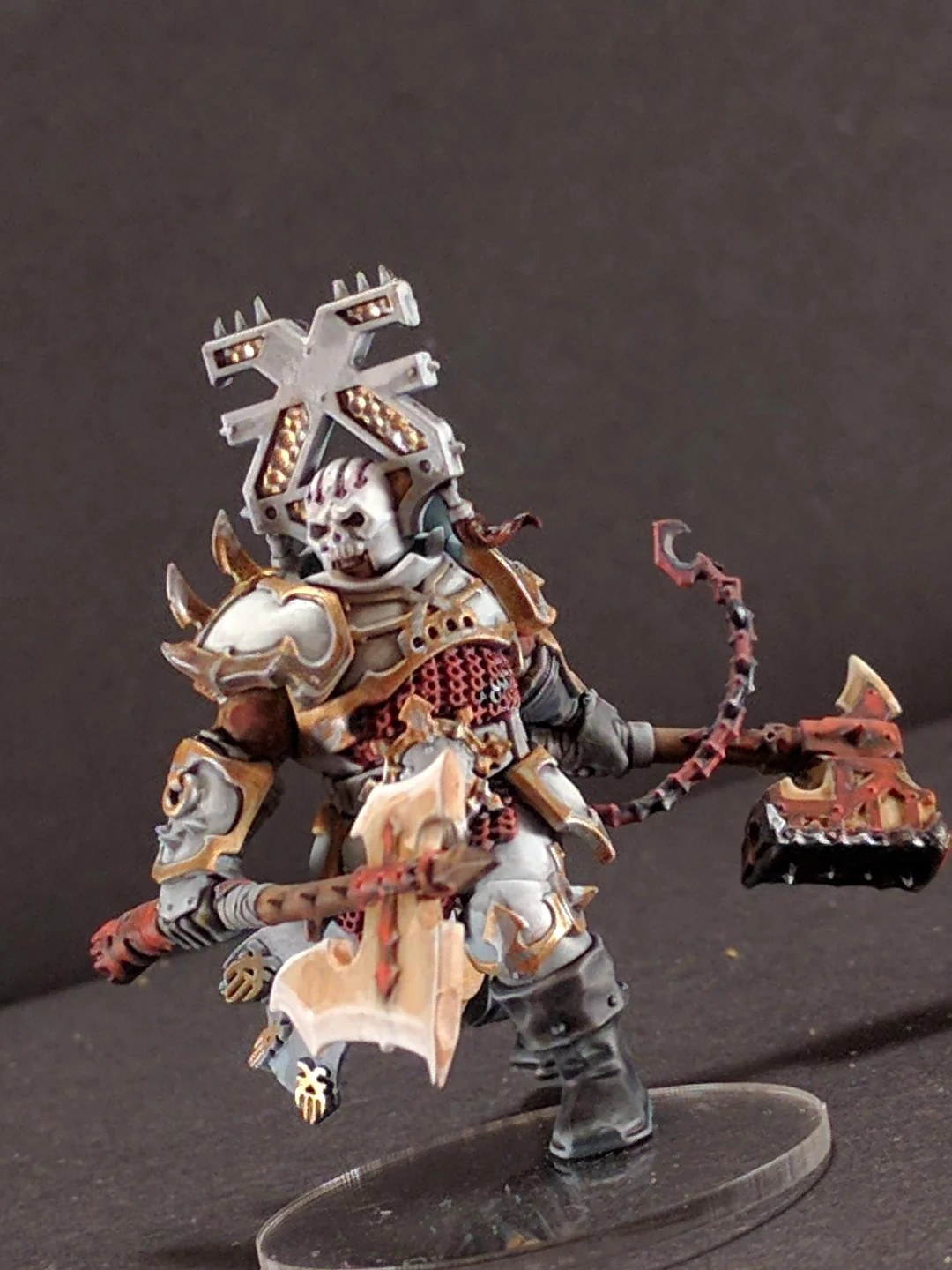
And honestly? That sounds like exactly the kind of idea that starts as a joke and ends with a genuinely memorable army.
Will it become a full hybrid of black, red, and gold? Will it drift back toward the classic scheme? Hard to say. But that’s also part of the fun.
We really could use a color-planning app
The chat ended on a very modern hobby problem: it would be incredibly useful to have a simple app for testing custom paint schemes on miniatures before committing brush to plastic.
And yes, absolutely. We’d use that.
Until then, we’re left with the old methods:
- collecting references,
- testing on a first model,
- painting one unit canonically,
- and trusting that black primer in the deepest recesses is sometimes doing exactly what it should.
Sometimes the best hobby progress doesn’t come from discovering a revolutionary technique. Sometimes it comes from hearing someone say: leave that bit black, it’s in shadow anyway.
And suddenly the whole project feels easier.