First Spearhead Impressions: build what looks cool, declare the rest later
We had one of those very relatable hobby moments this week: a fresh look through the The Old World? The Emperor? No — that other giant pile of rules PDF energy quickly turned into a much more important question.
What do we actually glue onto the miniatures?
In this case, the immediate trigger was a freshly assembled Slaughterpriest, proudly shown off by Pegie.
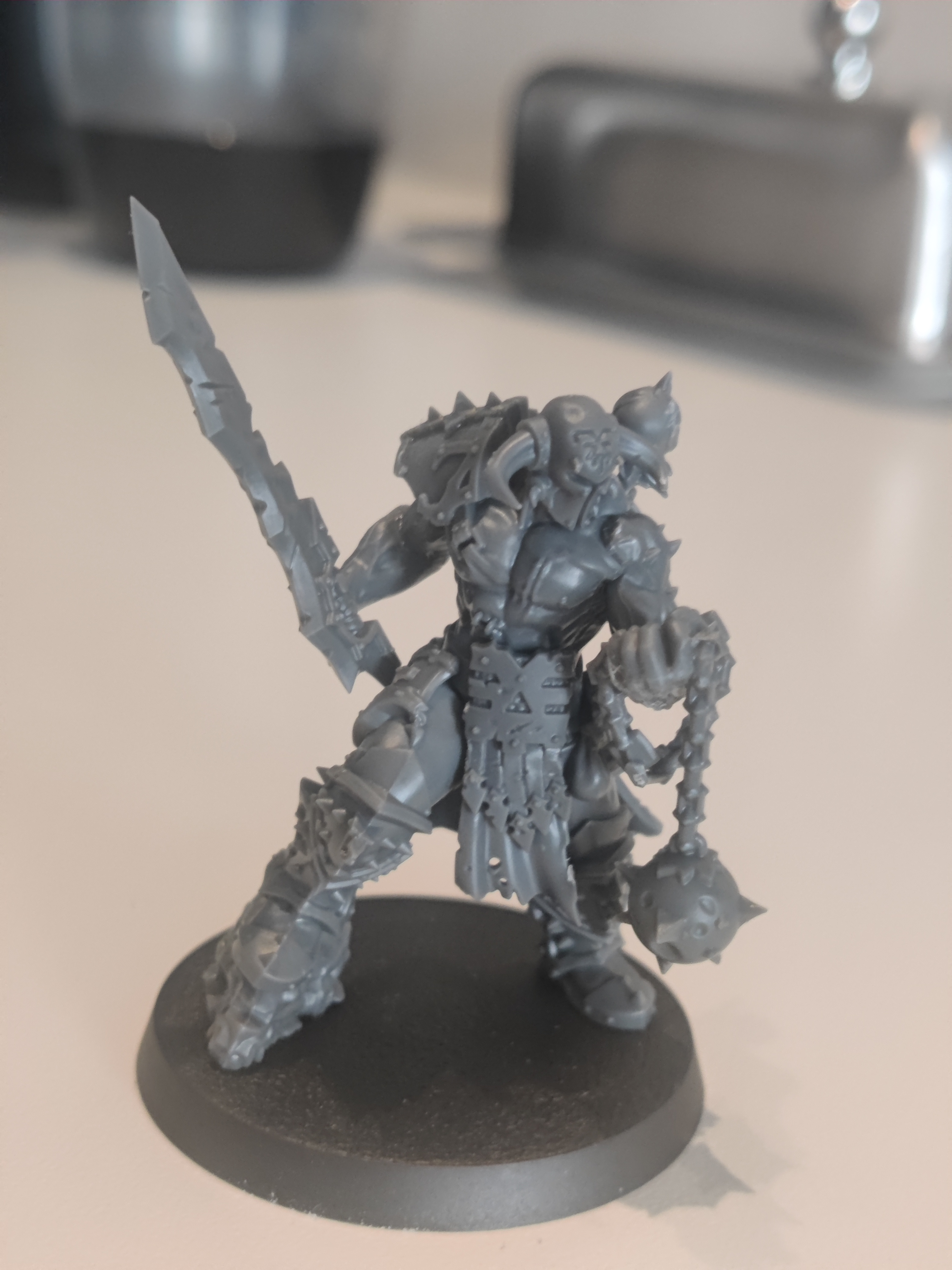
And honestly? Fair. Once the first model is done, the next hobby panic arrives right on schedule: which weapon options should the rest of the units get?
The good news: for Spearhead, this is much less scary than it looks
Michał immediately dropped the kind of advice that saves people a lot of unnecessary stress:
pick the weapons you like visually the most
That is a genuinely healthy approach, especially for Age of Sigmar: Spearhead. In Spearhead, unit options are much more fixed, so in practice you usually don’t need to obsess over every single arm, axe, pistol, or banner while building.
And if the plan eventually expands into what was lovingly called “bigmar” — full-size Age of Sigmar — then in many cases you simply declare what the unit is using before the game.
So if you’re standing over a fresh sprue, frozen by choice paralysis, this is your sign to relax a bit.
There are levels to this hobby brain
Of course, once weapon options come up, the classic camps immediately appear.
On one side, you have the book-faithful builders, who prefer assembling things exactly as intended in the rules and warscrolls.
On the other, you have the true extremists: people who magnetise every possible option and swap weapons between games.
Pegie’s reaction was the only correct one:
That’s insane. I want that.
And honestly, same.
Magnetising is one of those hobby skills that sounds completely unhinged until the moment you realise how satisfying it must be to reconfigure a unit whenever you want. Is it practical for everyone? Absolutely not. Is it cool? Extremely.
WYSIWYG matters… until it doesn’t
End3r added the most sensible middle-ground take, using Kharadron Overlords as an example.
With armies that have lots of weapon variants, there is definitely value in building models so it’s visually obvious who has what. It makes the army easier to read on the table, both for us and for our opponent. That can be especially helpful in smaller games and when we’re still learning the faction.
But also — and this is very important — people usually notice less than we think.
End3r mentioned having built a random Arkanaut with a Captain’s head and weapon, and apparently nobody even noticed. Which feels like a very Warhammer lesson: we can spend ages worrying about absolute visual correctness, and then at the table everyone is mostly focused on movement, dice, and not forgetting their own abilities.
Our takeaway
For army-building, especially early on, this feels like the best rule of thumb:
- build the models in a way that makes you happy visually,
- keep game readability in mind if the weapon options are numerous,
- don’t panic too much about exact loadouts in Spearhead,
- and if you’re using proxies or unusual builds, just make sure you can remember what is standing in for what.
That last part is probably the real key. A cool model is great. A cool model that both players can actually understand during the game is even better.
And yes, we are now emotionally prepared for the possibility that this innocent discussion about weapon options may eventually end in someone buying magnets and disappearing into a new hobby rabbit hole.
As it should.
Final thought
The newly built Slaughterpriest looks great, and more importantly, it kicked off exactly the kind of hobby conversation we love: half practical advice, half enabling, half chaos. Yes, that is three halves. That also feels correct.
If you’re building your first Spearhead box, our recommendation is simple: follow the cool. You can figure out the rest on the way.