First Steps into Malifaux (and a Brief Detour into Giant Nagash)
We had one of those classic hobby evenings where one topic smoothly turns into three others. This time the main discovery was Malifaux — and since Stas was the one taking notes, we got a quick late-evening rules rundown that immediately made us want to play more.
We only managed to play one round, so this is very much a first impressions post rather than a full review. But honestly? Even from that short contact, Malifaux already looks like a game with a lot of character.
Crews, points, and soulstones
One of the first things that stood out to us was crew building. In Malifaux, you build your crew to a set number of points. We played at around 30 points, although apparently 50 points is more typical.
The fun bit is that you usually don’t spend every last point. Whatever remains turns into soulstones (or, as we were loosely calling them in chat, soulgems), which become a resource you can spend on special abilities during the game. There is a cap, though: you can only start with up to 5 soulstones, even if you leave more points unspent.
That already feels neat from a design perspective — you are not just building a list, you are also deciding how many resources you want to keep in reserve.
Cards instead of dice
The biggest “oh, that’s cool” moment was definitely the resolution mechanic. Malifaux uses cards instead of dice.
Instead of rolling, you flip the top card of the deck and compare it to your opponent’s card, a bit like a card-game version of War. Then you add the relevant stat value — attack, defense, and so on.
There are also positive and negative modifiers handled in a very elegant way:
- with a positive modifier, you flip two cards and choose the higher one,
- with a negative modifier, you flip two cards and choose the lower one.
Simple, readable, and immediately understandable at the table.
The hand of cards and “cheating”
At the start of each round, you draw 7 cards into your hand. And this is where Malifaux gets even more interesting, because those hand cards can be used to replace flipped cards from the deck.
This mechanic is called Cheating Fate — or just “cheating,” as Stas put it in our chat.
The order matters too: first, the player who lost the duel gets a chance to replace their card, and then the winner can respond.
We really liked this idea. It means the game is not just about raw randomness. You are managing risk, holding back strong cards, deciding when a moment matters enough to commit resources, and trying to read what the other player might still have in hand.
Suits and triggered abilities
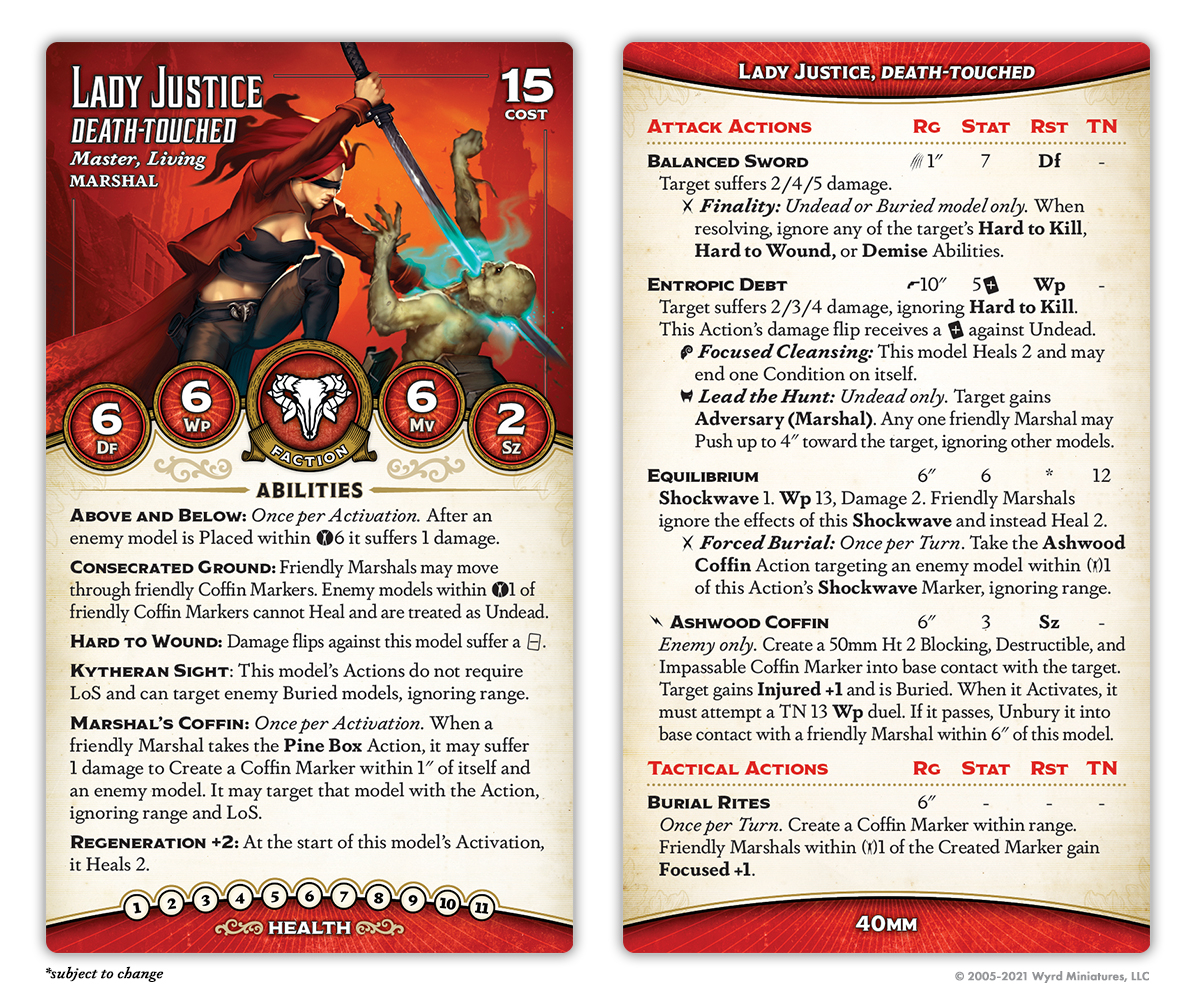
The cards are not only about numeric value. They also have suits — two black and two red.
The suit does not affect who wins the duel, but it matters for triggered abilities. If you win a duel, you may be able to trigger an extra effect — but only if the suit on the winning card matches the requirement of that trigger.
So the card matters in two ways at once:
- does it help you win,
- does it unlock the extra effect you wanted.
That gives the whole system a lot more texture than a simple pass/fail result.
Stas dropped in an example card while explaining it:
Not every duel is player vs player
Another nice detail: not every test is opposed by another model. Some abilities are resolved against a fixed Target Number (TN) instead.
That is a small thing, but it helps make the rules explanation click faster. Not everything has to be a direct duel — sometimes you are just trying to hit a threshold.
Catch-up mechanics we immediately appreciated
Stas also pointed out two mechanics that felt especially good as built-in catch-up systems.
1. You get a soulstone when one of your models dies
Whenever one of your little guys gets taken out, you gain 1 soulstone.
That is a very nice touch. Losing a model obviously hurts, but at least the game gives you something back to work with.
2. Empower
The second one is Empower. Before a duel, you can discard a weak card from your hand — specifically a card valued 1 to 5 — and in exchange you gain a positive flip for that duel.
So you:
- turn a bad card into value,
- improve your odds for the current duel,
- and can even use the discarded card’s suit for triggered abilities.
That is just a really satisfying piece of design. Bad cards are not dead weight, and losing momentum does not feel quite so hopeless.
So what is the game actually about?
Michał asked the very sensible question: what do you actually do in Malifaux? Is it just fighting, or are there objectives?
And yes — there are.
There are scenarios, and there are also Schemes, which are hidden side objectives. We did not get deep into that part yet, because we only played a single round, but our first understanding was that a lot of the game revolves around placing different markers in key places on the table, while your opponent tries to remove them.
That makes it sound much more like a tug-of-war over position and board control than a simple “walk up and hit each other” game. The comparison that came up was something between capture the flag and zone control, which honestly sounds great.
A charge rule we immediately wanted to steal
There was also one rule Stas instantly wanted to steal for other games.
In Malifaux, one of the actions is a charge, which is:
- a move in a straight line,
- followed by an attack.
A normal move, meanwhile, can turn — but cannot end with an attack.
And yes, this is exactly the kind of neat, clean rule that makes us look at our other systems and go: hmm, could we borrow that somehow?
And then, naturally, we started talking about Nagash
Because no hobby discussion remains fully on topic forever.
At some point the conversation swerved into Nagash in old-school Warhammer Fantasy, and the conclusion was basically: this is where even we start to lose our courage.
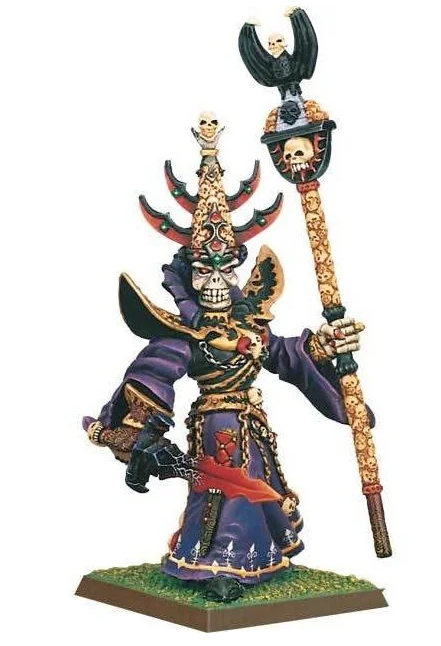
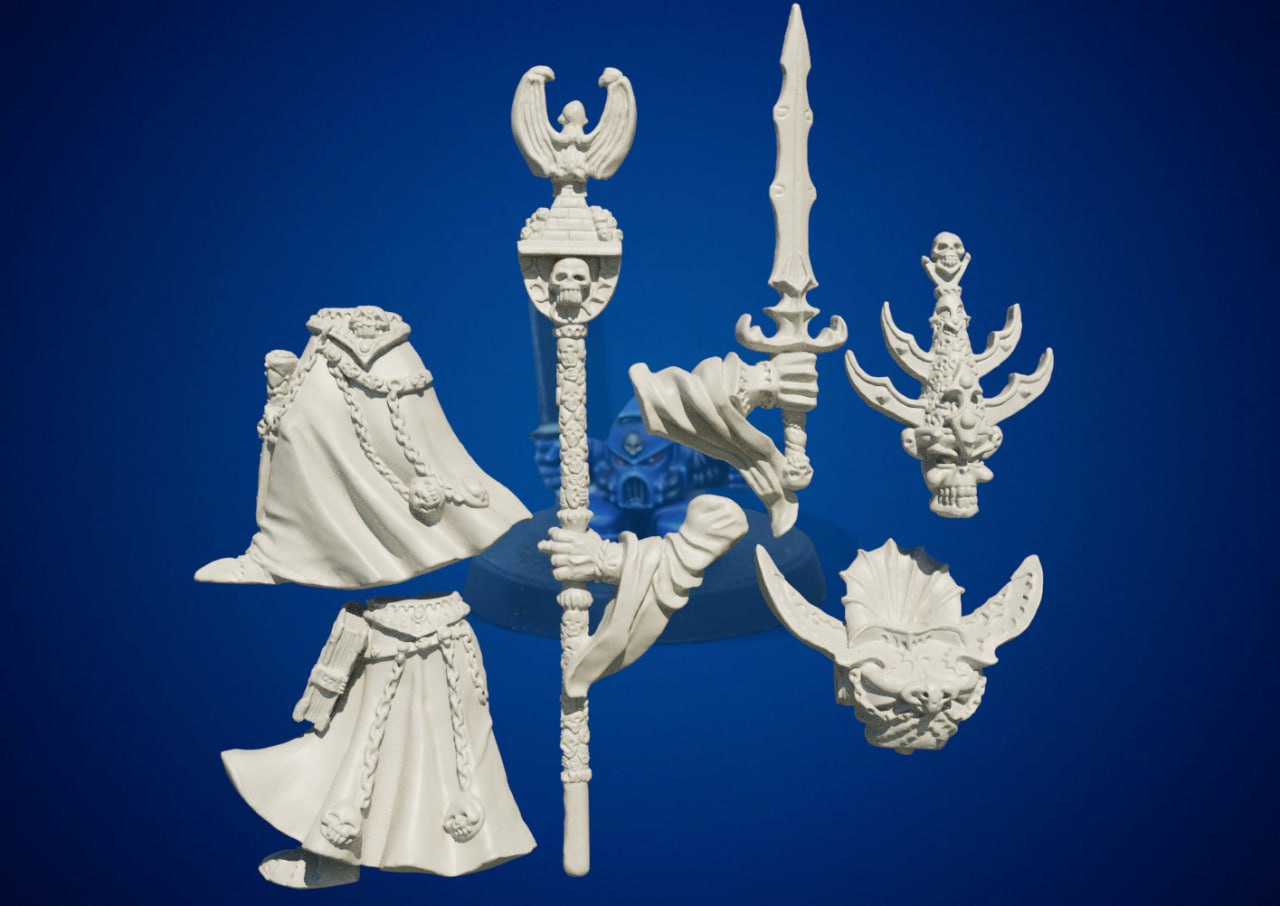
That then led to the very important practical observation that, according to Age of Sigmar basing rules, Nagash should be on a 130 mm base. Which naturally raised the question: what would that actually look like?
Apparently we may find out.
First impression: very promising
Even after just one round and a quick rules summary, Malifaux gave us the feeling of a game with a lot of clever ideas packed into it:
- card-driven duels instead of dice,
- hand management,
- controlled randomness,
- objective play,
- and several mechanics that help keep the game from snowballing too hard.
We definitely need more table time before saying anything smarter than that, but as a first contact? Very positive.
Also, if this ends with us both learning Malifaux and printing an absurdly large Nagash, then honestly this was already a successful hobby week.