First Steps in Spearhead-Style Warfare
A quick battle report from the learning table
Sometimes the best kind of game is the one where we lose badly but walk away even more hyped to play again.
This time, Michał dropped a short but very honest update from a game that sounded like a small-format Age of Sigmar match in the Spearhead spirit. By round 4, things were already looking rough:
“Penultimate round (4), I’ve only got the boss left.”
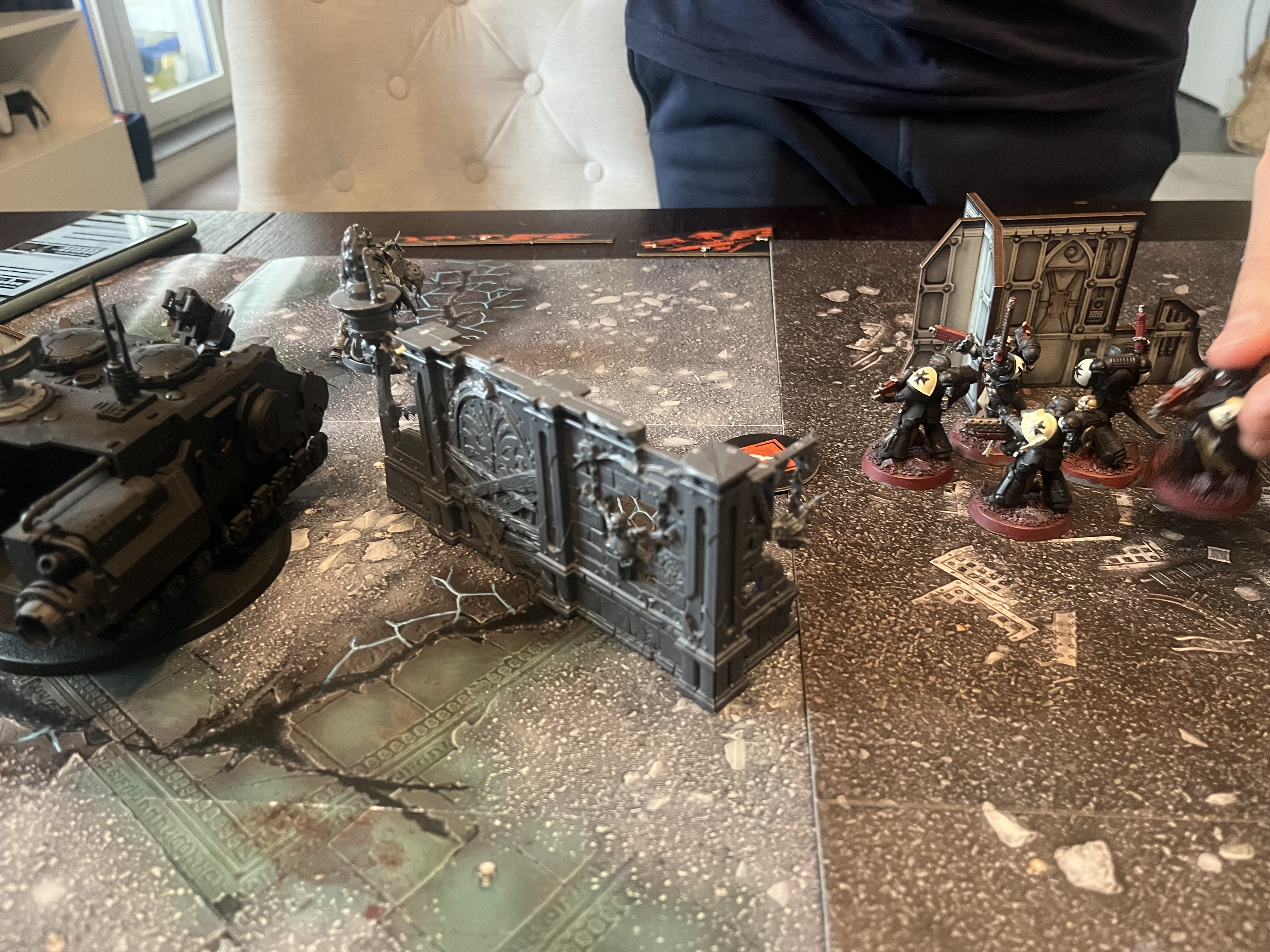
A few minutes later came the result:
“I lost.”
And not by a narrow margin either — the opponent wiped out all of Michał’s units in round 4. Ouch.
Still, it sounded great
What we really liked in this little exchange was the immediate post-game reaction. No salt, no frustration, just the classic:
“But I didn’t really know what does what yet.”
“A lot of thinking.”
“It’s fun.”
That is honestly one of the most relatable Warhammer experiences possible. First games in a new format are always a mix of confusion, rule discovery, bad positioning, forgotten abilities, and sudden realization that the game has already punished all of it.
And yet — that’s often exactly when a system starts to click.
Spearhead vibes, but its own thing
Michał described it as feeling a lot like Spearhead, but with a few notable differences:
- no twists
- battle tactics are predefined by the mission
- lots of actions and effects are paid for with command points, more like “bigmar”
That last comparison tells us a lot. If you already enjoy the rhythm of full-size Age of Sigmar, with command points driving key decisions, this sounds like a format that still keeps some of that feel instead of stripping the game down too far.
At the same time, having predefined battle tactics for the mission sounds like a neat way to reduce decision overload in one area while keeping meaningful choices elsewhere. Probably a good thing, especially in early games where there’s already plenty to process.
The classic first-game problem: too much to think about
The line about there being “a lot of thinking” really says it all.
That’s the thing with smaller competitive formats: they often look simpler from the outside, but in practice every activation, move, and command point matters more. With fewer units on the table, mistakes are easier to feel immediately. If one piece goes down at the wrong time, the whole game can collapse fast — which sounds exactly like what happened here in round 4.
Still, that kind of loss is often the useful one. You come away knowing not just that you lost, but why:
- not knowing all the tools yet
- still learning what matters most
- probably spending command points less efficiently than the opponent
- getting punished hard once the tempo slips
That’s painful, but it’s also the shortest route to getting better.
Also: that terrain looked fantastic
In the middle of all this, Michał also dropped a video link and immediately pointed out the terrain:
“Such amazing terrain.”
Which, honestly, is another deeply familiar hobby moment. We can be in the middle of discussing rules, missions, and getting tabled, and then instantly get distracted by a really good board setup.
Fair enough though — good terrain does a lot of heavy lifting in games like this. It shapes movement, creates meaningful decisions, and just makes the whole battle feel cooler.
More people getting pulled in
As a final touch, Michał mentioned that he invited Paweł to the channel, and shortly after that Wilini joined with a cheerful “Hi!”. That really sums up what we enjoy most about this hobby: one person tries a game, shares the excitement, posts a photo, links a video, and suddenly more people are orbiting around the idea.
That’s how many of our best hobby rabbit holes begin.
Final thoughts
So yes — this one ended in a round 4 defeat, with only the boss left standing for a moment before everything collapsed. But it also sounds like exactly the kind of game that makes us want a rematch.
A lot of thinking, lots of command point decisions, mission-defined tactics, no weird twists, and a format that feels close enough to Spearhead to be approachable while still doing its own thing?
Yeah, we’re interested.
And honestly, “I lost, but it was fun” is one of the healthiest possible signs for a game system.
We’ll gladly take more reports like this.