The Lost Legions of Grand Cathay: a little legend about terracotta and Tzeentch
A hobby experiment turned into a legend
Sometimes the best bits of Warhammer hobbying start with a simple message: “BTW, I finished the experiment.” And then, a moment later, it turns out that the experiment is not just a unit idea, but the seed of a full little legend.
This time Michał shared his take on an Imperial Cathayan force stationed in the Northern Provinces — and then immediately went further, spinning a story about the XVII, XVIII and XIX legions, supposedly posted even farther north, near the Dragon Gate of the Great Bastion.
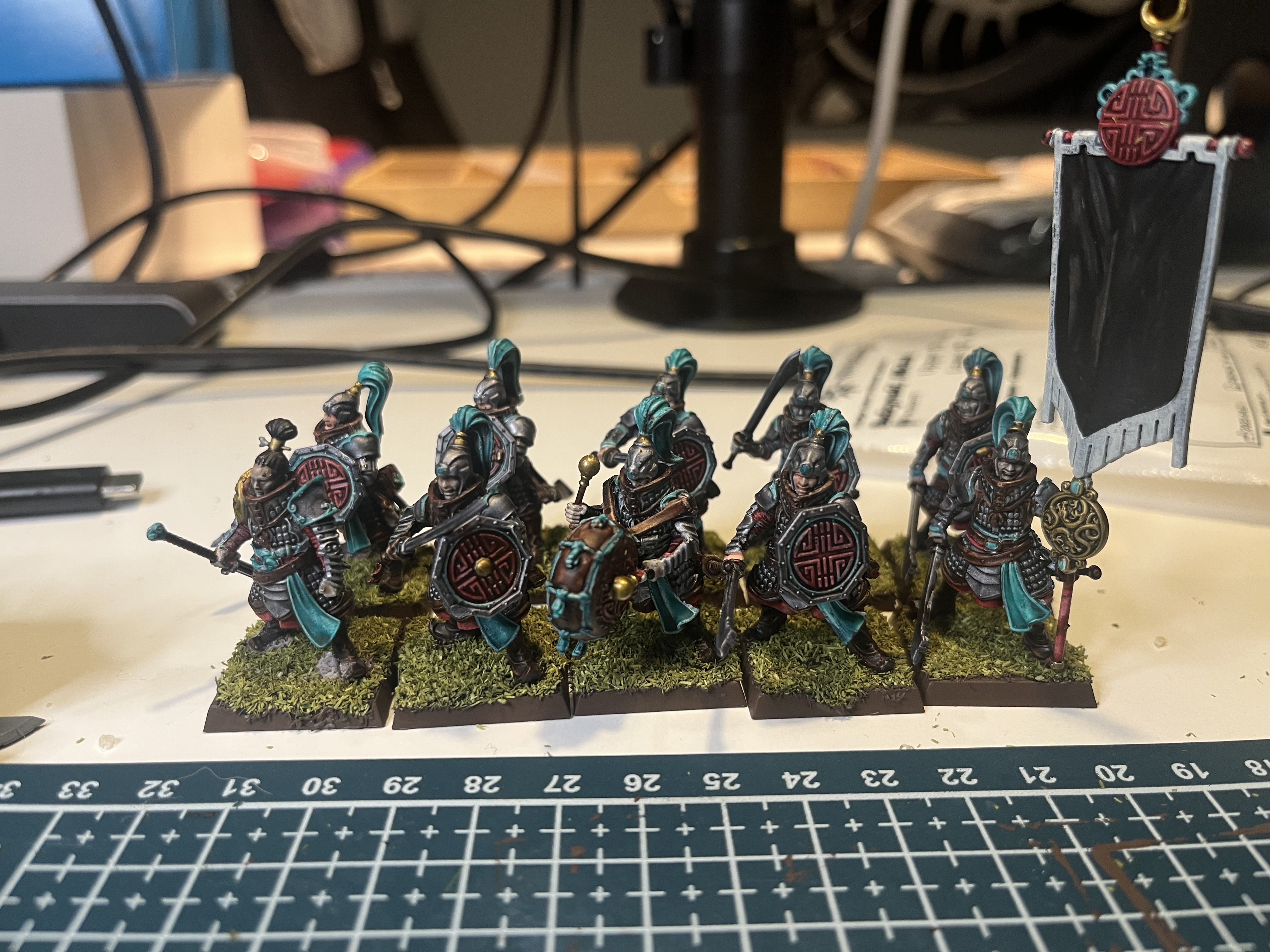
And honestly? This is exactly the kind of homemade lore we love most. It feels very Warhammer: grand, tragic, a little theatrical, and just ironic enough to hurt.
The legend of the northern legions
According to the tale, these lost legions were patrolling the wide valleys of the Nan Gau massif when they discovered a stone temple absent from all maps. It was inhabited by monks no one had ever heard of, men who claimed they had spent centuries in seclusion studying ancient prophecies of Harmony in the name of the Celestial Dragon Emperor.
Then came the turning point.
From the clouds descended a heavenly messenger: winged, radiant, speaking with a voice like a bell — not to the ears, but directly to the heart. And the messenger declared that the monks were heretics trying to alter the course of destiny.
The order was simple: kill them, burn their books, and in return the soldiers would receive eternal life. They would become unbreakable. Hard as stone against the power of Chaos.
Being loyal subjects of Grand Cathay, the legionaries did not wait for explanations. They slaughtered the temple’s inhabitants and burned what remained.
And then the reward came immediately.
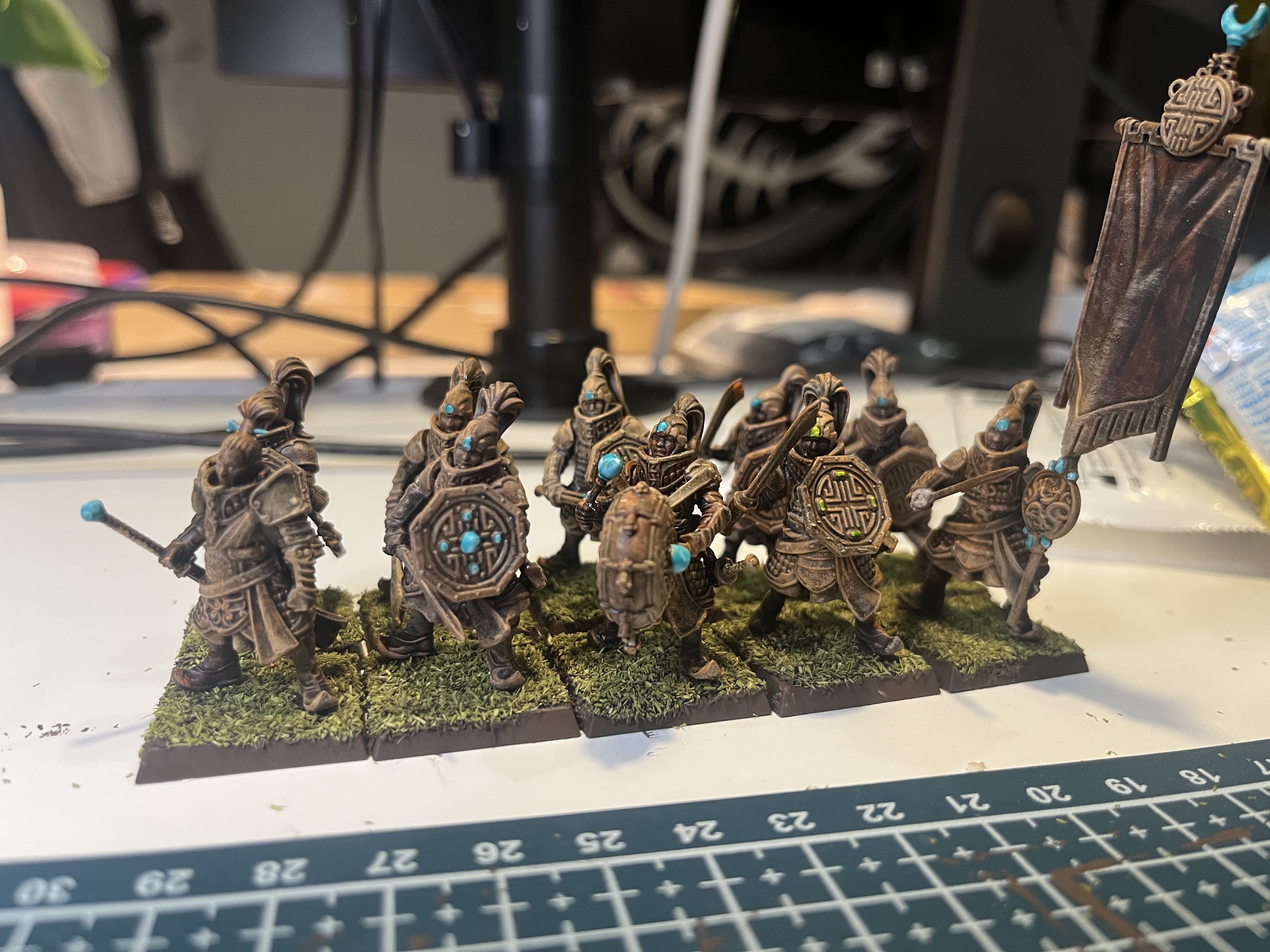
Their bodies stiffened. Their skin cracked. Their souls were trapped in terracotta forms.
Hard as stone indeed.
Just not in the way they expected.
Tzeentchian cruelty at its finest
What makes this story work so well is that it lands exactly in that classic Warhammer space where faith, obedience and tragedy collide.
The wise, in Michał’s version, say that it was Tzeentch himself who took on the guise of a divine herald, mocking the piety of Cathay’s soldiers and rewarding their devotion in the most cruelly literal way possible. That is such a perfectly Tzeentchian twist that we could immediately picture it as one of those half-forgotten border legends told by officers, monks and terrified peasants.
And the best part is the aftermath: Legion XIX still marches and still fights, believing that every act of courage brings them one step closer to repaying their debt and reclaiming their humanity.
That is bleak. That is dramatic. That is extremely our kind of nonsense.
A Roman joke, but make it Cathay
Michał also capped the whole thing with a brilliant punchline: somewhere at the Celestial Court, one can almost hear the Emperor crying out, like Augustus after Teutoburg, “Give me back my legions!”
Which also means that, at long last, poor Varus has been spiritually rehabilitated.
From lore idea to tabletop plan
What we liked most here is that this was not just a story for story’s sake. It immediately fed back into the modelling plan.
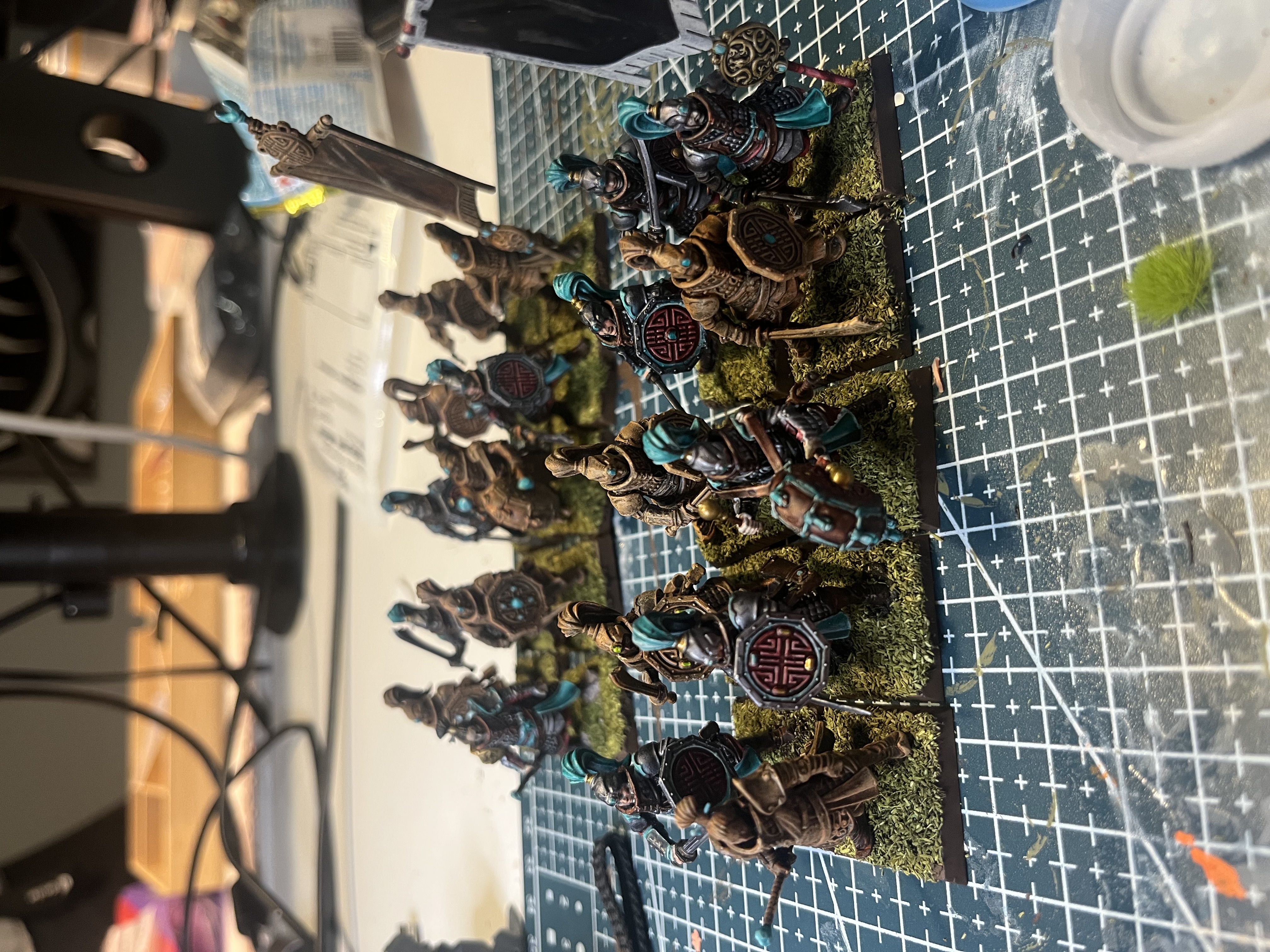
Michał mentioned two possible ways to build the force:
- mixed units, where some warriors have already proven themselves in battle and regained human form, while others are still trapped in terracotta bodies;
- or separate units of humans and terracotta soldiers.
Both options sound great, just in very different ways.
The mixed-unit approach would tell the story directly on the tabletop. You would see the curse and the slow road to redemption inside a single regiment, model by model. That feels very narrative and very characterful.
The separate-unit version, on the other hand, would probably make the army read more clearly at a glance and give the terracotta concept more visual punch as a distinct formation.
Why we love this kind of lore
Official background is great, but there is something special about these little personal myths that grow directly out of an army project. They give a collection its own identity. They make even a single converted model feel like it belongs to something bigger.
And this one has all the right ingredients:
- Grand Cathay on the edge of the world
- secret temples and forbidden prophecies
- misplaced loyalty
- a Chaos god being technically truthful in the worst possible way
- cursed soldiers still marching toward redemption
If that is not proper Warhammer lore energy, we do not know what is.
We are very curious which route Michał takes in the end — mixed regiments or separate human and terracotta units — because either way the army already has a story we are going to remember.
And honestly, that is half the fun of the hobby.