Big Games, Small Games, and Why We Like Different Warhammers
We had one of those very familiar hobby chats recently: a little bit of rules talk, a little bit of list-building pain, a little bit of wishlist planning, and a lot of comparing which Warhammer systems actually click for us.
And honestly? The most fun part was that nobody landed in exactly the same place.
Not every format hits the same
Wilini summed up one side of the discussion pretty clearly: Spearhead and Combat Patrol still feel a bit too simplified for him right now. They do their job, sure, but if you’re looking for something with a bit more meat on the bones, they can come across as trimmed down a little too far.
At the same time, Warhammer 40,000 is still just great. No hesitation there.
That contrast is interesting, because simplified formats are often supposed to be the easy on-ramp. But for some of us, the appeal of Warhammer is exactly in the layers: the weird interactions, the list decisions, the feeling that there’s more going on than just moving the obvious pieces forward.
Kill Team: brilliant, but demanding
One thing we did agree on: Kill Team is fantastic.
The catch is the entry barrier. KT really rewards learning the details, understanding how teams function, and getting comfortable with a denser rules experience. It asks more from the player at the start.
But the upside is huge. As End3r pointed out, even with that complexity, Kill Team doesn’t eat an entire day. That matters a lot. A game can be deep without automatically turning into a marathon.
That may be one reason why it lands so well for us compared with some of the more reduced formats. It stays rich, but it doesn’t necessarily become a 10-hour commitment.
Age of Sigmar timing: first games are always weird
Part of the conversation drifted toward game length, especially in Age of Sigmar.
We were laughing a bit about how a 2000-point AoS game can feel enormous when you’re still learning. End3r mentioned those long 2k games with Michał, while Stas made the very fair point that first games always take several times longer because you’re constantly checking rules, confirming interactions, and making sure you’re not accidentally skipping something important.
That tracks with our experience too. Once you know what your army does, the whole thing speeds up dramatically.
Michał said his league-paced 2000-point AoS games take around four hours, which sounds much more like a “real world” experienced-player timeline.
And then there was the reminder that lower-point games can be deceptive. Wilini mentioned that in a recent 1000-point game with Michał, about two hours passed and they had basically played through the first round with not much left on the table afterwards. That’s the thing with many wargames: people get scared of “all the later rounds,” but often the longest part is deployment plus the opening exchanges. After that, it’s usually the survivors sorting things out.
The Old World still looks gloriously silly
Wilini also dropped what may be the best quick summary of Warhammer: The Old World from a spectator’s perspective: it looks hilarious with all the fleeing and reactive movement.
And honestly, yes — that’s part of the charm.
There is something deeply entertaining about a game where movement, reactions, redirections, and panic can create a battlefield that feels less like two brick walls colliding and more like a dramatic chain of bad decisions.
We even had a short rules clarification on charge reactions and redirects in the middle of all this, because of course we did.
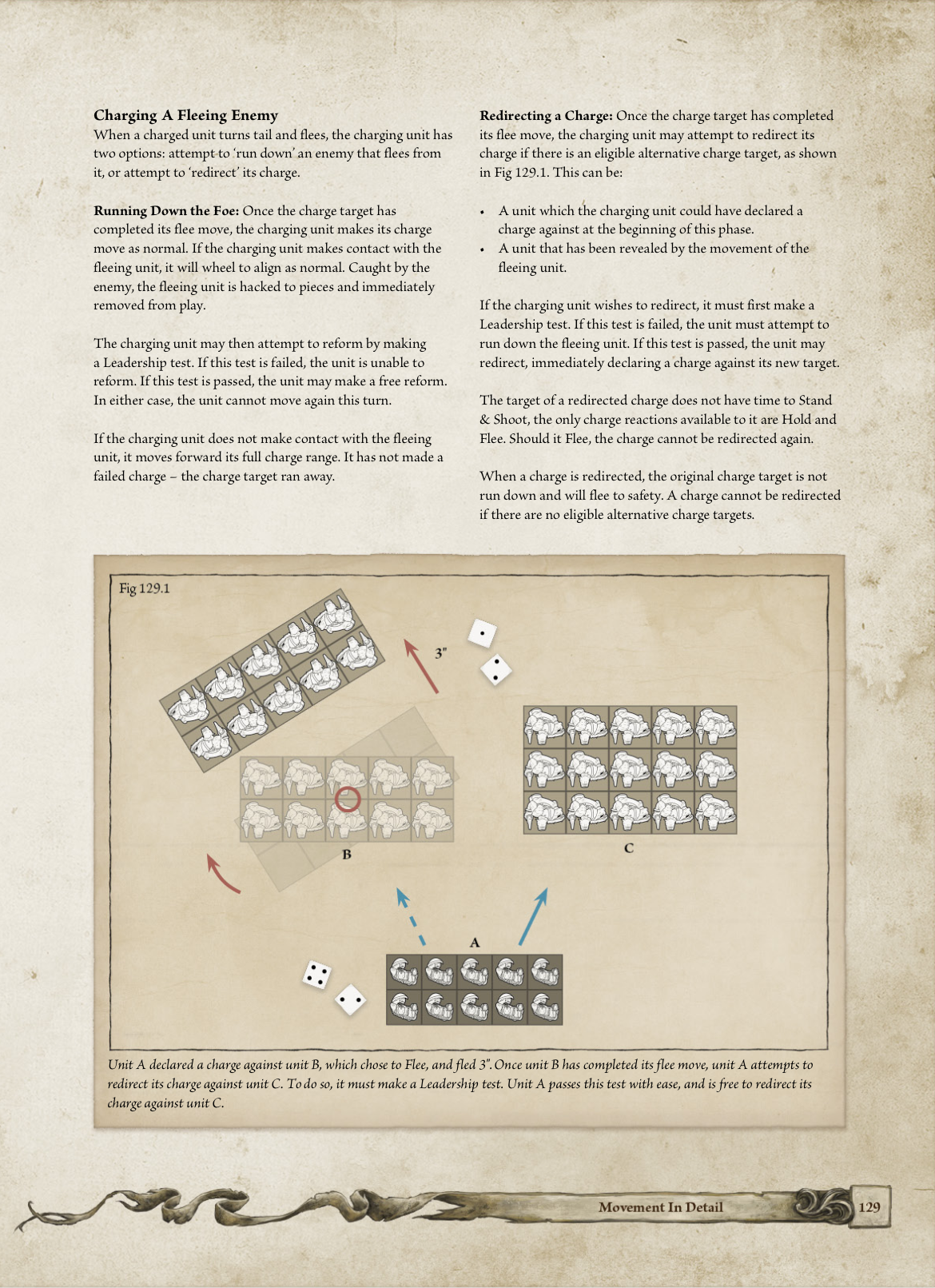
Also important: Bretonnia has apparently been claimed for the future already. So that’s one more long-term project quietly entering orbit.
Bigmar on the horizon
One of the recurring themes in the chat was simple: we want to get some proper bigger games on the table.
Wilini is hoping to finally play “bigmar” on Friday — once the army is properly together. Or at least properly enough, which is often the more realistic hobby milestone.
There are still things to assemble, and the rules differences versus Spearhead aren’t fully internalised yet, but that’s not really the point. Sometimes you just want to throw down a bigger game for fun, learn by doing, and see how the full version actually feels once your collection starts looking like a real army.
That hobby momentum also includes painting: Wilini was about to sit back down and keep working on the Stardrake, which sounds exactly like the kind of centrepiece project that makes a bigger AoS game feel worth chasing.
The practical side: magnets, budgets, and Votann vehicle pain
Of course, no hobby conversation stays purely theoretical for long.
We also had the deeply relatable side of the hobby show up: waiting for magnets to come back into stock, trying to plan purchases, and looking at army lists while quietly realising that some units are much more important than your wallet would like.
End3r was specifically hunting for Votann vehicle options for list planning at 1000 points, because once you start sketching army builds, some of those vehicle slots suddenly stop feeling optional. The problem, as always, is that this hobby has a cruel sense of timing: it’s hard to justify spending a few hundred on one little space car when you’re already planning several other boxes in the same month.
Very normal Warhammer economics there.
The conversation then took a turn into the modern hobby internet wilderness, where one search doesn’t find the thing you actually wanted, but does somehow uncover news that someone has already scanned the Salamanders Combat Patrol contents. Which, from the sound of it, is mostly generic Space Marines with a unique character and a few extra bits.
Again: very Warhammer.
Everyone has their own best version of the hobby
That was probably the nicest takeaway from the whole exchange.
Some of us want the cleaner, shorter formats. Some of us bounce off them and prefer something fuller. Some of us love Kill Team despite the learning curve. Some are eyeing The Old World because the reactive movement chaos looks too funny to ignore. Some are trying to get from Spearhead into full-size Age of Sigmar. Some are just trying to make the budget survive the next army idea.
And all of that is valid.
The nice thing about Warhammer right now is that there really are a lot of ways to enjoy it — from compact skirmish games to full battleline nonsense, from serious list planning to “let’s just put models on the table and see what happens.”
We’re pretty sure this conversation won’t be the last time we compare formats, complain about prices, get distracted by a future army, and promise that this Friday we’ll finally play the bigger game.
Because that’s also part of the hobby.