First Minis, First Doubts, and the Return of Leadbelcher
Painting is easier once you accept one thing: they just need to stop being plastic
We had one of those very relatable hobby conversations this week — the kind that probably happens in every Warhammer group sooner or later. You paint two small minis, look at them, and immediately decide that your colours are… not quite it.
That was exactly where end3r landed. The verdict was honest and very healthy: the current colours were not fully convincing, but you have to start somewhere. And honestly, that is the whole hobby in one sentence.
We’re painting so there’s no shame in fielding plastic, not because we’re trying to win painting competitions.
And really? That is a fantastic approach for getting things done.
Nuln Oil: the old friend everyone reaches for
The emergency plan was simple: hit it with Nuln Oil and maybe everything would suddenly start looking more coherent. Which, let’s be honest, has been a legitimate painting strategy for years.
Sometimes a mini looks awkward right up until the wash goes on. Then the shadows appear, metallics settle down, details separate a bit better, and suddenly the whole thing starts making sense.
Not every model needs to be a display piece. Sometimes it just needs to look good on the table from arm’s length. That counts.
The search for that one green and that one metallic
Very quickly, the discussion turned into the classic hobby detective story: what was that paint again?
Michał asked whether end3r remembered the green he had used before at his place, and even offered to share some if it turned out to be the better option. That is exactly the kind of hobby support system we appreciate — because half the time the best paint in your collection is the one your friend already tested.
The bigger mystery, though, was the armour colour. End3r remembered liking the metallic used earlier, but the paint name had vanished into the void — probably written down on some random piece of paper that has since disappeared into hobby legend.
What we did know was this:
- it was a metallic for armour,
- it was a nice grey,
- and most importantly, it felt “warm”.
That last part is interesting, because it is exactly the kind of thing we often notice when comparing paint ranges. Two silvers can both be “steel”, but one will feel colder and bluer, while another reads softer, warmer, and more natural on the mini.
Army Painter vs Citadel: not better, not worse — just different
One thing that came up naturally was how different the metallics felt between ranges. The Army Painter metallics end3r had on hand felt colder, while the Citadel metallic he remembered seemed more delicate and warmer.
That does not automatically make one range better than the other. It is more about the result we want.
For this particular paint scheme, the mix was already starting to make sense:
- green trousers worked well,
- brown boots, straps and suspenders also looked good,
- and those areas were being handled with contrast-style paints/speedpaints.
Meanwhile the metallics were doing a different job, especially on the armour.
There was also a useful clarification in the chat: the metallic Army Painter set in question was the Metallic Speedpaint Set, but these paints did not really behave like classic contrast paints in the same way the regular Speedpaint browns and similar colours do. Still, the conclusion was simple: they looked good enough and worked fine.
And that is another healthy hobby truth — sometimes understanding exactly what a paint is matters less than knowing whether it gives the effect you want.
Mystery solved: Leadbelcher
Eventually Michał dropped a photo of the paints, and the answer appeared almost immediately:
Leadbelcher.
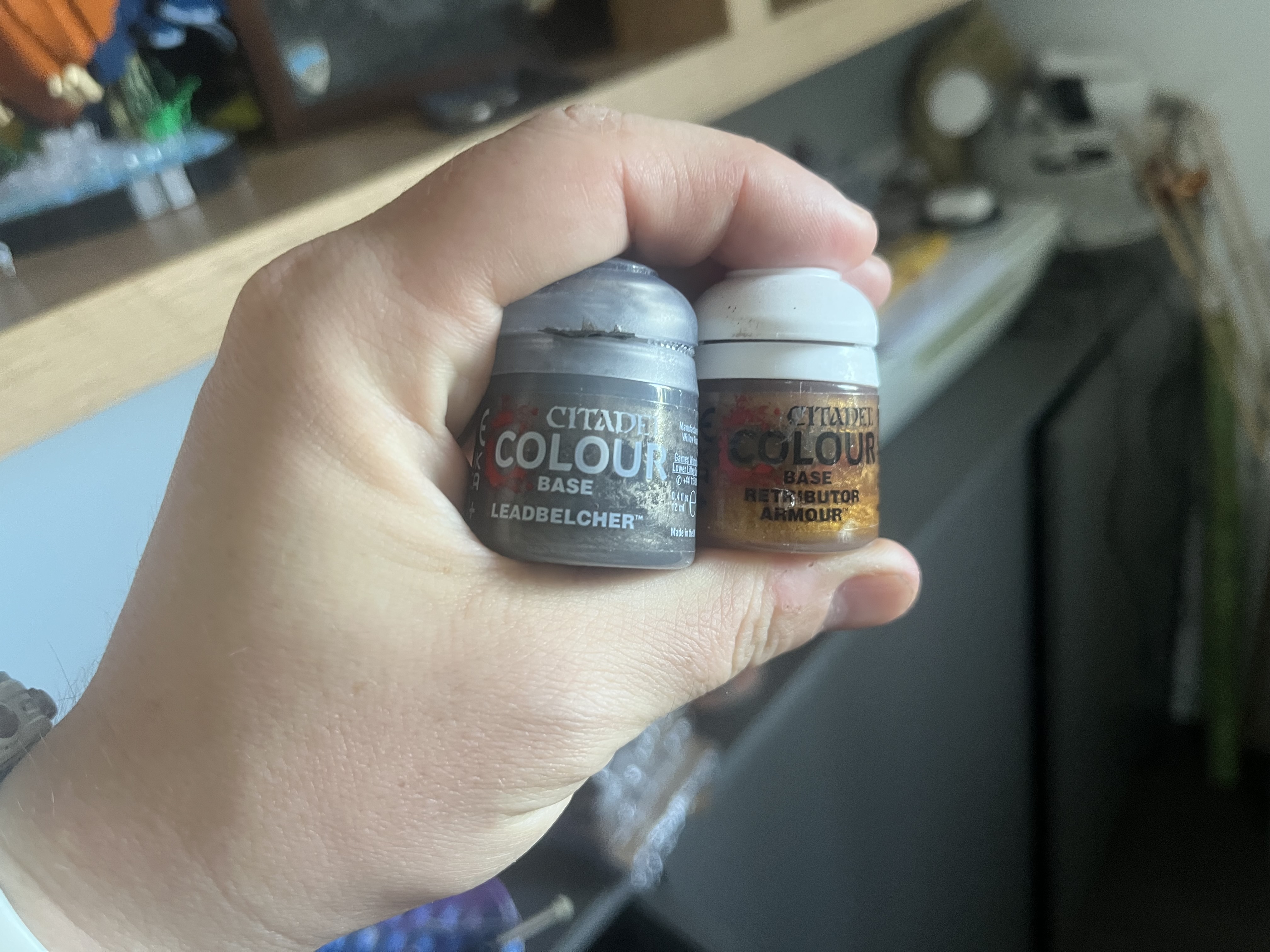
Case closed.
And once the name came back, the rest of the scheme clicked into place too. End3r also called out Retributor Armour as another metallic that pairs nicely with Leadbelcher. That sounds like a very solid combo already: a dependable steel, a rich gold, and then the rest of the leathers and cloth handled with paints that go on quickly and look good on the tabletop.
Honestly, this is how a paint scheme is born
What we like about this whole exchange is how real it feels.
A paint scheme rarely arrives fully formed. Usually it starts with:
- painting a couple of test minis,
- not being fully happy,
- trying to remember what worked last time,
- comparing ranges,
- planning a wash,
- ordering three more paints just in case,
- and slowly discovering which parts already look good.
That is hobby progress, even if it does not feel glamorous in the moment.
The green trousers are working. The brown leather bits are working. Leadbelcher is back on the menu. Nuln Oil is waiting in reserve. That is more than enough to keep moving.
And in the end, that is the real win: getting colour onto the mini, learning what we like, and making sure the army no longer looks like a pile of grey plastic.
Which, for most of us, is exactly where painting starts.