When 7 Goblins Attack: Rules Rabbit Holes, Step Up, and Why We Love Warhammer
We love those hobby evenings when a “simple rules question” turns into a full-on expedition through the rulebook. This time the topic was gloriously Warhammer: how many goblins actually get to attack after casualties, step-up moves, and supporting attacks with spears?
And honestly, this is exactly why we love Warhammer.
The question
The discussion started with a classic Old World-style puzzle. We had a goblin unit with a front rank of 10 models, and 8 of them died. So what happens next?
Stas broke down the practical interpretation like this:
- 2 goblins are still left in the fighting rank,
- then 5 more can attack as supporting attacks,
- because the unit has spears,
- and the third rank effectively becomes the second rank as models step forward.
So the answer, in his view, was:
7 attacks total.
Not exactly the kind of question you answer in two seconds unless you’ve already spent far too much time arguing about rank geometry and timing windows.
The real Warhammer experience: confidence, doubt, and PDFs
Naturally, the next step was not “let’s leave it there,” but rather:
- question the example,
- question the reasoning,
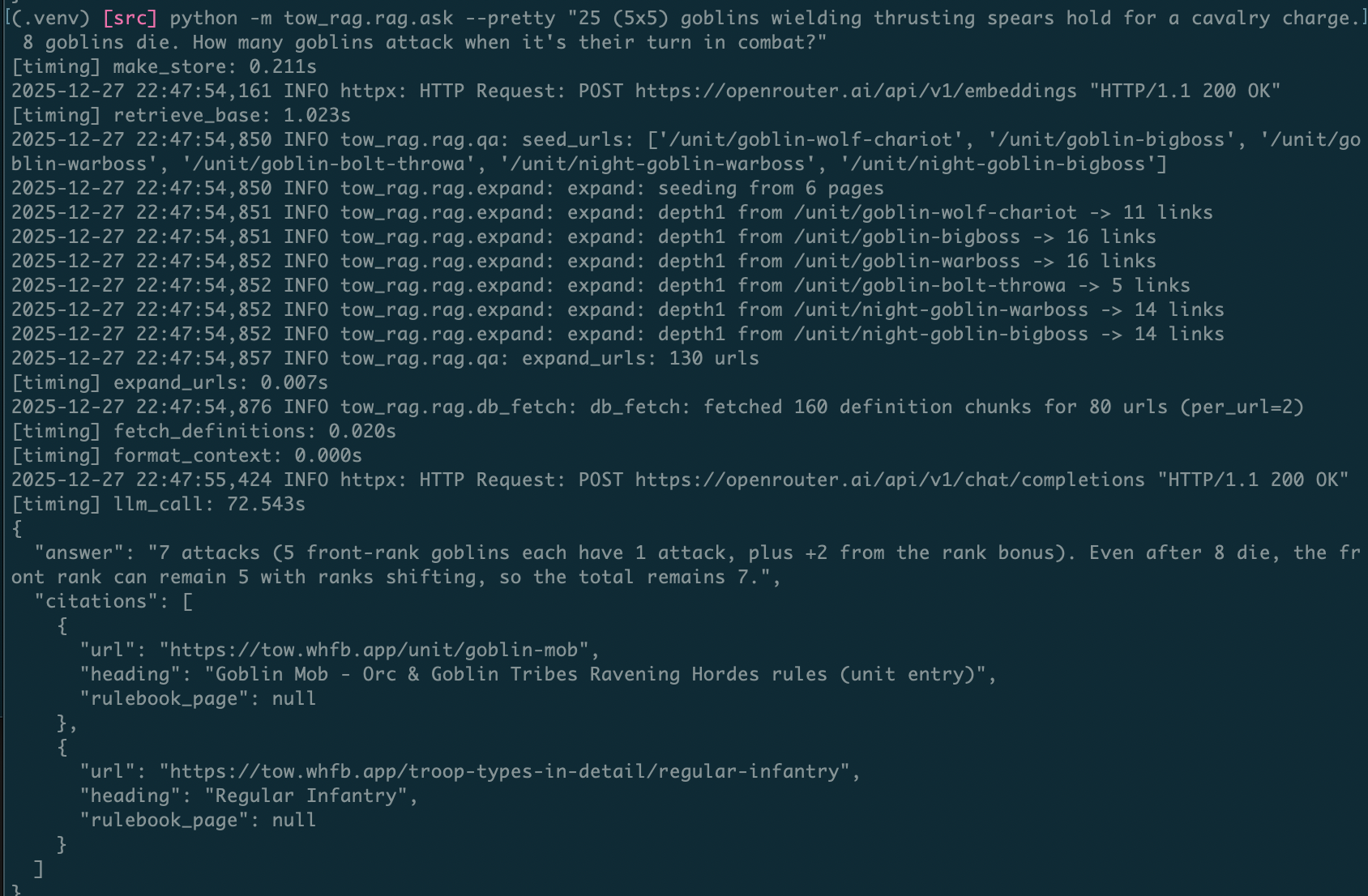
- question whether the example changes if the unit had 25 goblins instead of 20,
- and then question whether Games Workshop ever clearly explained any of this in the first place.
Which, to be fair, is a very authentic Warhammer experience.
At one point Stas noted the heart of the issue: there seems to be a rule saying that a model making a step up move can’t attack. But then the obvious follow-up appears immediately:
does that also apply to supporting attacks?
And of course this is where things get wonderfully muddy. The understanding we landed on was that rules-as-intended probably say it does not, which is why the result stays at 7 attacks rather than 2.
Enter the machine
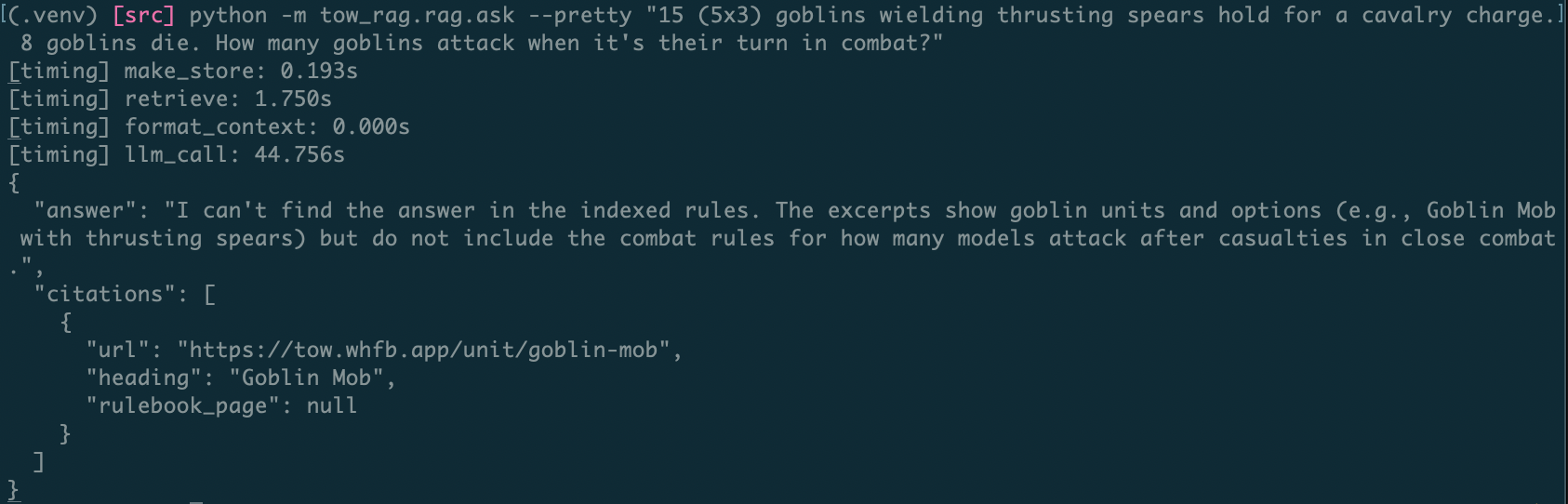
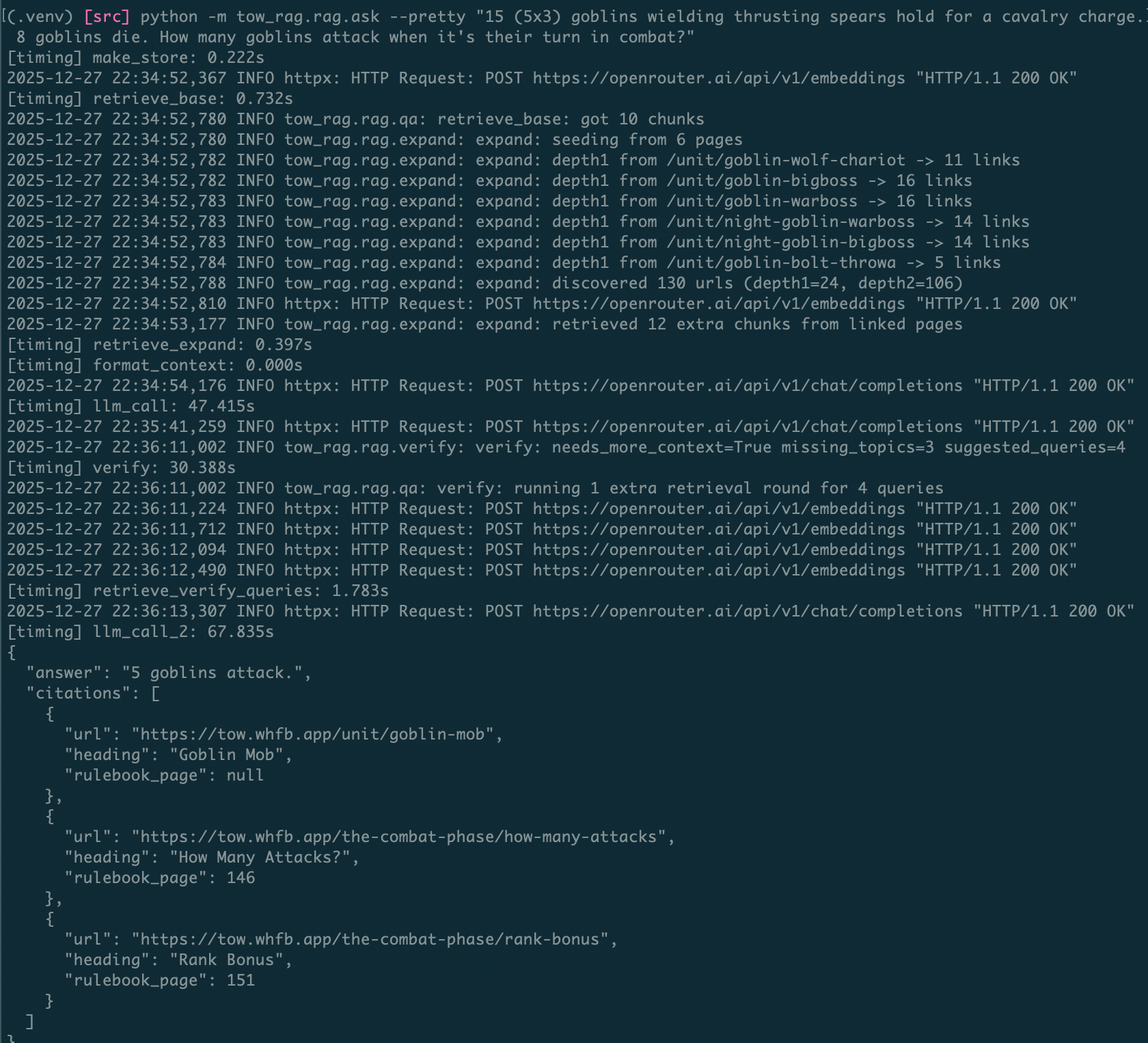
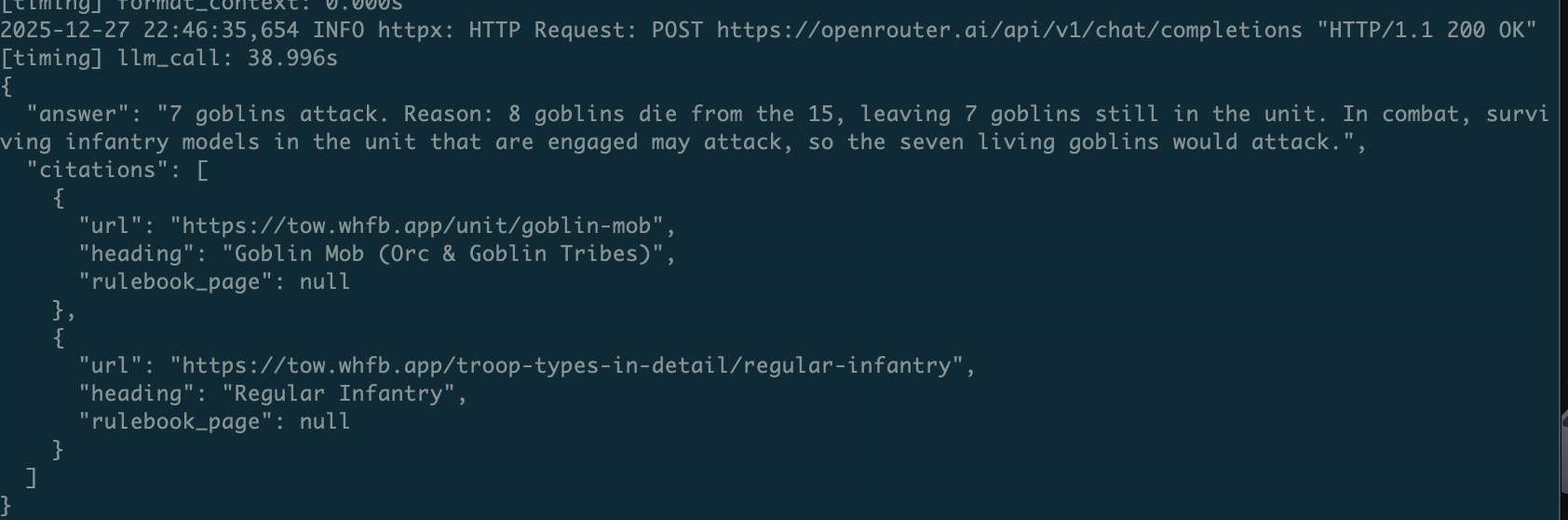
The funniest part of the whole exchange was that this wasn’t just a rules debate for debate’s sake. Michał was also testing a system to help reason through these questions automatically.
That meant building context from Warhammer rules sources, pulling links from rulebook paragraphs, and trying to create a structure that could answer these tangled interactions more reliably.
In other words: instead of just suffering through Warhammer rules discussions like normal people, we are apparently trying to engineer our way through them.
Respect.
Michał described one of the first steps as building a kind of graph based on links in the rulebook, with the idea that this should solve a huge chunk of the problem. That’s such a beautifully familiar hobby-adjacent project: start with one annoying edge case, and five minutes later you’re building a rules-reasoning engine.
The best part: the answer was right
Even with all the uncertainty around the reasoning chain, there was one very satisfying conclusion at the end:
the result came out correct.
And that really is the perfect summary of many Warhammer rules conversations:
- the path is messy,
- the wording is questionable,
- everyone is only 70% sure at any given moment,
- but somehow we still arrive at something sensible.
Why we enjoy this stuff so much
There is something deeply charming about these micro-debates. On paper, it’s just a question about goblins, ranks, and supporting attacks. In practice, it’s the whole hobby in miniature:
- remembering obscure rule interactions,
- arguing over intent versus wording,
- checking old sources,
- building examples that accidentally prove the wrong thing,
- and getting way too excited when a weird rules engine finally gives the correct answer.
This is the kind of thing that keeps army-building and list planning fun too. Because even when we’re not putting models on the table, we’re still thinking about formations, rank depth, equipment choices, and how units actually behave once casualties start happening.
A block of goblins is never just a block of goblins. It’s also a mathematical object, a rules puzzle, and occasionally a software test case.
Screens from the discussion
A few snapshots from the debate and the reasoning process:
Final takeaway
Our favourite conclusion from this whole exchange is probably this:
Warhammer rules may be chaotic, but they create excellent conversations.
And if those conversations involve goblins, spears, step-up moves, and someone quietly building an AI-assisted rules oracle in the background, even better.
If nothing else, we now have one more answer ready for the next time somebody asks:
“So… the correct answer is 0?”
Probably not.
Probably 7.