Purple Plasma Salamanders, Because Lore Can Wait
Sometimes a painting project hits that very specific stage where we stop asking “is this the perfect choice?” and start asking “is this finished enough that we can keep our sanity?” This week, end3r landed exactly there with a squad of Salamanders — including a decidedly non-codex, non-lore-approved, but very fun purple plasma scheme.
And honestly? We respect it.
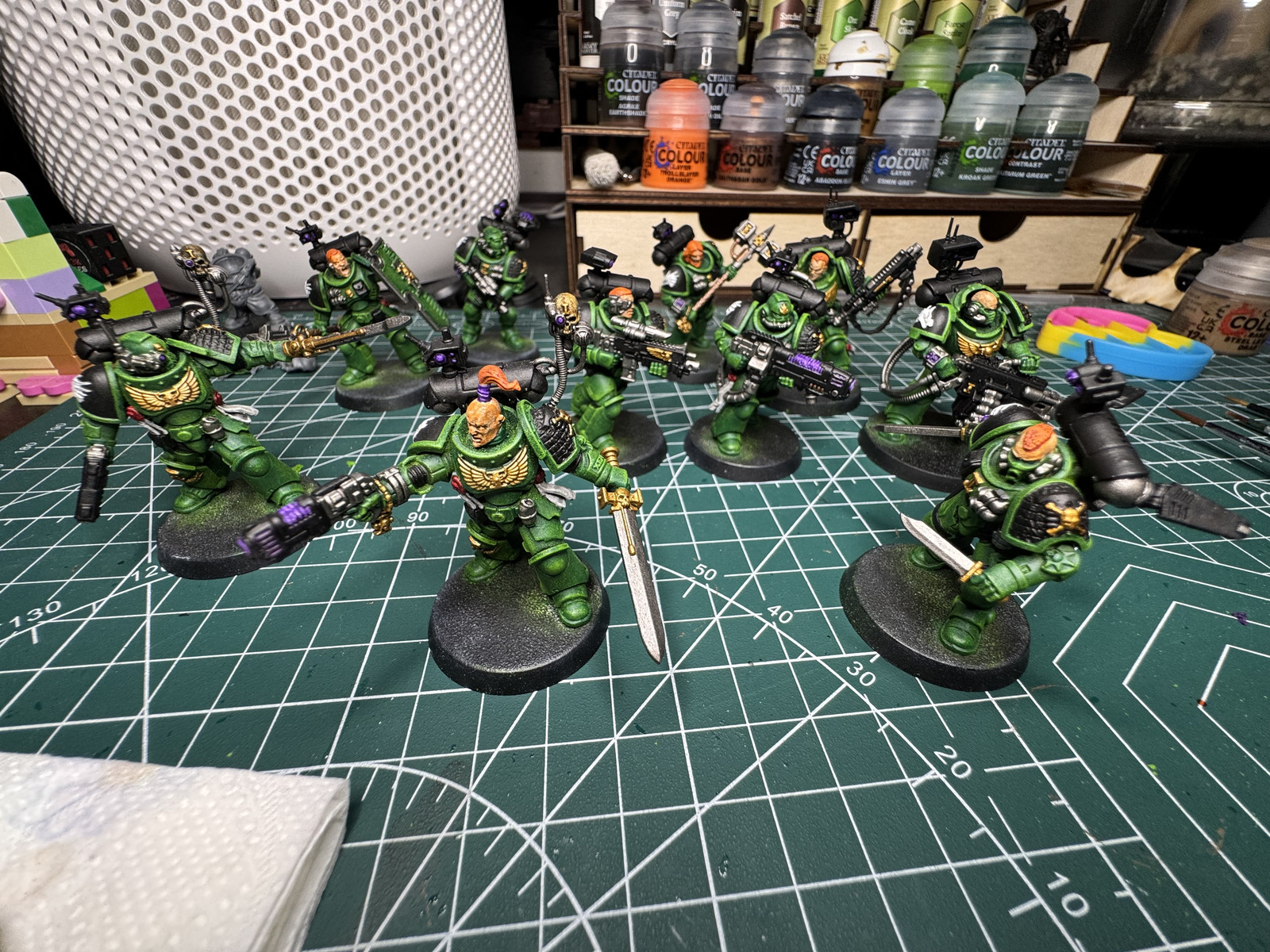
The starting point was simple: rude blade Salamanders from Temu, painted with purple plasma, because sometimes the correct hobby decision is just “yeah, this will look cool”. Later came the inevitable painter’s doubt — that creeping feeling that maybe the purple ended up a bit too present across the whole mini.
Michał immediately came in with the kind of practical hobby advice we all need from time to time: if it really bothered us, a quick drybrush back up with white and a repaint into another glow colour would be maybe a minute per miniature. But, crucially, he also said what a lot of us were thinking: it doesn’t actually clash that badly. It works. Leave it.
And that was probably the real heart of this whole exchange. At some point, after painting slowly, carefully, and poking at every detail forever, end3r reached that deeply relatable stage of: right, that’s enough now. So the scheme stays — at least for the Championships.
The best part? Even if the plasma raised doubts, the things that often cause the most pain apparently came out better than expected: faces and hair. That’s always such a good feeling. You spend ages worrying about the flashy bits, and then the human details quietly carry the miniature.
Bases: practical first, ambition later
Once the minis themselves were basically settled, the conversation naturally moved to bases. The current plan is nice and grounded: Astrogranite technical paint. No heroic attempts to conjure lava from thin air, no forcing tufts that don’t fit the vibe — just a solid texture that suits the models and gets the army over the line.
Which, to be clear, is often the best hobby choice.
Of course, because no hobby chat can remain sensible for too long, Michał then dropped a reference for a much fancier alien base idea — the kind of thing that looks incredible, but also like it expects you to casually invest about 15 hours into a single base and emerge as a different person.

The reaction was immediate and extremely fair: yes, it looks amazing, but it’s also one of those tutorials that feels a few levels above where we currently are. Like seeing something painted by El Miniaturista and briefly forgetting that maybe the first step is just finishing our basic troops.
Still, Michał made a very good point: nobody gets to that level by waiting until they “deserve” to try. We get there by making twenty bases that are just okay, and then the twenty-first suddenly turns out great.
That said, realism won this round. Right now the priority is still assembling and painting the core infantry, not disappearing into a 10-year side quest of artisanal display bases. Maybe someday. Perhaps around the exact moment the frigate project is finally finished.
The hobby lesson of the week
We liked this little exchange because it captures a very familiar part of miniature painting:
- trying something that maybe breaks the expected palette,
- not being fully sure about it afterwards,
- getting talked down from unnecessary repainting,
- and deciding that finished is sometimes better than theoretically perfect.
And really, purple plasma on Salamanders? If it looks good on the table, that’s enough for us.
Sometimes “bo jebać lore” is not a rejection of the setting. It’s just a healthy painting philosophy.