TOW Academy: 500 Points of Chaos Dwarfs vs Khorne Daemons
Today we managed to squeeze in a proper little Warhammer: The Old World academy session with @pegie, and honestly, it was exactly the kind of game we like most: small points, lots of learning, a few rules mistakes, and a lot of hype.
We played 500 points of Chaos Dwarfs into Daemons of Chaos under the banner of Khorne. Small game, but with enough weirdness and cinematic nonsense to make it feel much bigger.
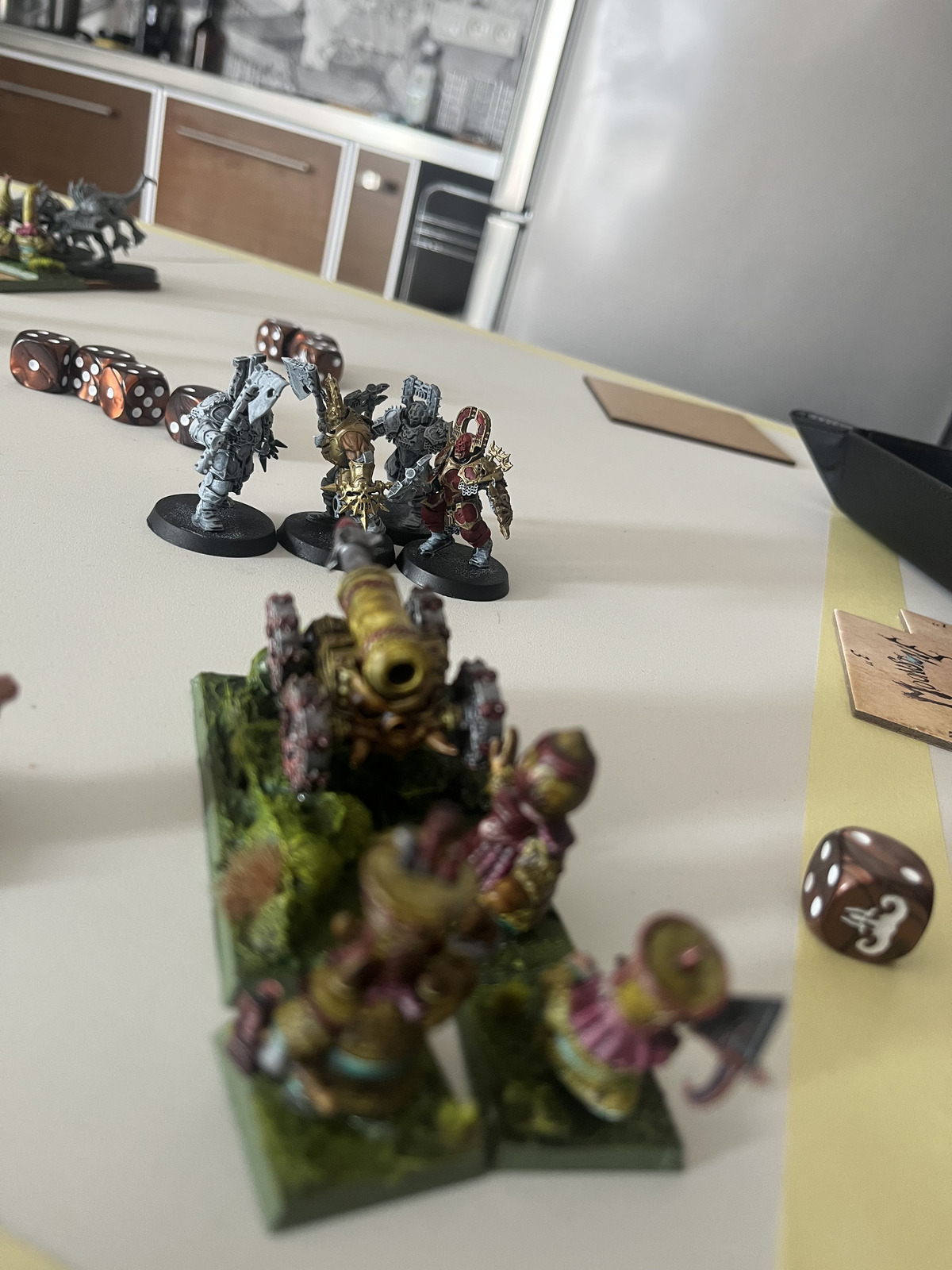
Right at the start we discovered one of the classic “academy game” situations: we had not read one of the key daemon rules carefully enough. For the first few turns, we were basically just playing Give Ground after lost combats, because daemons are Unbreakable and never flee in the normal way.
That part was true — but what we missed at first was Daemonic Instability.
After losing combat, those daemonic units should also take a Leadership test before Give Ground, and for every point they fail by, they lose a wound. And if they roll double 6, the whole unit can get banished back into the warp. Which is extremely funny, very thematic, and exactly the kind of rule that makes us like this system even more.
Lore-wise it also just works. These weren’t undead-style unstable troops slowly crumbling from combat resolution — they were Khorne daemons barely held together in reality, and sometimes they can simply unmake themselves and disappear into another dimension. Peak Warhammer.
Also: a built-in 5+ Ward save on all daemons feels very chunky at this points level. You really notice it in a 500-point game.
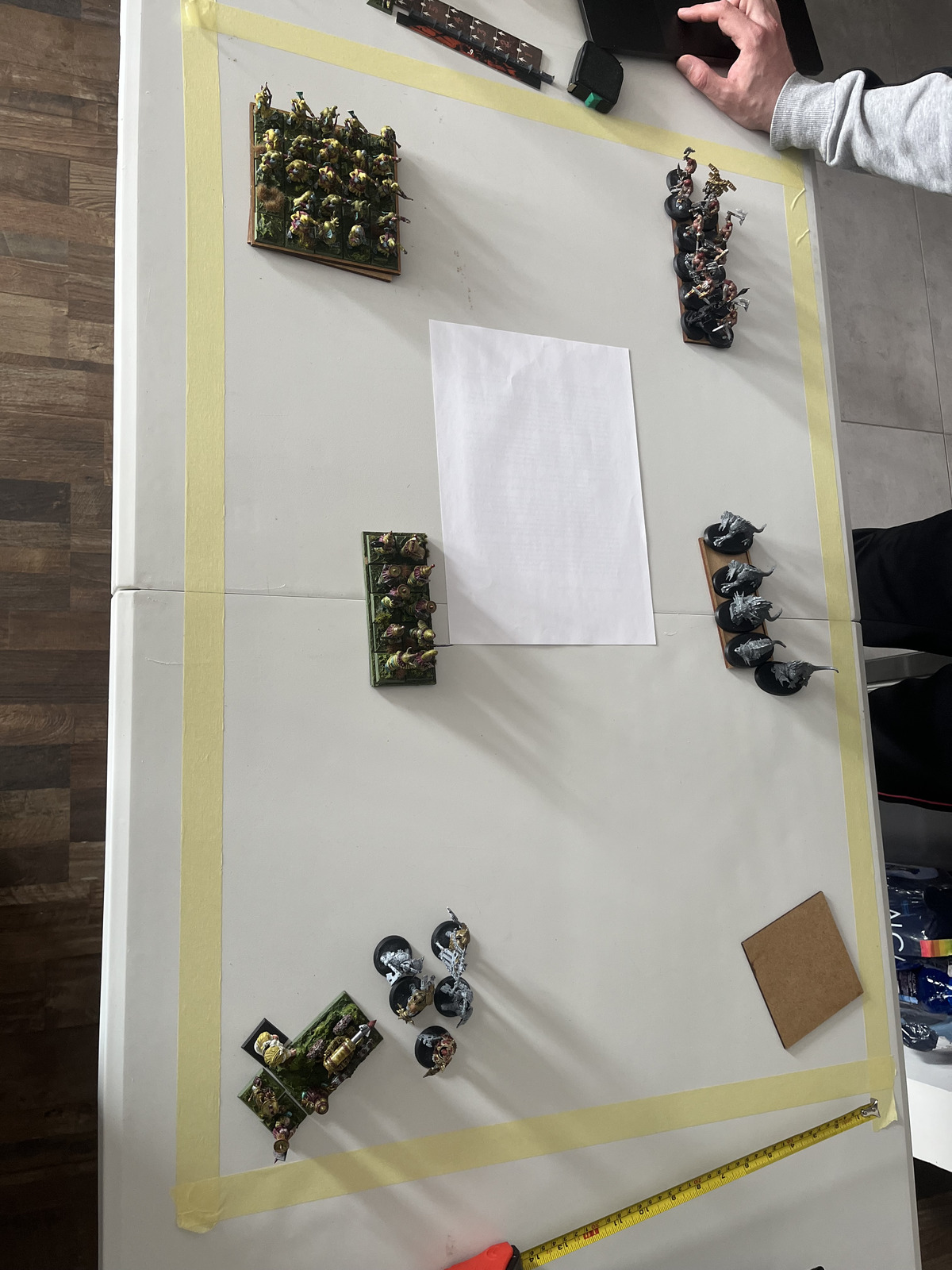
The game itself was fast and great fun. We managed to fit 5 rounds into 3 hours, which for a learning game with rule-checking, discussion, and post-combat “wait, how does this actually work?” moments is a very nice result.
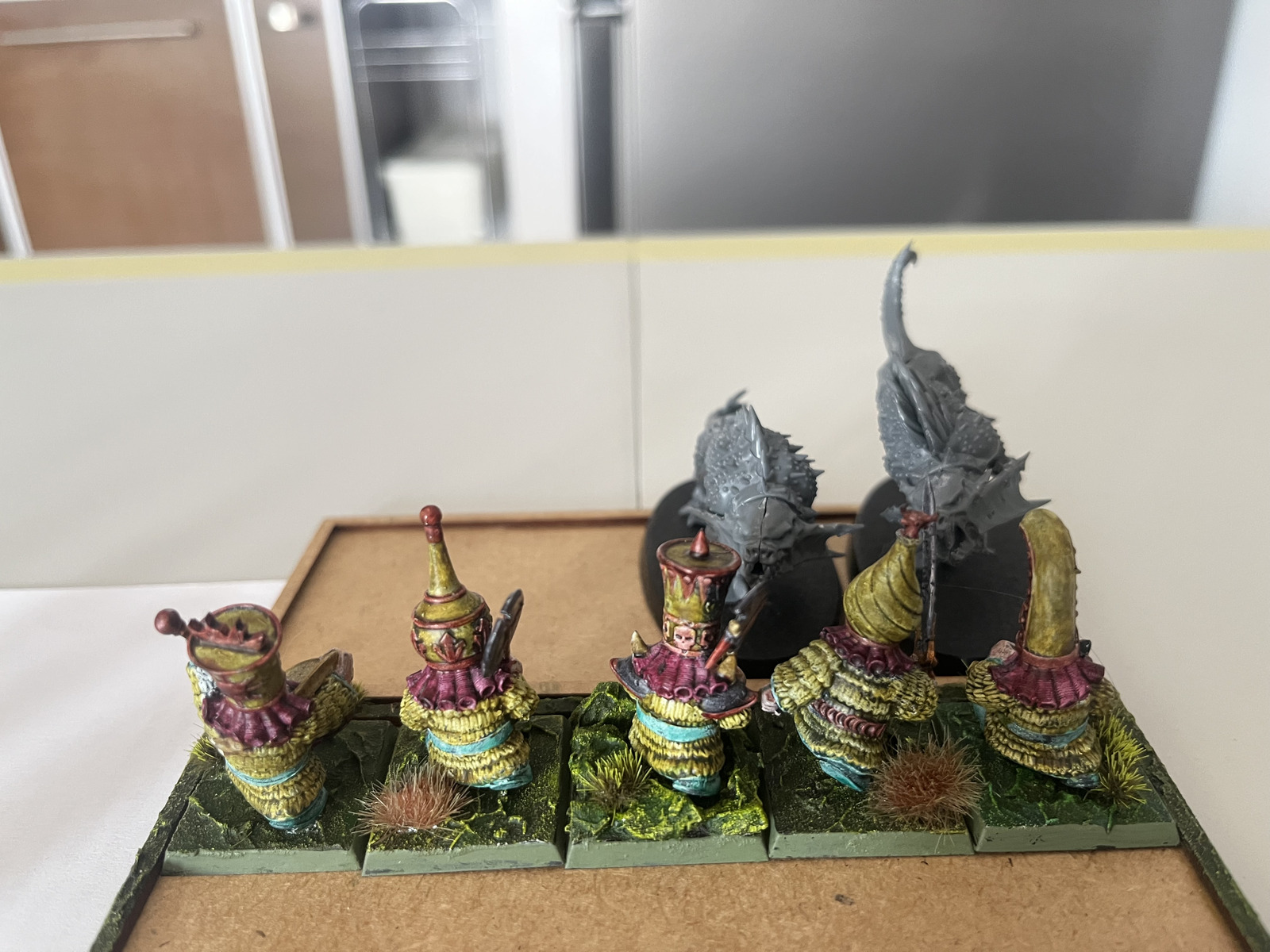
What really clicked for us was how much personality TOW has in its mechanics. There is a lot to learn, but in a good way. The random elements are especially charming — the kind of thing where your artillery can suddenly go wrong because the wind was a bit too strong and now you’ve basically dropped a nuke on your own troops. That sort of chaos is part of the appeal.
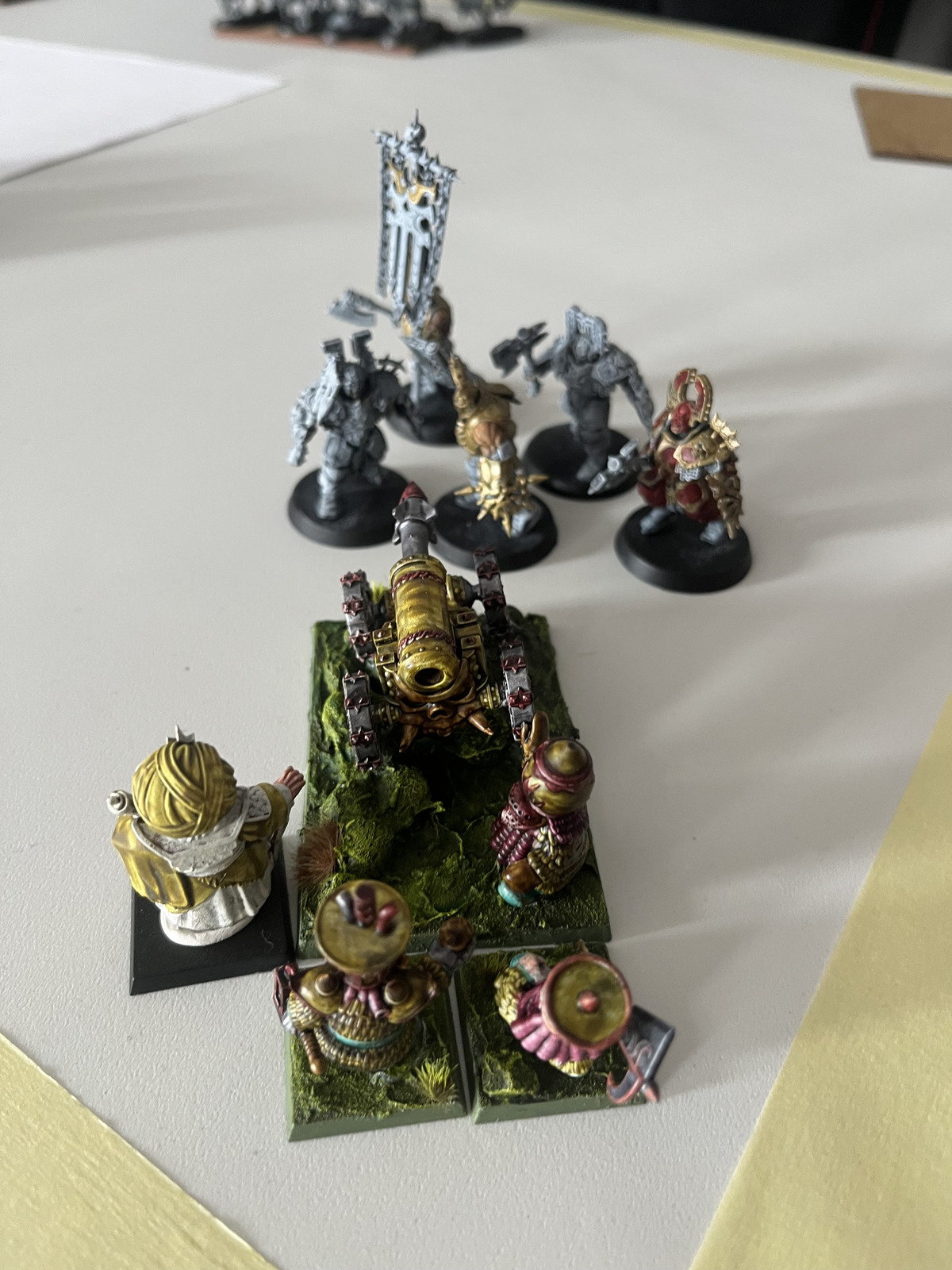
Same with Khorne units needing to be kept on a leash so they do not just auto-charge without your permission. It gives the game that slightly unruly, almost Total War-like energy, where formations matter but so does the fact that some units are absolute maniacs.
And yes — being able to push units around, force Give Ground, and potentially drive things off the table is just plain satisfying.
The result
We ended up with a 5:1 result, although after comparing notes later it probably should have been 4:2.
Why? Because the Chaos Dwarf sorcerer apparently did not actually have line of sight / visibility to the Herald when he cast the spell that killed him. So we are filing that one under academy tax: you learn, you misplay, you fix it next time.
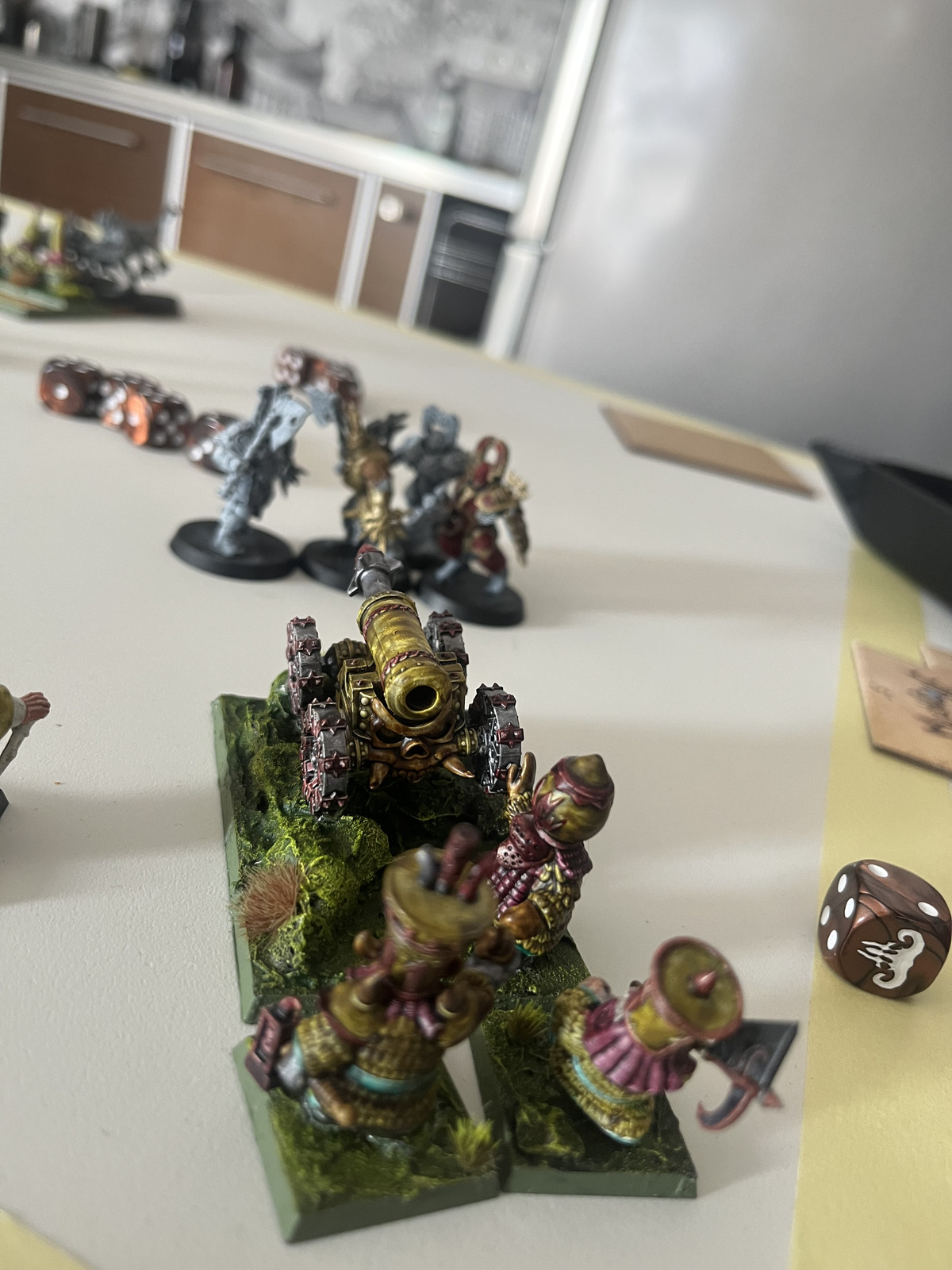
The daemons’ points came from a fleeing unit of Sneaky Gits, who panicked after taking a direct hit from a Deathshrieker fired more or less on instinct. Blind shot, direct impact, immediate chaos. Beautiful.
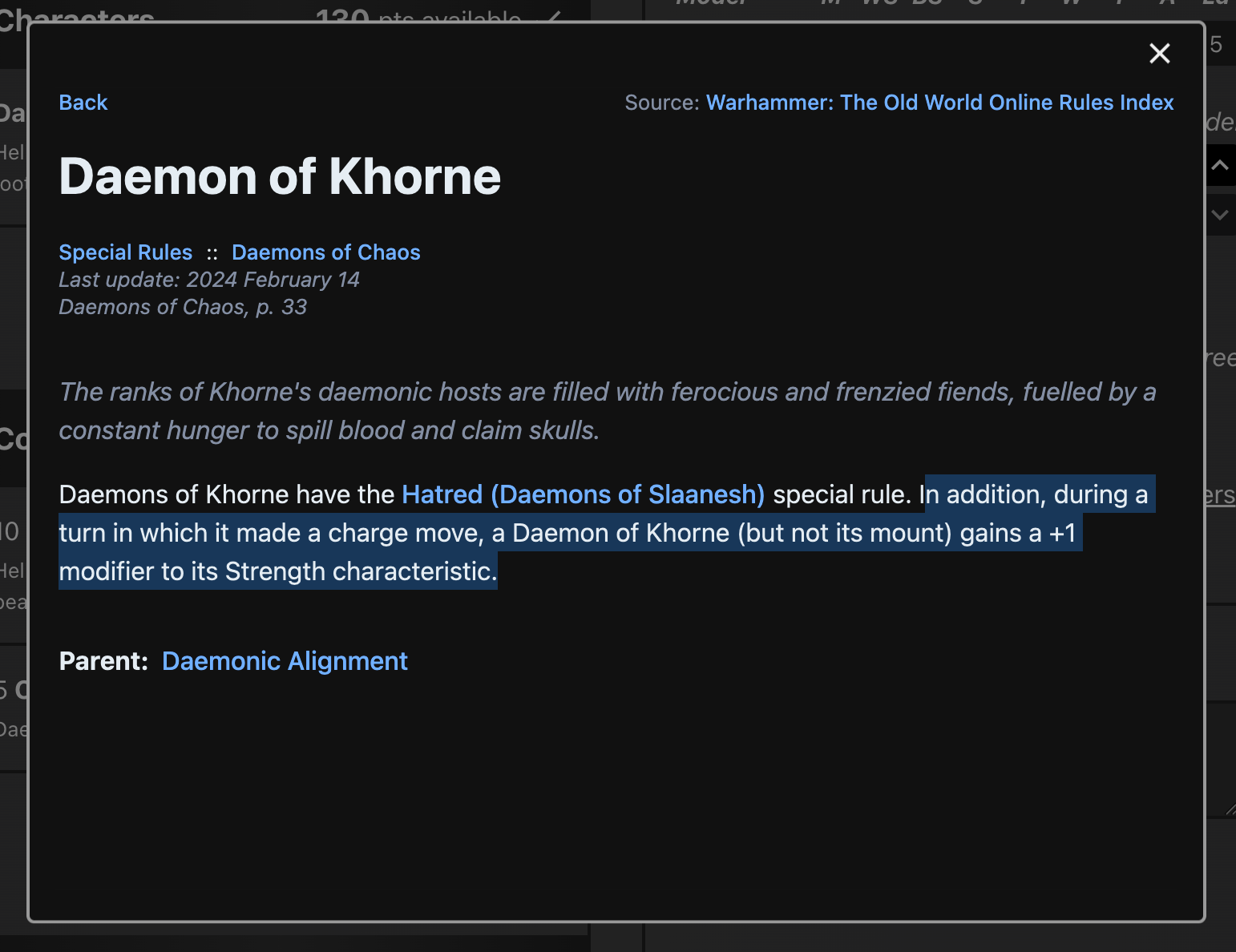
Later on, we also noticed another important Khorne detail: all of Pegie’s daemons had +1 Strength in the turn they charged.
So yes, by the end of the day the score sheet had become a little negotiable. There was even a brief “fine, let’s call it a draw then” energy in the chat after another rules discovery. Which, to be honest, is exactly how these early-learning games should go.
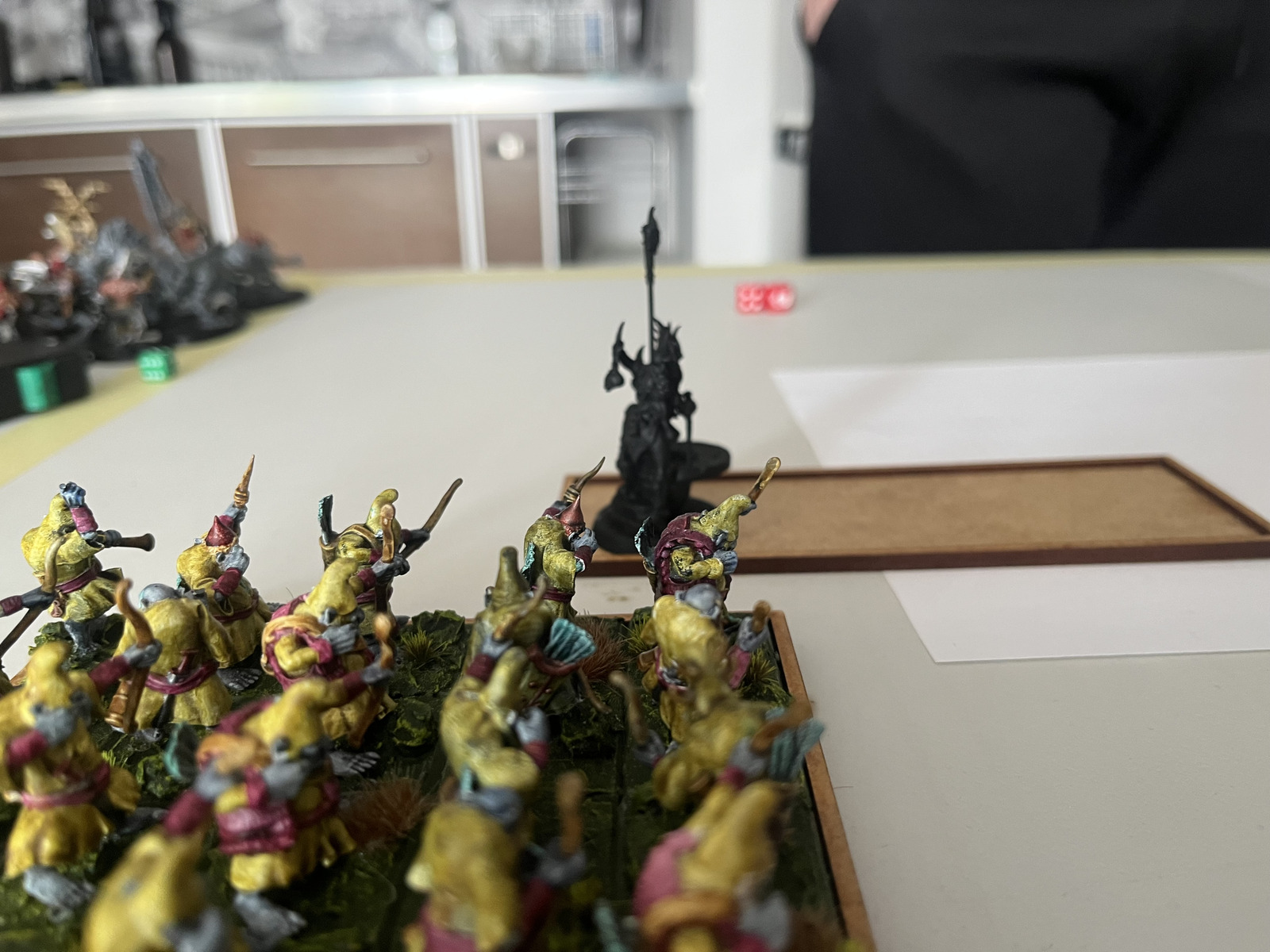
Daemonic Alignments are great
One of the coolest takeaways from this game was discovering how flavorful the Daemonic Alignments are.
From what we worked out after the game:
- Khorne gives +1 Strength on the charge and sometimes Furious Charge, meaning even more attacks
- Nurgle forces the opponent to re-roll 6s in melee
- Slaanesh gives +1 charge range
- Tzeentch gives +1 to casting for casters
That is such a nice design space. Even at a glance, you can already feel how differently those armies want to play.
Rules screenshots and side quests
During the post-game rules archaeology, we also ended up sharing screenshots and clarifications in chat, because of course we did.
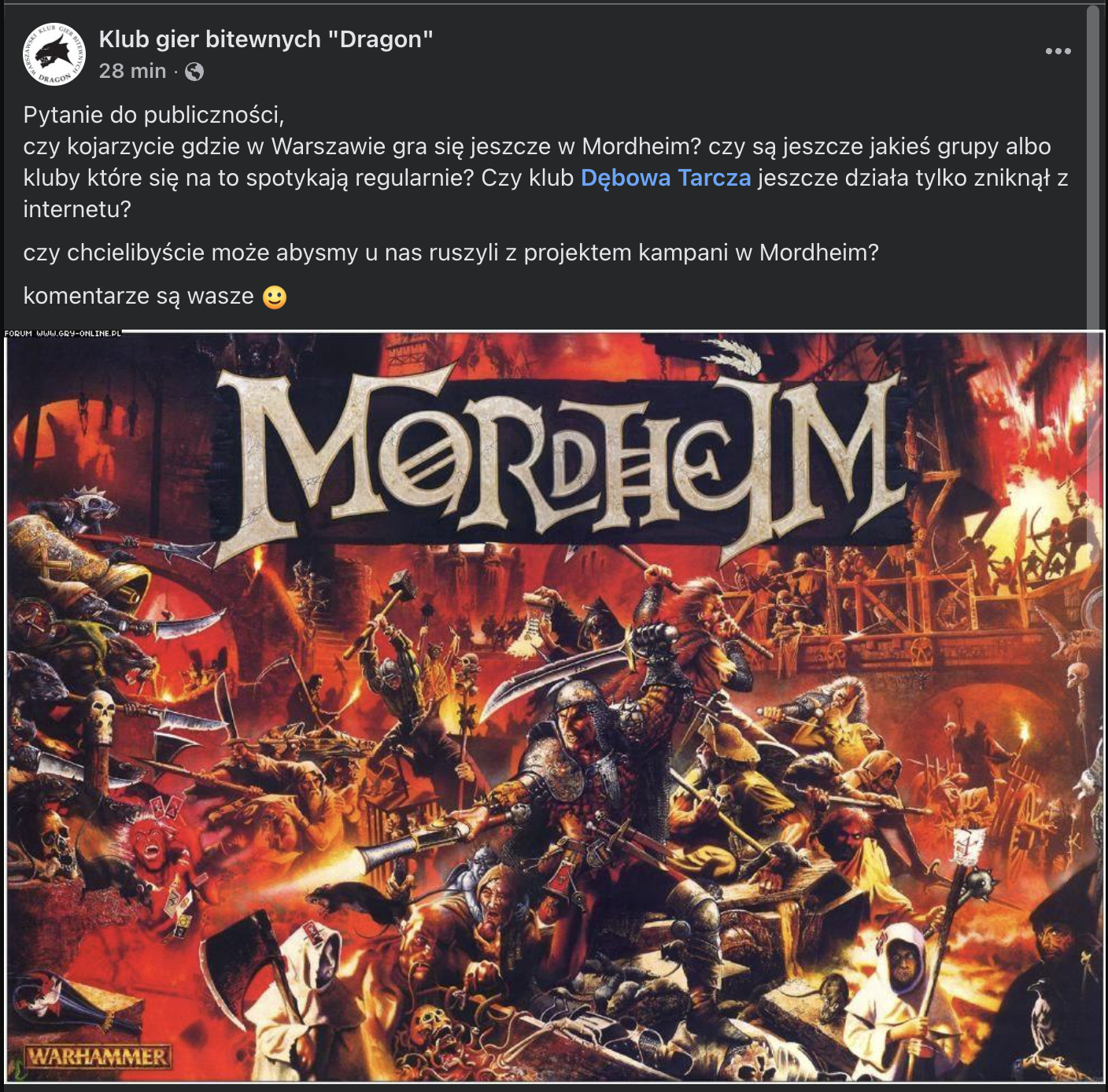
And because hobby life is never just one game system, there was also a side plot: Michał wrote to Dragon asking whether they play Mordheim, and if not, whether they know who does in Warsaw. The very next day, there was already a post about it. Sometimes the hobby gods really do provide.
Final thoughts
Very fun game. Very fun system. Definitely one of those sessions where we came away not just with a result, but with a list of things we now understand much better.
TOW keeps giving us that feeling of big ranked battles with just enough unpredictability to create stories immediately. Misread rules, accidental self-sabotage, daemons getting punted out of reality, artillery panic shots, hidden charge bonuses — all the good stuff.
We are absolutely playing more of this.
If you are also learning The Old World, our recommendation is simple: play small games, accept that the first few battles will involve some archaeology in the rulebook, and enjoy the nonsense.
It is worth it.