Necromunda boards, 3x3 vs 4x4, and the eternal question: will we finish before the pizza arrives?
We recently had one of those very relatable hobby chats: first we were trying to schedule a game, then suddenly we were deep into a discussion about how to set up a Necromunda table so it’s actually fun to play.
And honestly? That’s exactly the kind of hobby tip we like most — the practical kind that comes straight out of real planning, real terrain, and real concerns like “if we start at 17:00, will we still be measuring the first shot at 19:00?”
The plan: Thursday, some terrain, maybe two games side by side
It started simply enough. We were sorting out whether we had terrain available, what time we could meet, and whether we could fit in a second game on the same evening. The rough idea quickly became: one table earlier, another around 19:00, and ideally everyone playing next to each other.
Which, naturally, led us to the next important topic: what kind of board are we actually putting on the table?
Because in Necromunda, that matters a lot.
One of the nice things in Necromunda: declare first, measure later
One bit that immediately came up in the chat was something we really like about Necromunda’s flow: you generally declare what you’re doing first, and only then check the exact range.
That gives the game a very different feel than systems where every millimetre gets inspected before anything happens. It keeps things moving, keeps the tension up, and makes the whole thing feel a little more cinematic.
As we joked, that’s a very different energy from the more exacting side of Kill Team, where moving a building a millimetre to the left can feel like the beginning of a rules dispute.
3x3 or 4x4? Our quick takeaway
The most useful part of the discussion was the comparison between 3x3 and 4x4 Necromunda setups.
3x3 boards
For us, 3x3 sounds like the sweet spot for a quicker game.
End3r pointed out that this is usually the go-to if we want things to move faster. On a smaller board, gangs get into the action sooner, there’s less empty running around, and for a casual evening game that’s a huge plus.
If we’re trying to fit games into a weekday evening, maybe even with a second table running next to it, 3x3 just makes sense.
4x4 boards
A 4x4 board is absolutely playable, and some people prefer it — but it comes with a cost: more space means more early-game movement before anyone really gets to anything.
That can be great if we specifically want a larger battlefield and a more spread-out scenario. But if the goal is a relaxed game night where we actually want to get to the fun bits before late evening, it can feel a bit too roomy.
As summed up in the chat: on 4x4 there can be a lot of running at the start just to reach meaningful positions.
Necromunda tiles are a handy built-in measuring aid
Another neat point: the board in Necromunda is often built from tiles, and those smaller sections can make eyeballing distances much easier.
In our chat, End3r mentioned the little tile grid effectively helping with quick estimation because the sections are in regular increments. That’s genuinely useful in play — especially in a game where terrain is dense and lines of fire can get weird very quickly.
Of course, as also noted: it gets a bit less convenient once you start trying to shoot at awkward angles across the board. Then we’re back to proper measuring and hoping our eyes are better than they really are.
Terrain freedom: the real rule is “make it fun”
Probably our favourite takeaway from the whole exchange was this: in Necromunda, there’s a lot of freedom in how we build the battlefield.
You assemble the map from larger tiles, then place terrain pieces — constructions, containers, crates, platforms, whatever fits the table and the mood. There’s room for a lot of creativity here, and that’s a huge part of the system’s charm.
Even better, the philosophy described in the chat was basically:
the main rule is that it should be fun
And honestly, yes. That’s the energy we want.
Not every table has to be tournament-tight. Not every platform has to be placed with surgical precision. If the board looks cool, creates interesting movement, and gives both sides options, we’re already in a very good place.
Mixing kits works great too
One specific note we liked: Kill Team: Bheta-Decima terrain can work really nicely as platforms in Necromunda.
That’s a great hobby tip in itself. If we already have terrain from other systems, it’s worth looking at it not as “wrong game” scenery, but as extra building material for underhive tables. Industrial kits, walkways, containers, gantries — all of that can slot into Necromunda beautifully.
Example boards from the chat
Below are the example setups that came up during the conversation. They show nicely how dense, vertical, and modular a Necromunda board can be.
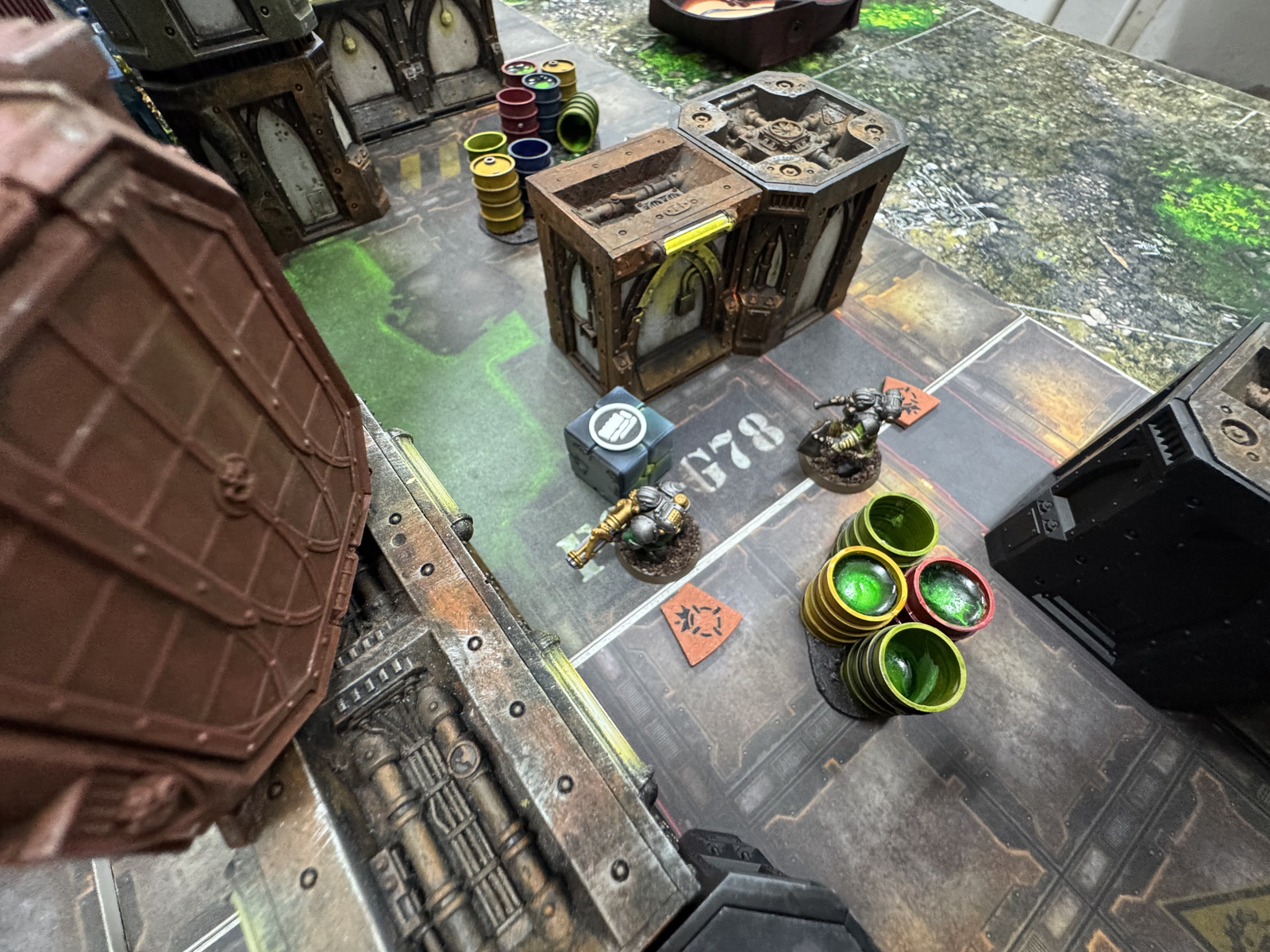
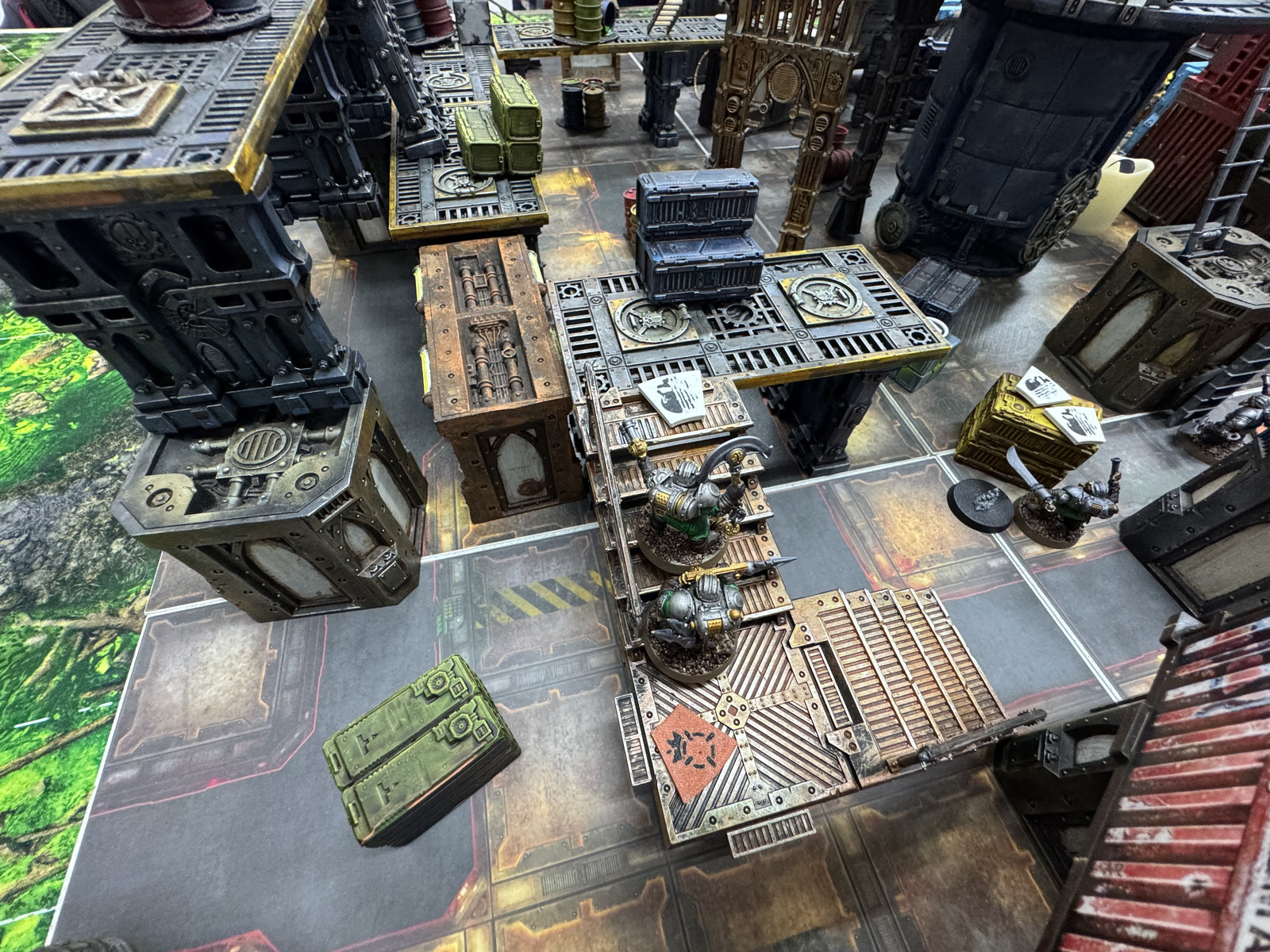
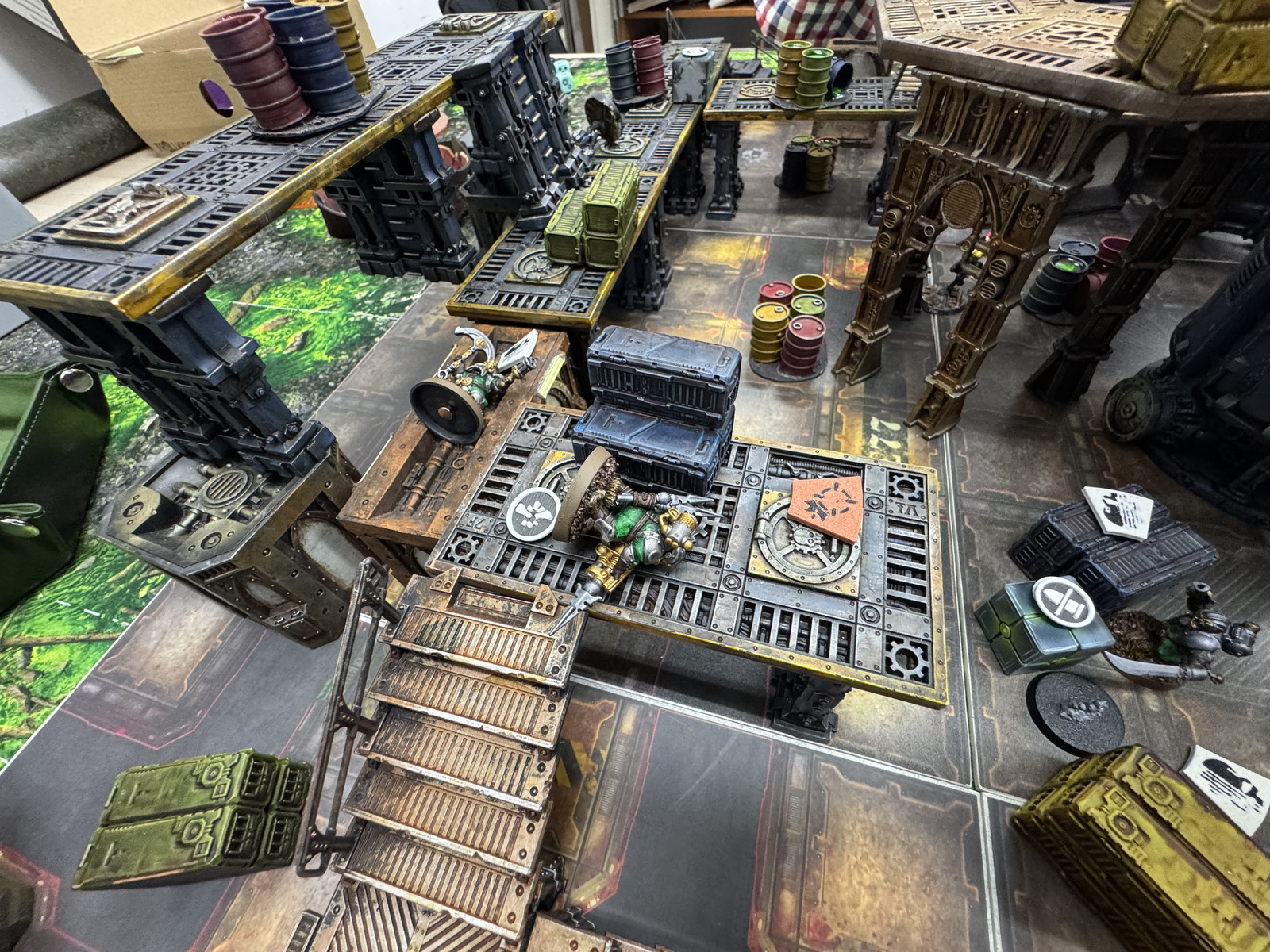
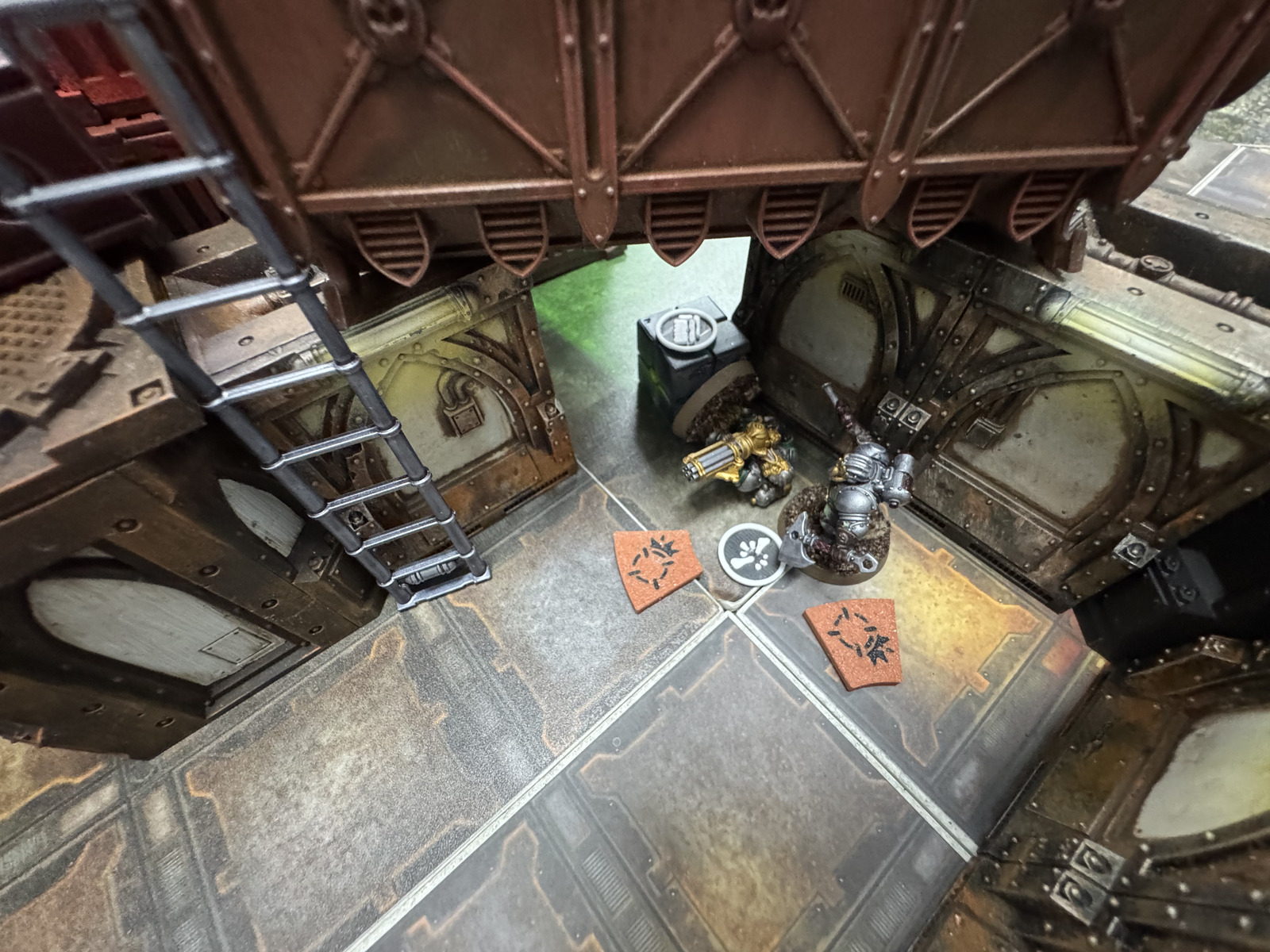
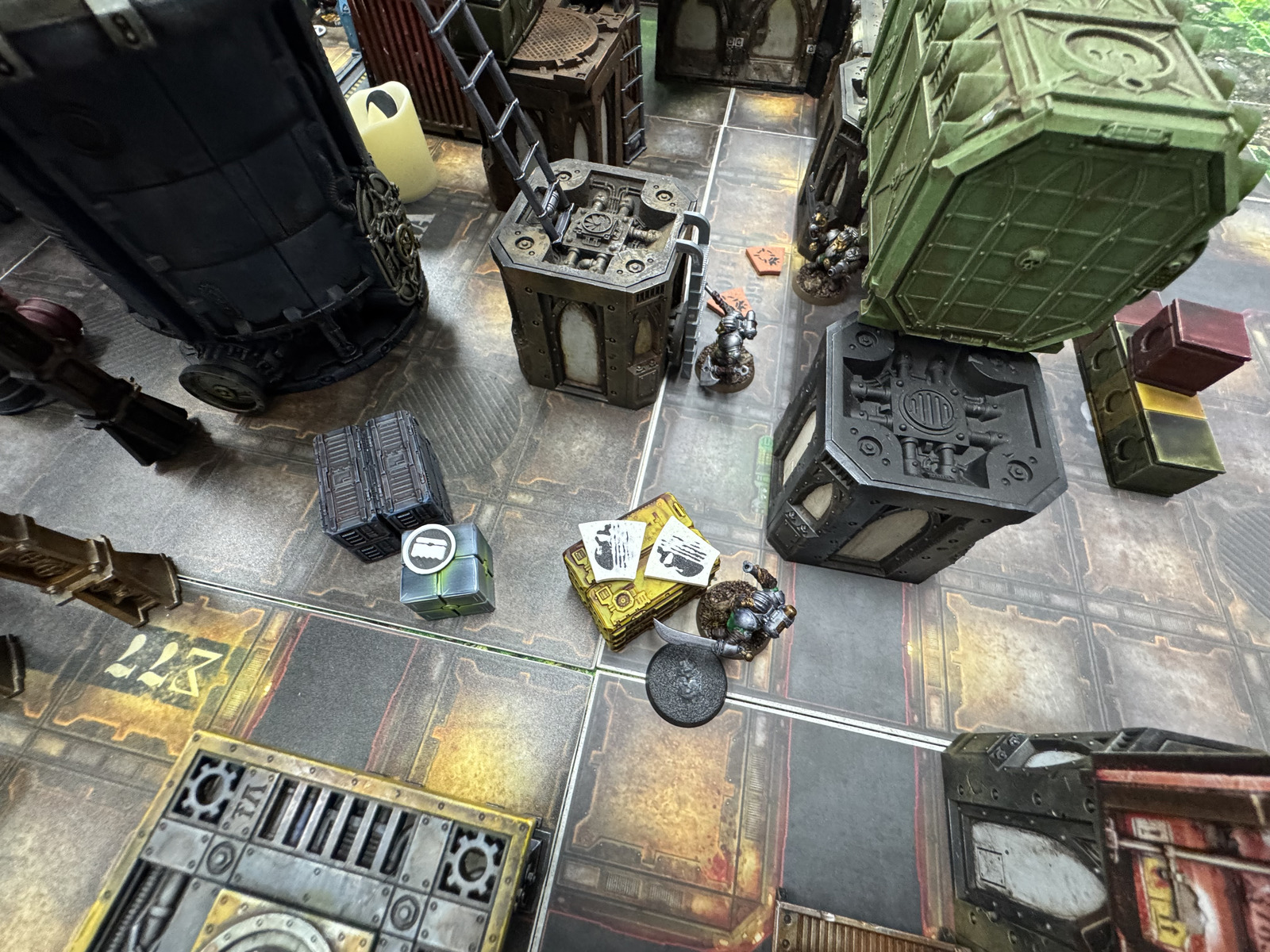
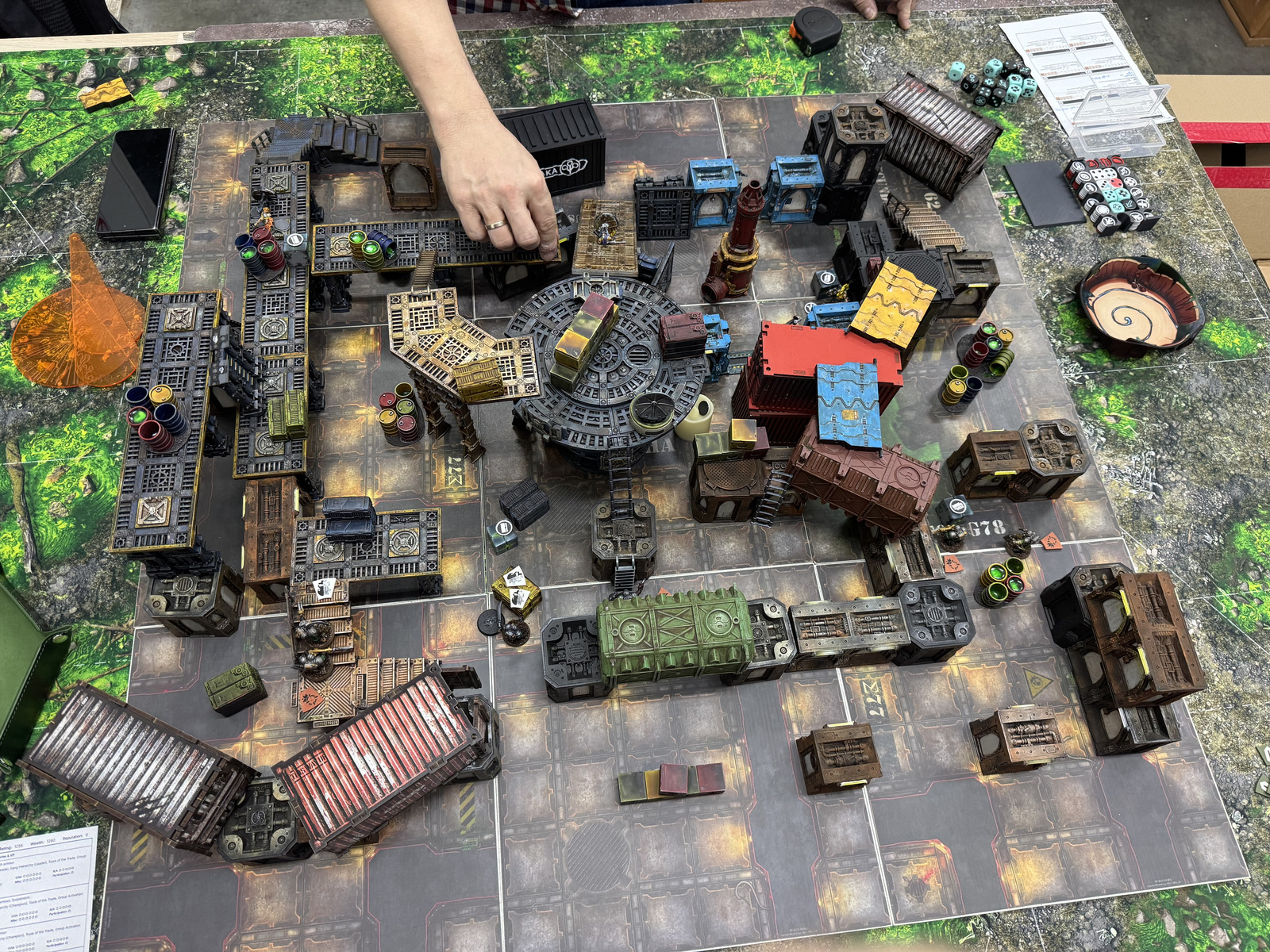
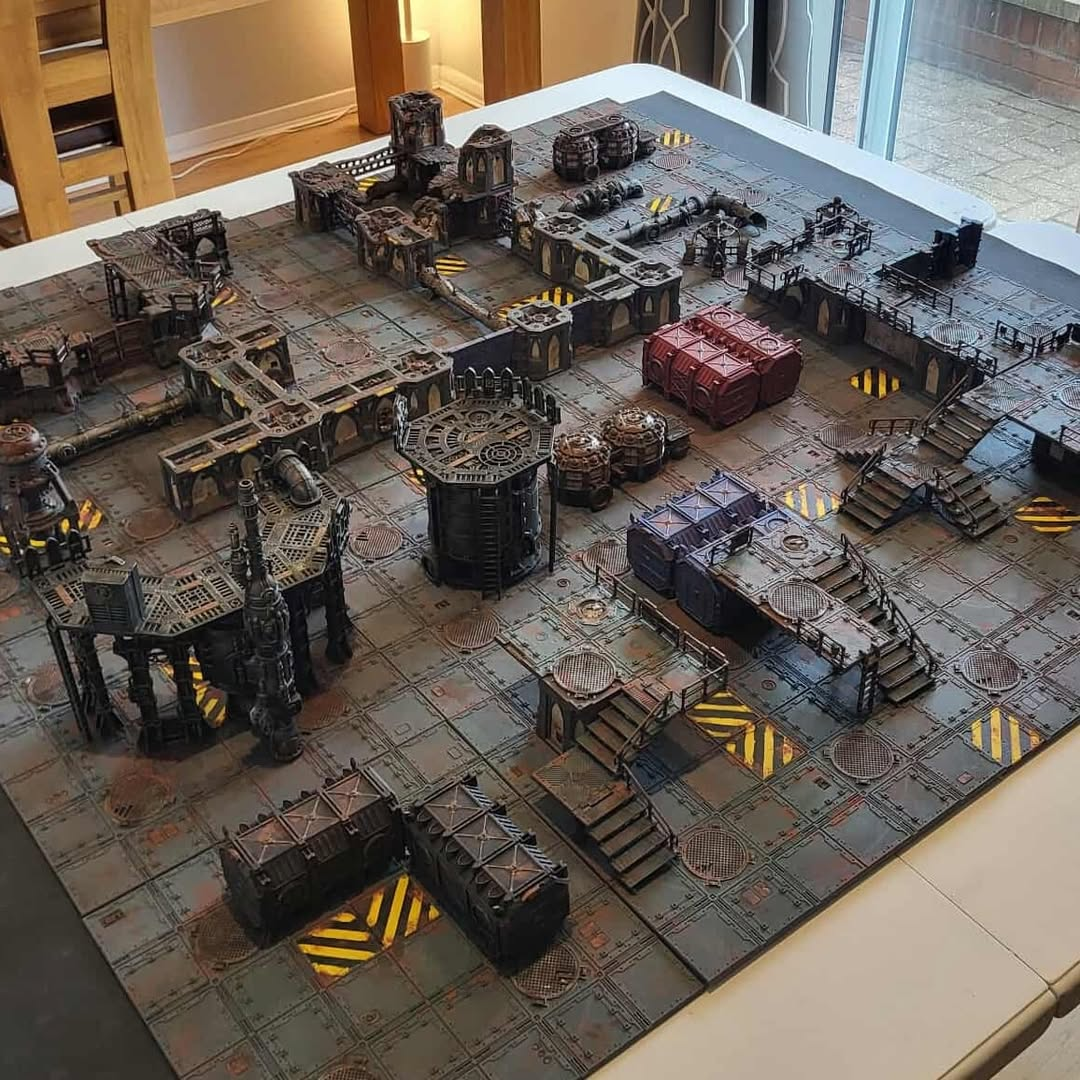
And here’s the larger 4x4 example that sparked the “that’s a lot of running before contact” comment:
Our practical takeaway
If we were to turn this whole conversation into one simple hobby tip, it would be this:
- Use 3x3 if you want a faster, tighter Necromunda game
- Use 4x4 if you want more space and don’t mind a slower opening
- Don’t overthink terrain placement — aim for a cool, playable board
- Mix terrain kits from other games if they fit the vibe
- Remember that “fun first” is a perfectly valid table-building principle
And, maybe most importantly:
- If we schedule for 17:00, we should probably account for at least one extended measuring joke before the first proper volley
We’re very much looking forward to getting a couple of tables running side by side — ideally with good terrain, good company, and pizza arriving at exactly the right moment.
If you’ve got your own preference for 3x3 vs 4x4 in Necromunda, let us know. We’re always curious how other groups balance speed, density, and pure underhive chaos.