King of the Colosseum: our first step from Combat Patrol into full Warhammer 40k
Sometimes a format lands at exactly the right moment in a hobby journey. That was very much the case for us with King of the Colosseum.
End3r jumped into an intro game yesterday and came out of it with what felt like the perfect bridge between Combat Patrol and “proper” Warhammer 40,000. Same universe, same models, sometimes even the same weapon profiles — but suddenly with a lot more of the real 40k texture: detachments, enhancements, more weapons, more interactions, more stratagems, and actual army building with points.
For someone who started with Combat Patrol, this sounded like exactly the right next step.
So what actually changes compared to Combat Patrol?
The big takeaway from the game was that Colosseum still uses normal 40k rules, with only a few format-specific tweaks. The detachments are not some special house-made mini version — they are regular 40k detachments.
In End3r’s case, that meant looking at the normal Salamanders options and picking Firestorm Assault Force, which gives that very Salamanders-flavoured ability to advance and still shoot.
He also had 485 points in models and rounded the list out with a 15-point Enhancement, Forged in Battle, which lets him turn one hit roll into a critical once per turn.
That alone already shows the difference in feel. In Combat Patrol, the box defines pretty much everything for you. Here, the models may be familiar, but the list starts becoming yours.
Right after the game, the conclusion was simple: before Tuesday, there is some homework to do — Wahapedia, detachment rules, unit rules, stratagems, all that good stuff.
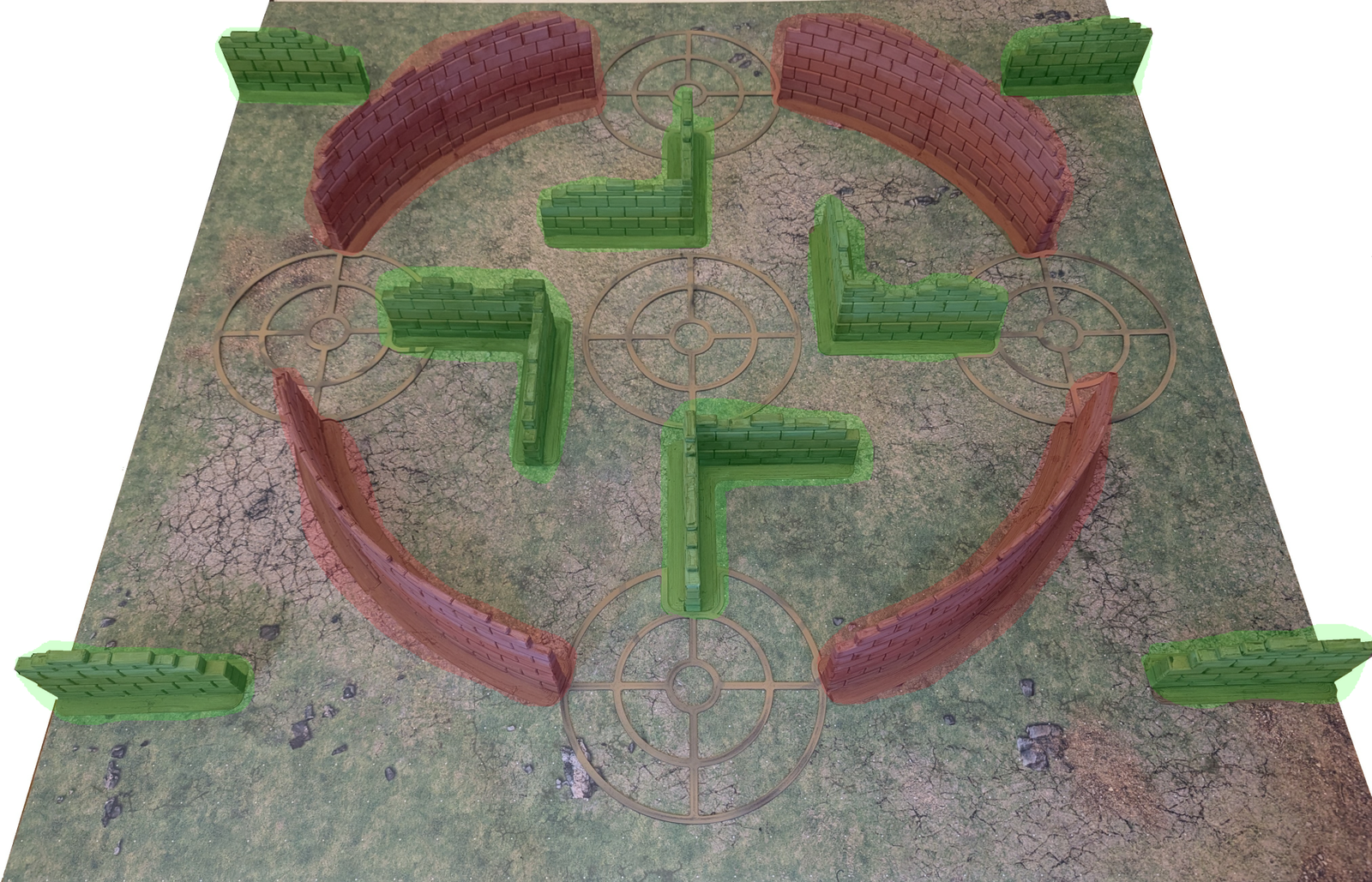
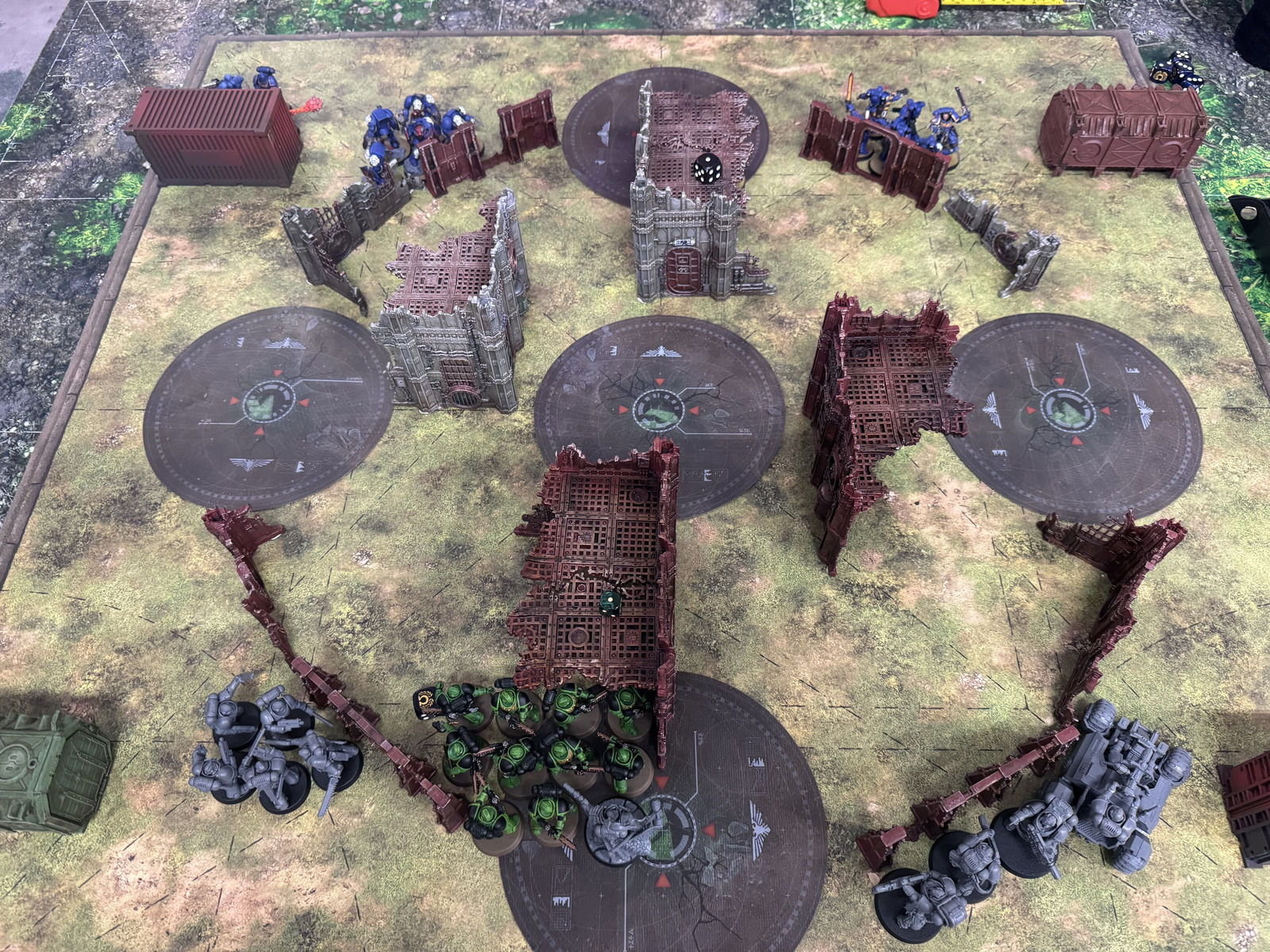
The Colosseum board itself
The format has its own board layout, with inner and outer rings, but beyond that it still feels very recognisably like 40k. Missions are also built from familiar 10th edition ingredients, but with some twists: one mission element is picked by the first player from an available list, and another is chosen by the opponent.
So you get combinations like a classic objective-holding setup such as Take And Hold, mixed with a modifier like Ruinescape, where terrain no longer blocks movement for vehicles.
That sounds like a small thing on paper, but it changes how you look at the table immediately.
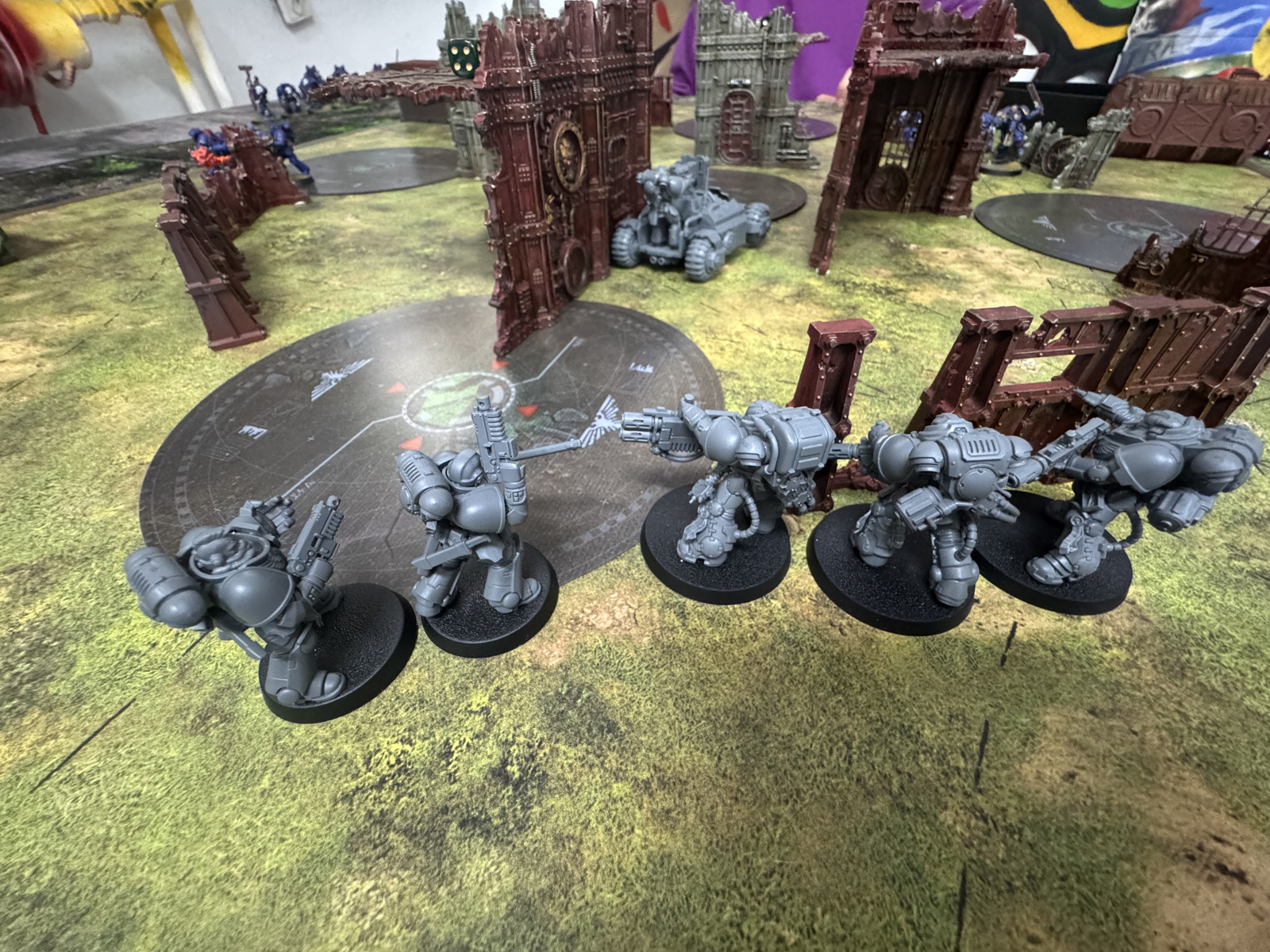
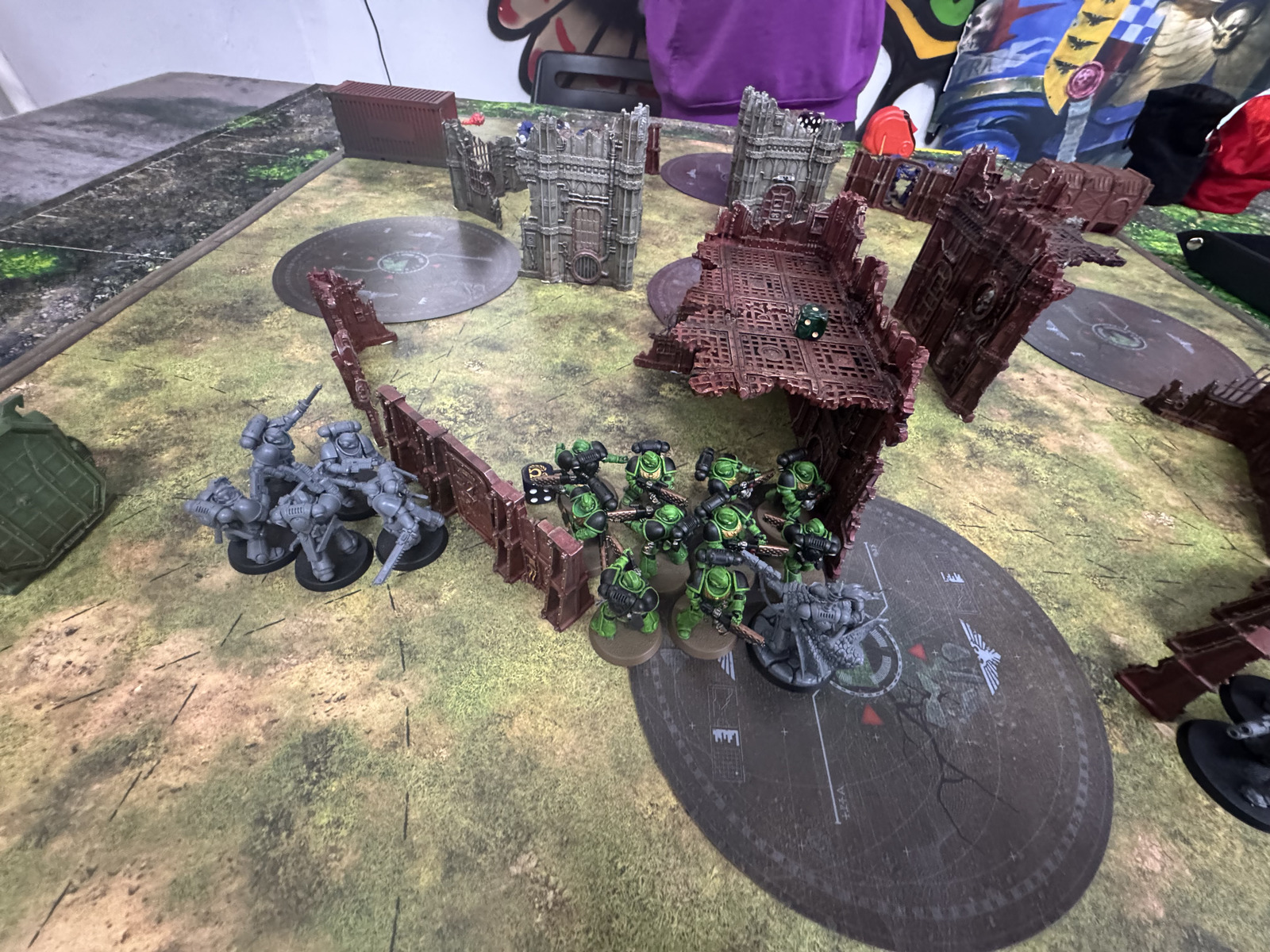
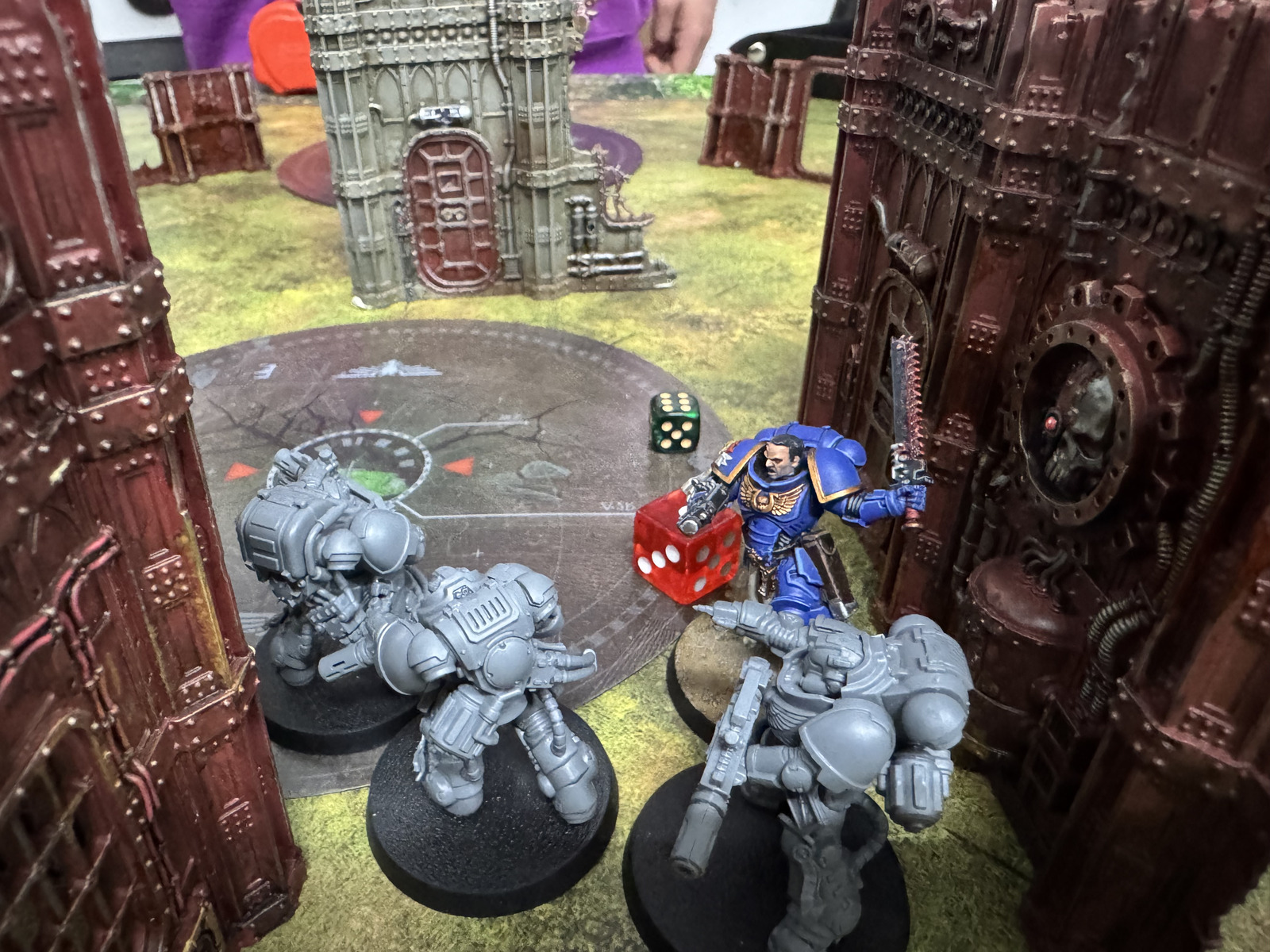
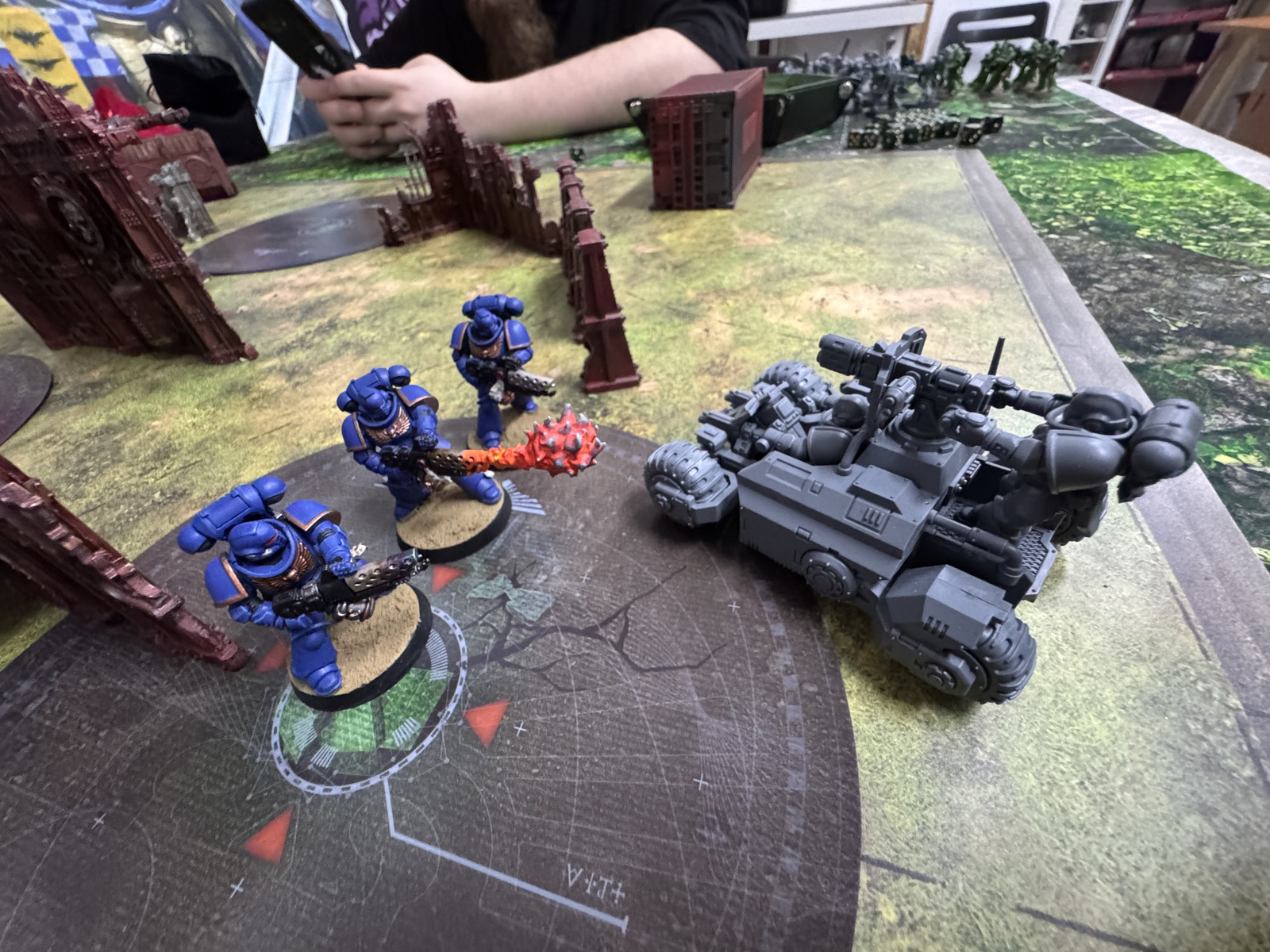
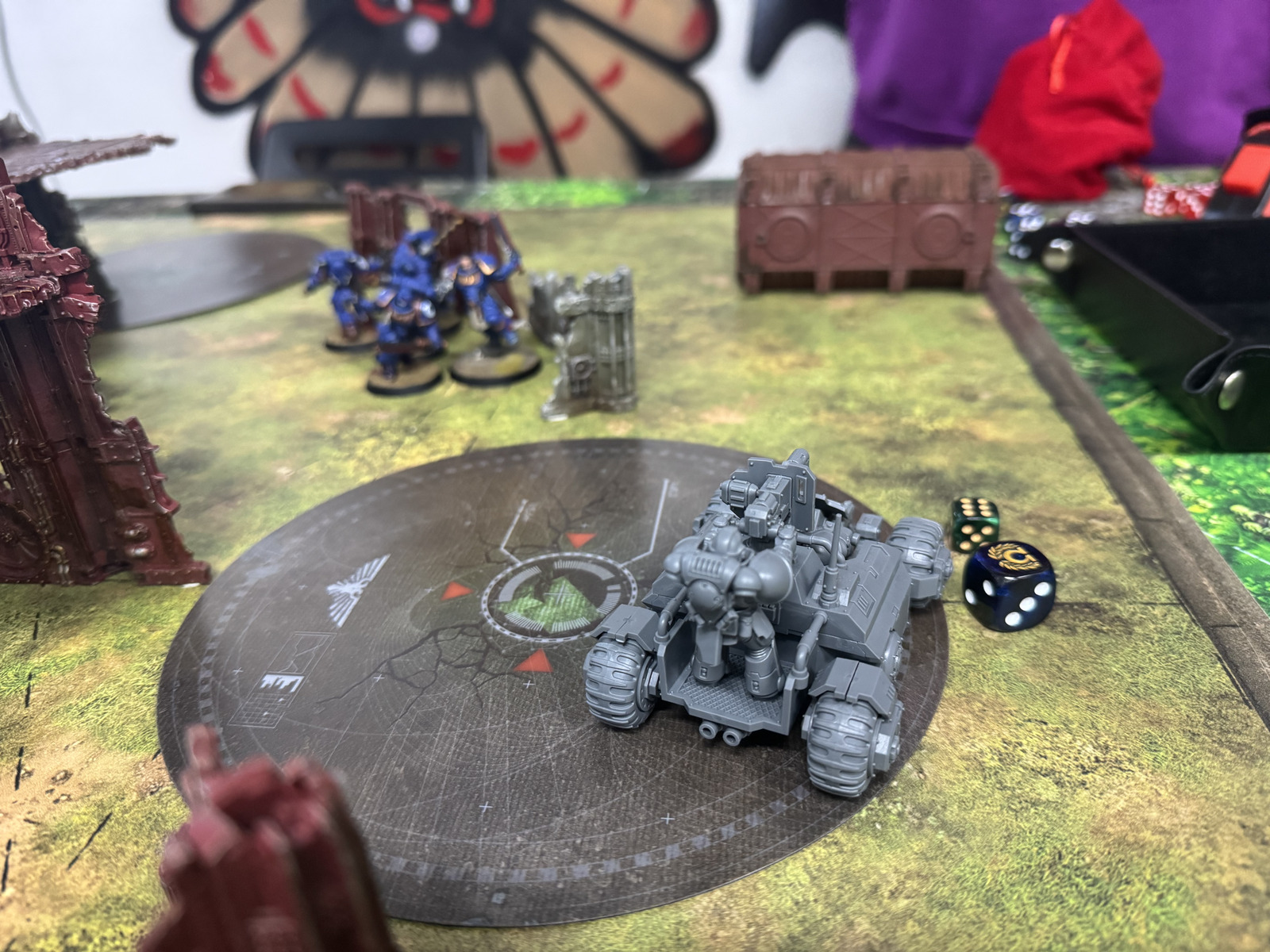
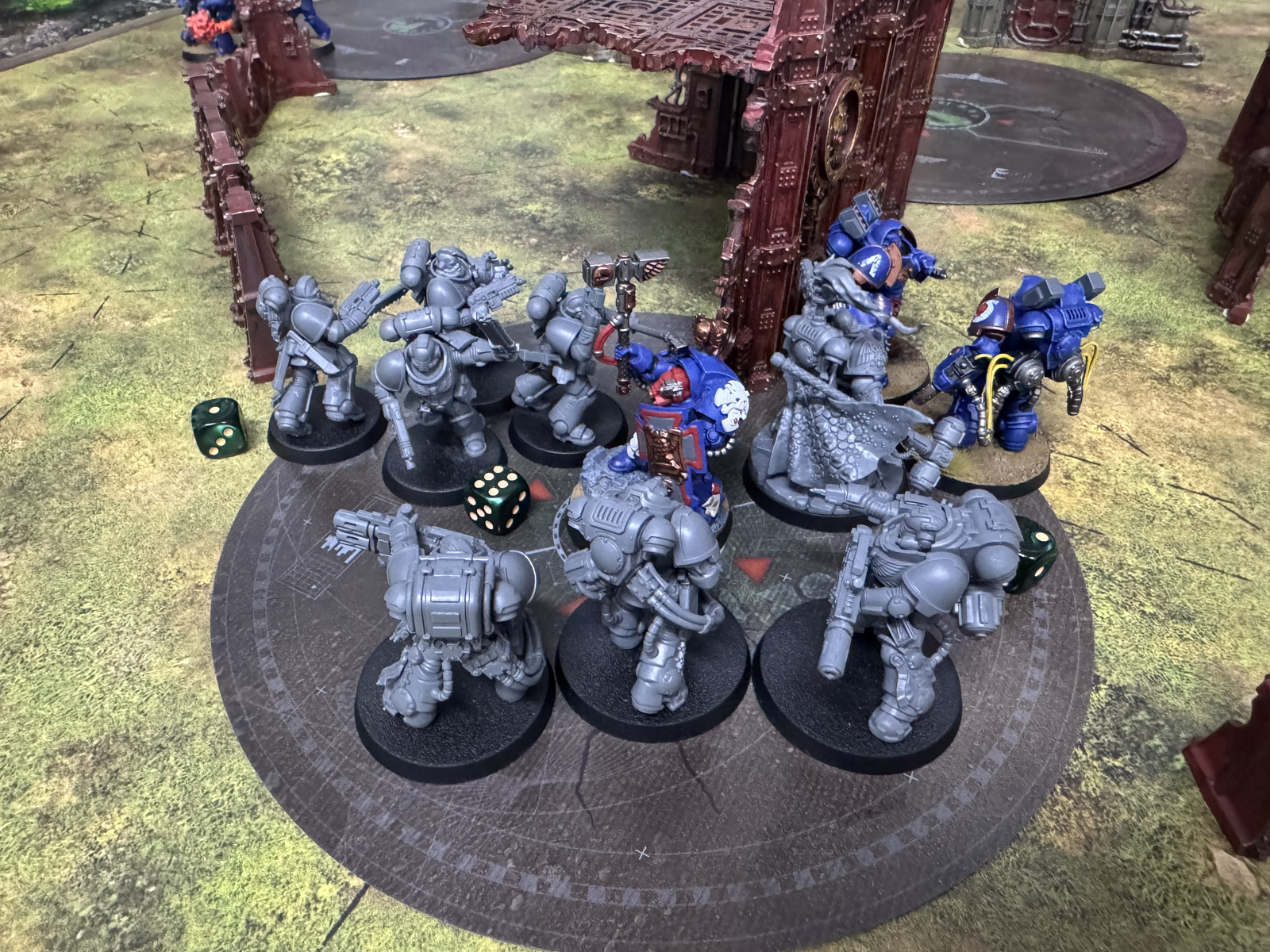
We also got a good look at the Colosseum terrain setup in action.
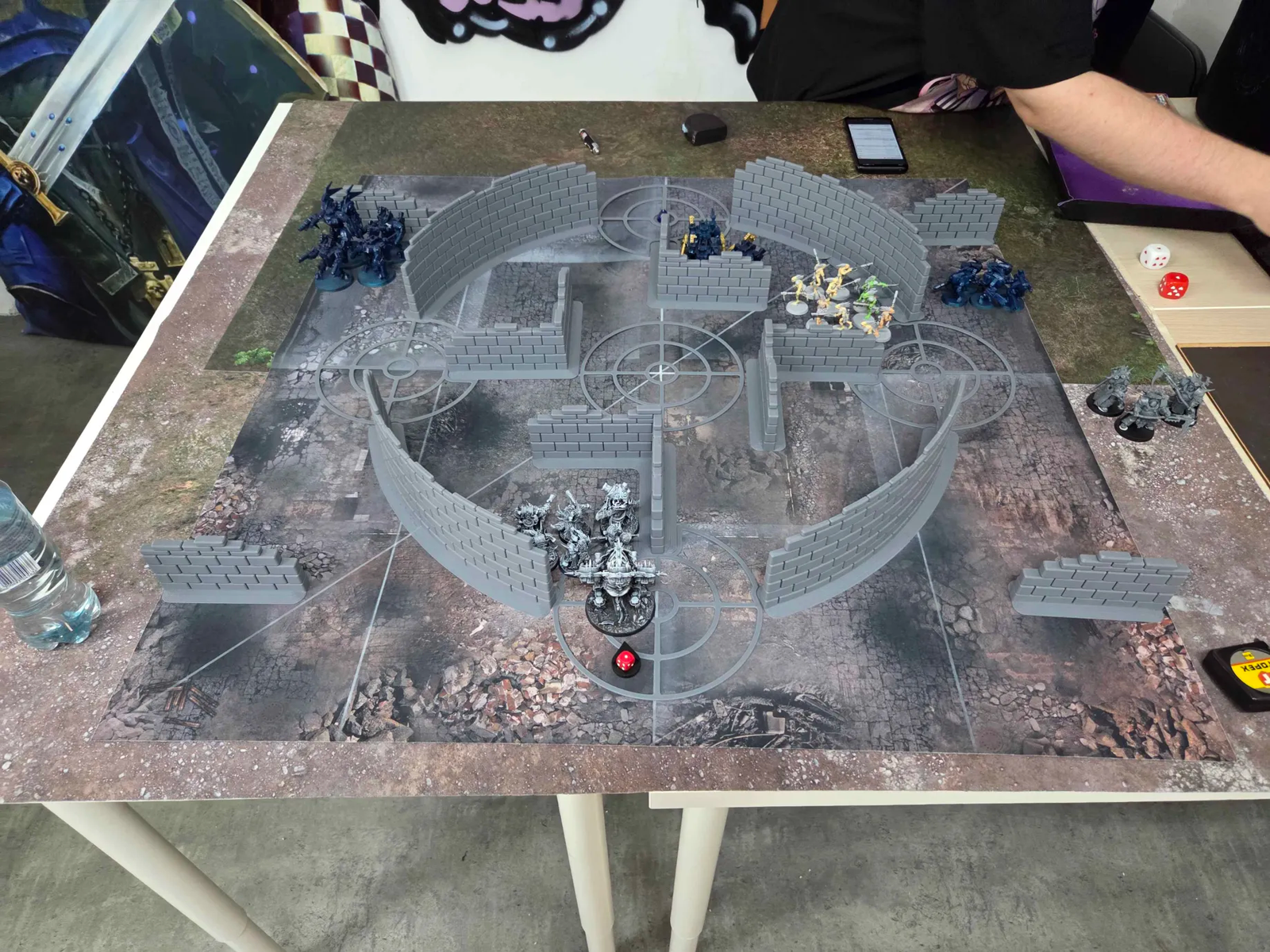
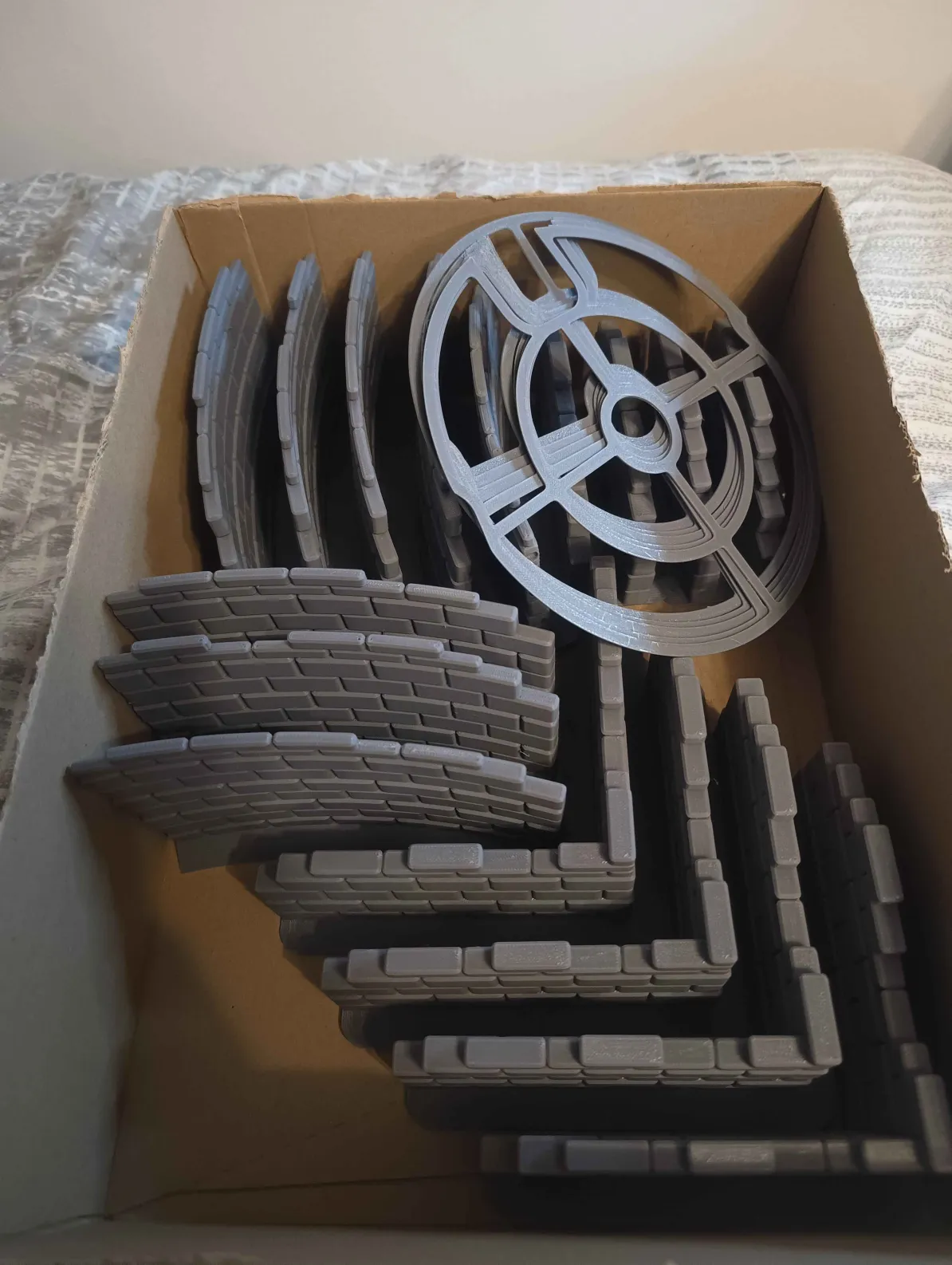
And since terrain always matters, it was worth noting that some of the photos from the game used Volkus Kill Team terrain and containers, while the “proper” league table was set up on the other board.
The game: Salamanders vs Ultramarines
The actual match sounded like exactly what we want from an intro game.
End3r brought Salamanders, the opponent had Ultramarines, and by all accounts it was neither one-sided nor bogged down. The opponent helped with rules along the way, there was proper back and forth, and the game stayed smooth and fun all the way to the end.
In the end, Ultramarines took it with their last remaining unit in turn 5. Final scenario score: 30:35, which End3r immediately translated into league language as a likely 9:11.
Honestly? For a first step beyond Combat Patrol, that sounds excellent.
The hero of the day: the ATV that refused to die
Every battle report needs that one moment — the ridiculous, cinematic, statistically silly thing that everyone remembers afterwards.
This game absolutely had one.
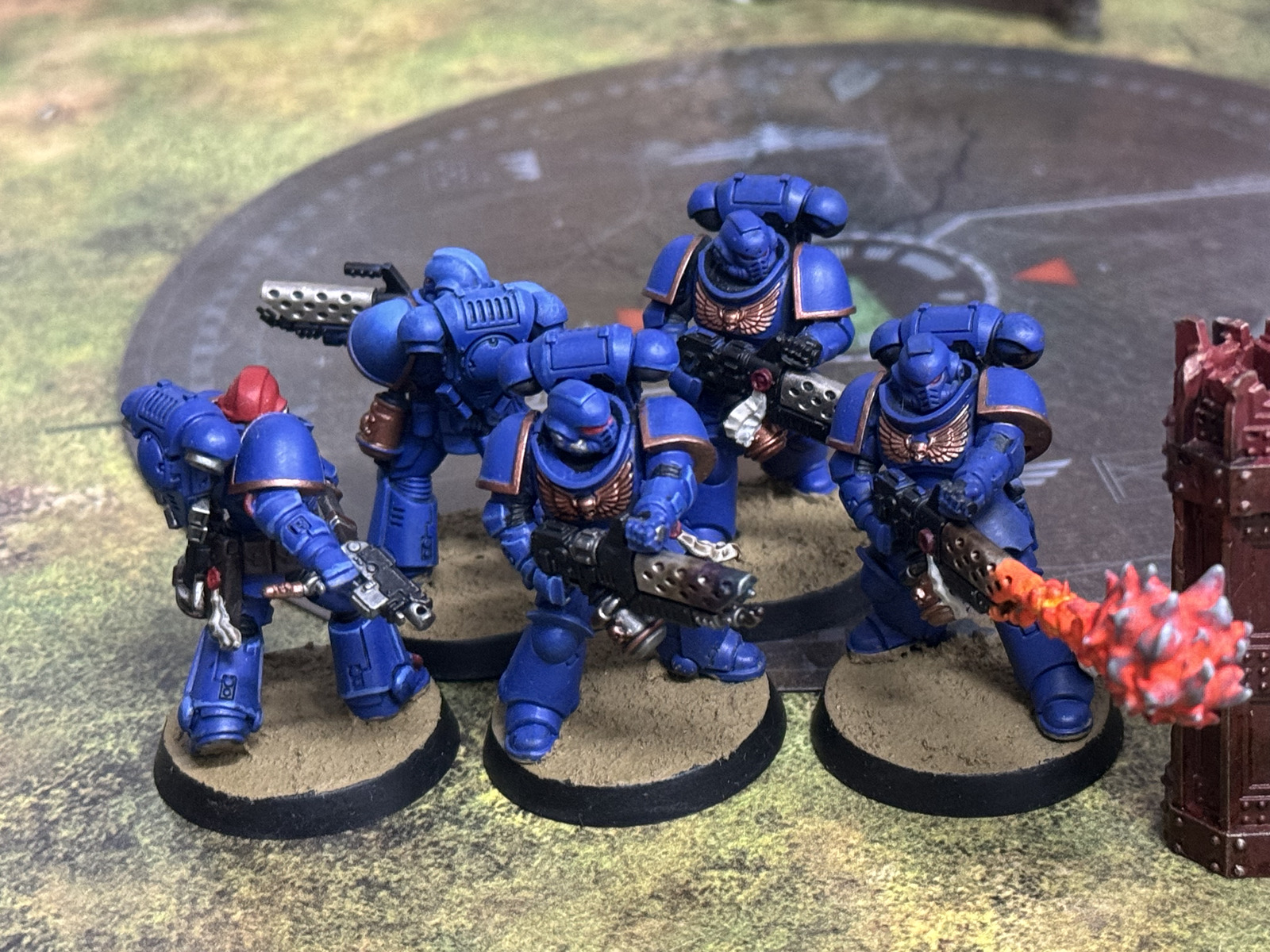
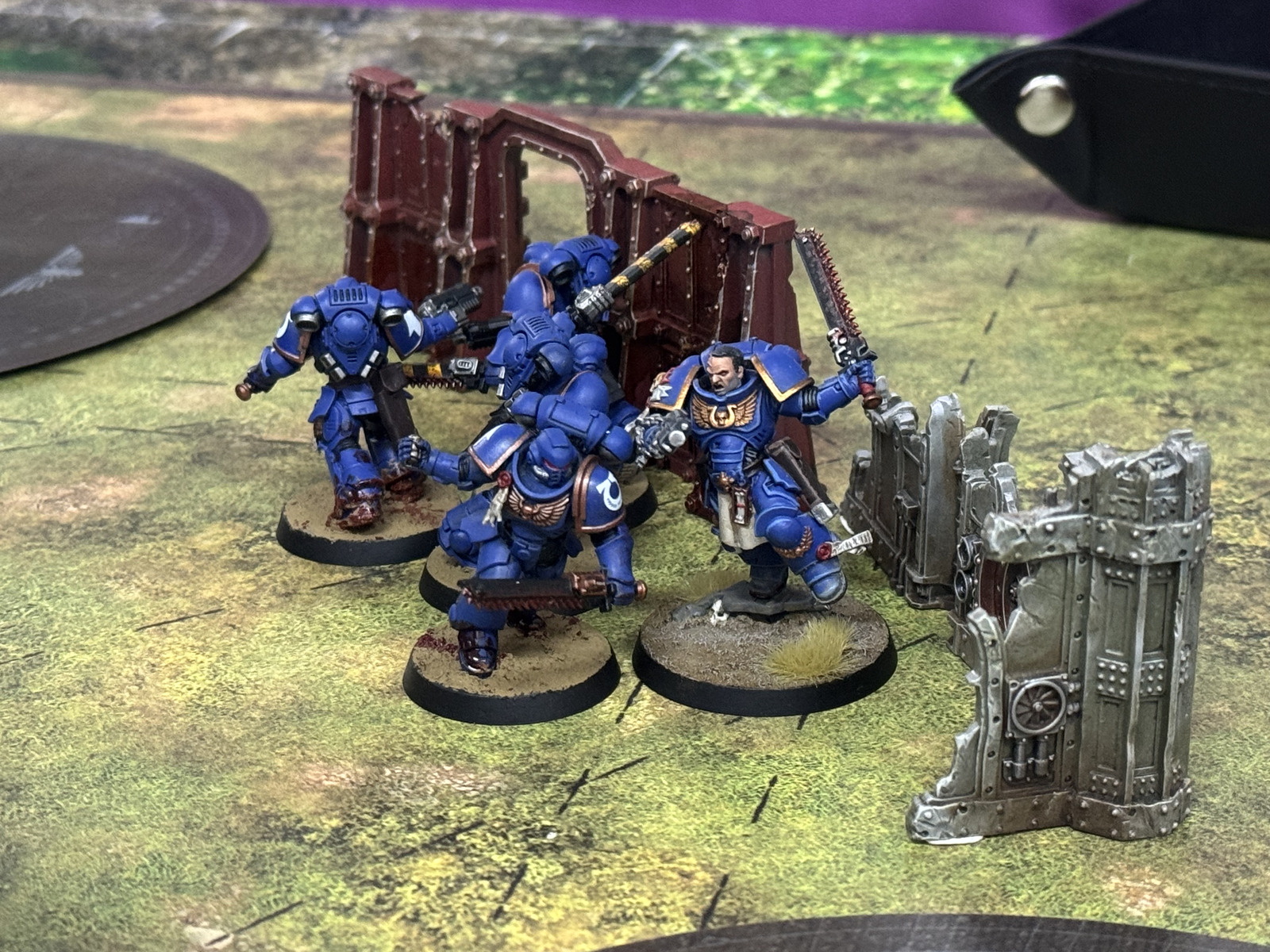
At one point, enemy Intercessors charged End3r’s ATV. Chainswords in melee, lots of attacks, and the ATV was sitting on just 2 wounds. The opponent got 11 attacks through. We all know the feeling at that point: you laugh, pick up the dice mostly out of duty, and assume the model is dead.
The math was brutal. To survive, the ATV would need to save 10 out of 11 attacks on 4+.
So naturally, it did.
That is exactly the kind of nonsense that makes tabletop games magical.
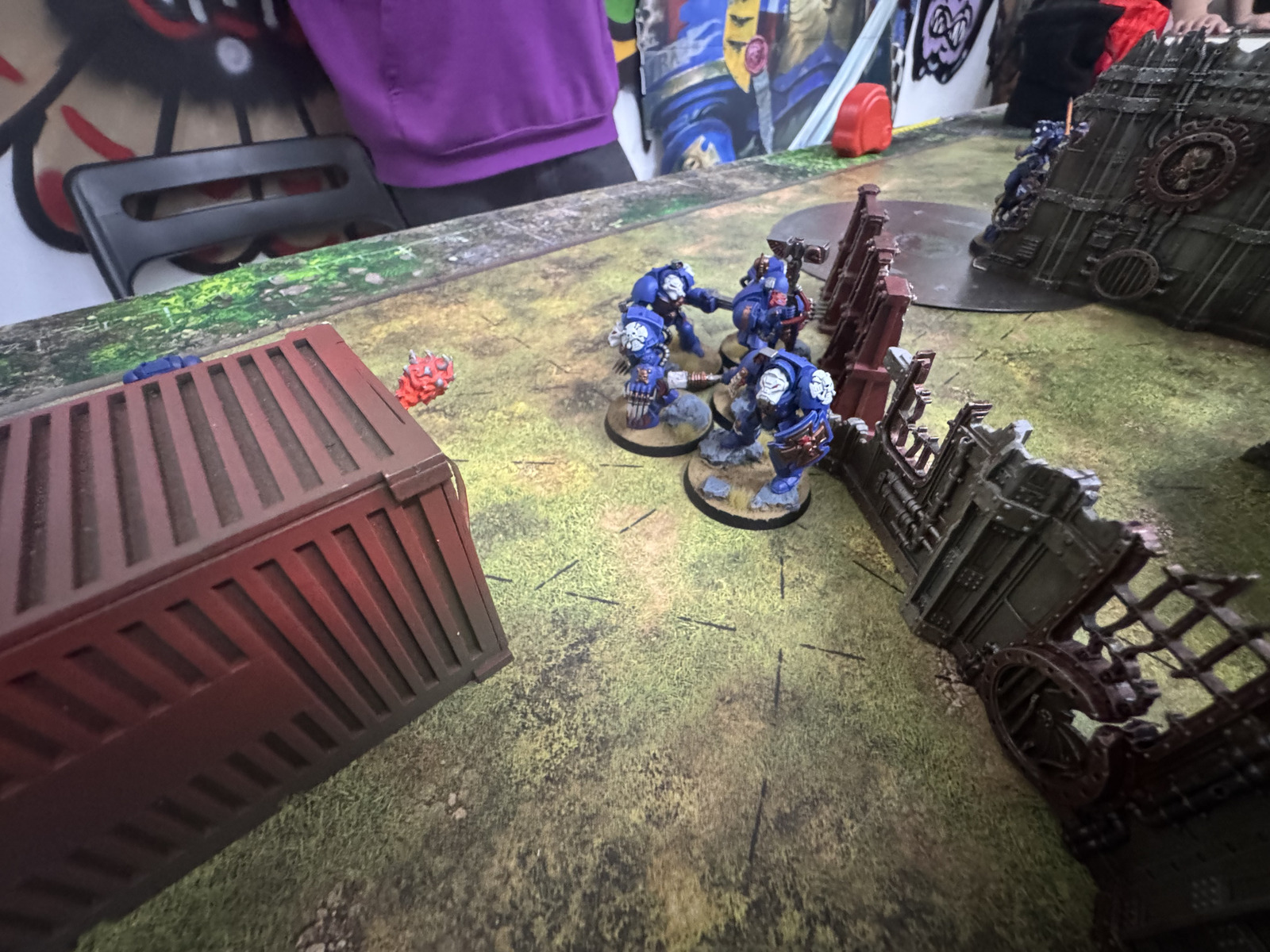
And because the story was not absurd enough yet, the ATV then went on to delete an entire Terminator squad — yes, the walking tanks — and scored 10 VP by the end of the match.
Absolute legend behaviour.
Photo dump from the game
We got a whole set of photos from the intro match, so here they all are — because if we are writing a battle report, we are absolutely showing the battlefield from every angle we have.
Why this format feels so promising
The conversation afterwards was maybe even more interesting than the game itself.
We ended up talking about how Combat Patrol and Spearhead both solve a real problem: they make entry into a big game much easier. Buy one box, get simplified weapon profiles, simplified stratagems, fewer moving parts, and just start playing.
For End3r, that accessibility is exactly why he got into Age of Sigmar and 40k in the first place. Without Spearhead or Combat Patrol, the jump into the full systems would have been much harder.
At the same time, several of us get why people eventually want more. Full 40k detachments give armies a stronger identity, and some factions just feel better once they can use the broader toolbox from the main game.
That is why Colosseum sounds so good: it keeps the game manageable, but starts layering in the “real” 40k decisions.
For End3r, 2,000-point games are still too much to comfortably process right now, but 500-ish points with real 40k rules? That is a sweet spot.
What comes next?
The obvious next step is more reading, more reps, and probably more Salamanders.
There was also some joking-but-not-really-joking talk that if a 1,000-point option shows up, Salamanders may get expanded before the Votann pile is fully assembled. Then again, why choose just one project when the shelf can support at least two?
And of course, in the background there is the eternal side quest of other systems calling to us. There was some chat about Age of Sigmar, hopes for AoS 5, and the fact that 2,000 points of Kharadron Overlords are very much waiting for their moment.
Meanwhile, Kill Team got its usual honourable mention as the game that is very easy to enter from a model-count perspective, even if some of its rules can still be… character-building.
Bonus hobby chaos from the same day
Because no chat thread in our group ever stays on one topic for long, the same conversation also gave us a few extra snapshots from the wider hobby day.
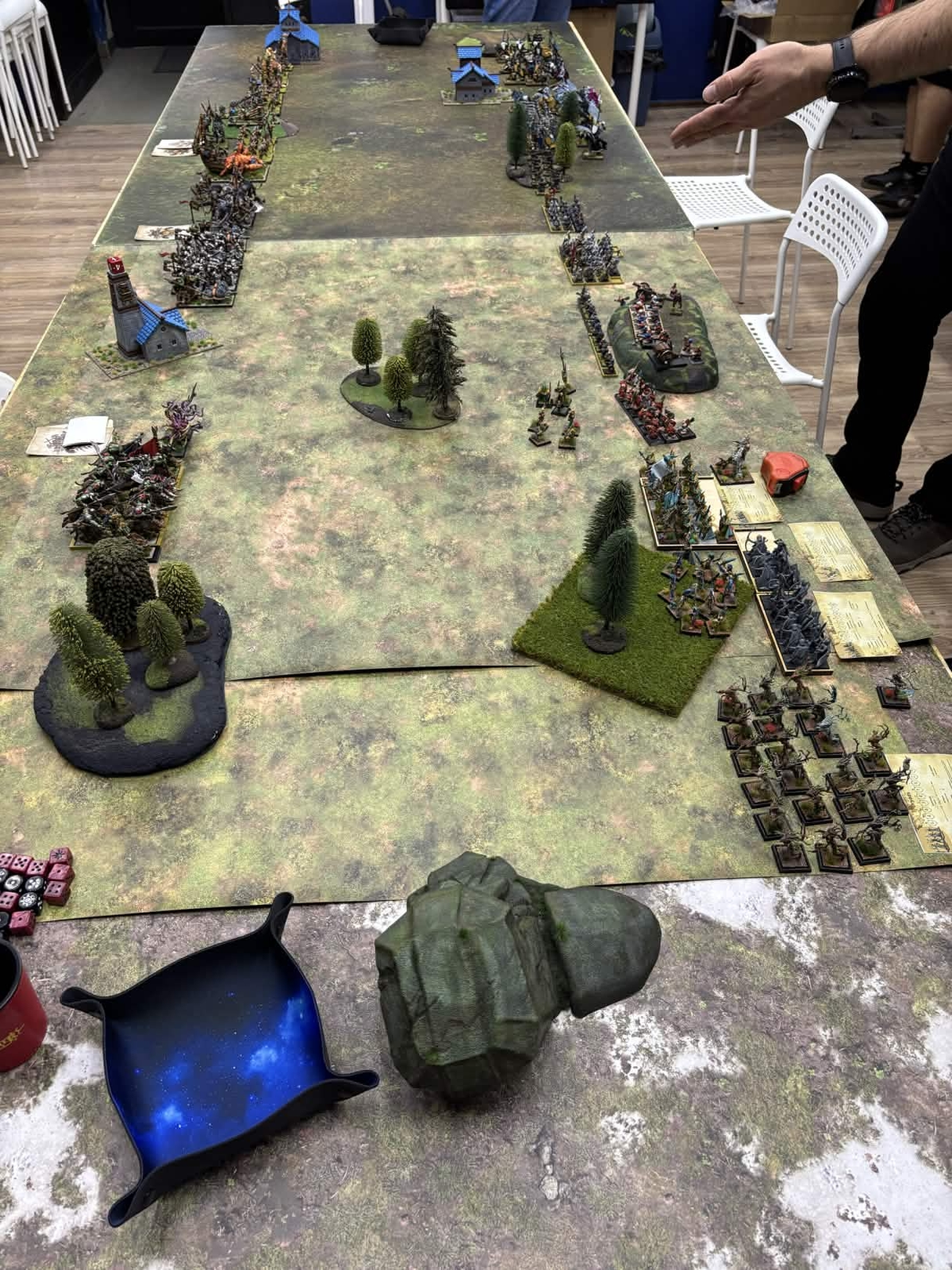
First, apparently 12,000 points hit the table somewhere else: 6k good vs 6k evil. Casual.
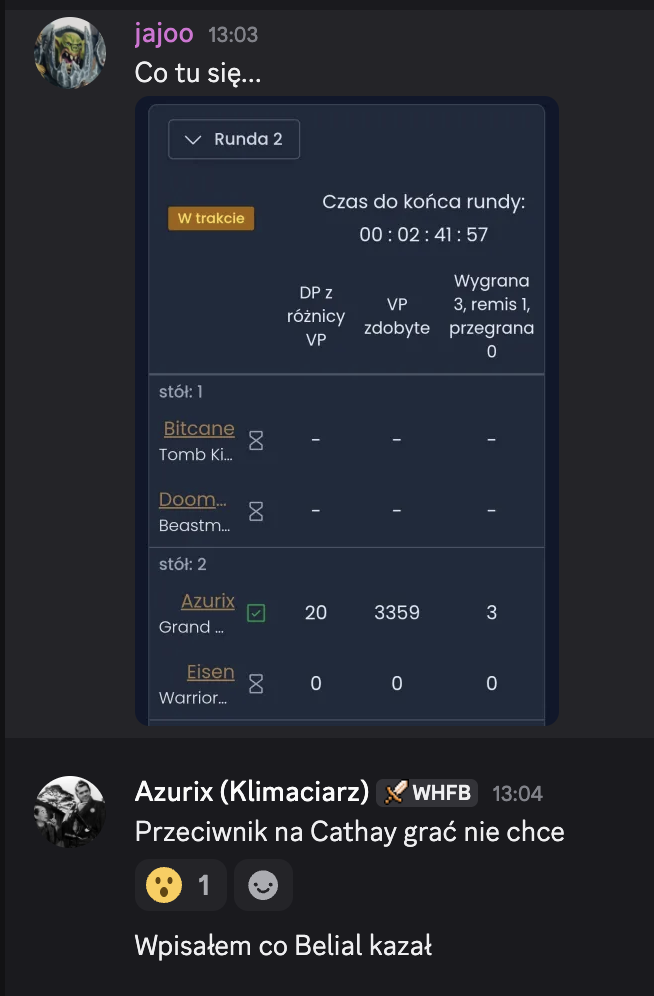
Then there was tournament drama.
And finally, a note about TSN Arena introducing new house rules where any infantry can score objectives, not just Core.

There was also a link dropped in the discussion as part of that side conversation, so for completeness, here it is too.
Final thoughts
What we liked most about this report is that it did not sound like a scary first contact with “big 40k”. It sounded like a fun, close game with just enough extra complexity to feel exciting.
That is probably the best endorsement Colosseum could get.
You still get the familiar models. You still get a manageable game size. But now the army starts to become your army, with your detachment, your enhancement choices, your mission reads, and your glorious ATV miracle stories.
And really, if a tiny vehicle survives the impossible, murders Terminators, and swings 10 VP by the end of the game, that is exactly the kind of nonsense that convinces us to come back for round two.