AI Cardboard Armies for The Old World: Our First Method for Mass Ranks
We’ve been chatting lately about a very specific hobby problem: how do we get big ranked armies on the table fast without immediately committing to painting a mountain of infantry?
And honestly, the answer that started emerging was: cardboard stand-ins, but done properly.
What began as Stas asking “so, how do we approach this methodically?” quickly turned into a really fun little workflow for building AI-assisted paper/card army blocks for Warhammer: The Old World. The idea is simple: instead of treating every single model as a separate project, we think in terms of movement tray footprints, unit density, and a small number of repeating visual variants.
For us, that’s the interesting bit — not just “make paper minis”, but make them in a way that actually helps test armies, visualize mass battle formations, and see whether a concept even works before spending loads of time and money.
Starting from the unit footprint
Stas kicked it off with a very practical example: let’s say we want a block of 90 Orcs in a 15x6 formation.
At that point, the conversation immediately shifted from individual miniatures to how many figures fit on one base element. The rough assumptions were:
- 5 goblins per base
- 4 orcs per base
- 2 boars per base
- 1 chariot per base
And from there, the next smart step was to avoid making dozens of unique pieces. Instead, we aim for a few repeating designs:
- 15 goblins total across 3 variants
- 12 orcs total across 3 variants
- 6 boars total across variants
- 3 chariots
- plus 12 Black Orcs
That’s such a good hobby lesson in itself: when you’re prototyping a mass army, don’t build the whole collection one-to-one. Build a visual system that can be repeated.
The first Orc and Goblin test sheets
Michał put together a first pass and sent over some examples for Stas to check. The immediate reaction was basically: oh wow, this is chunky in a good way.
These first sheets already showed the direction really well — ranked-up greenskins, readable silhouettes, and enough variety to keep repeated bases from looking too samey.
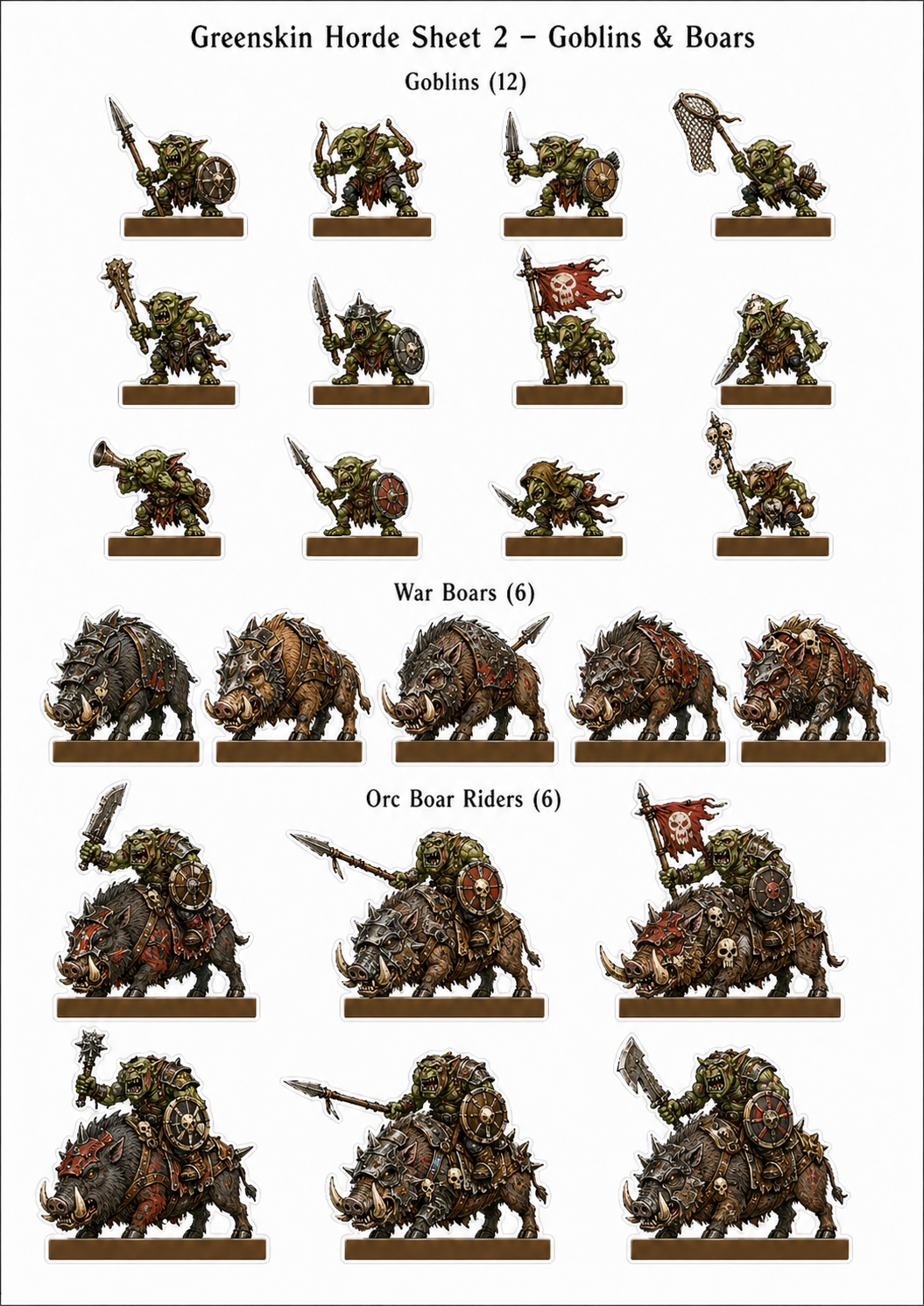
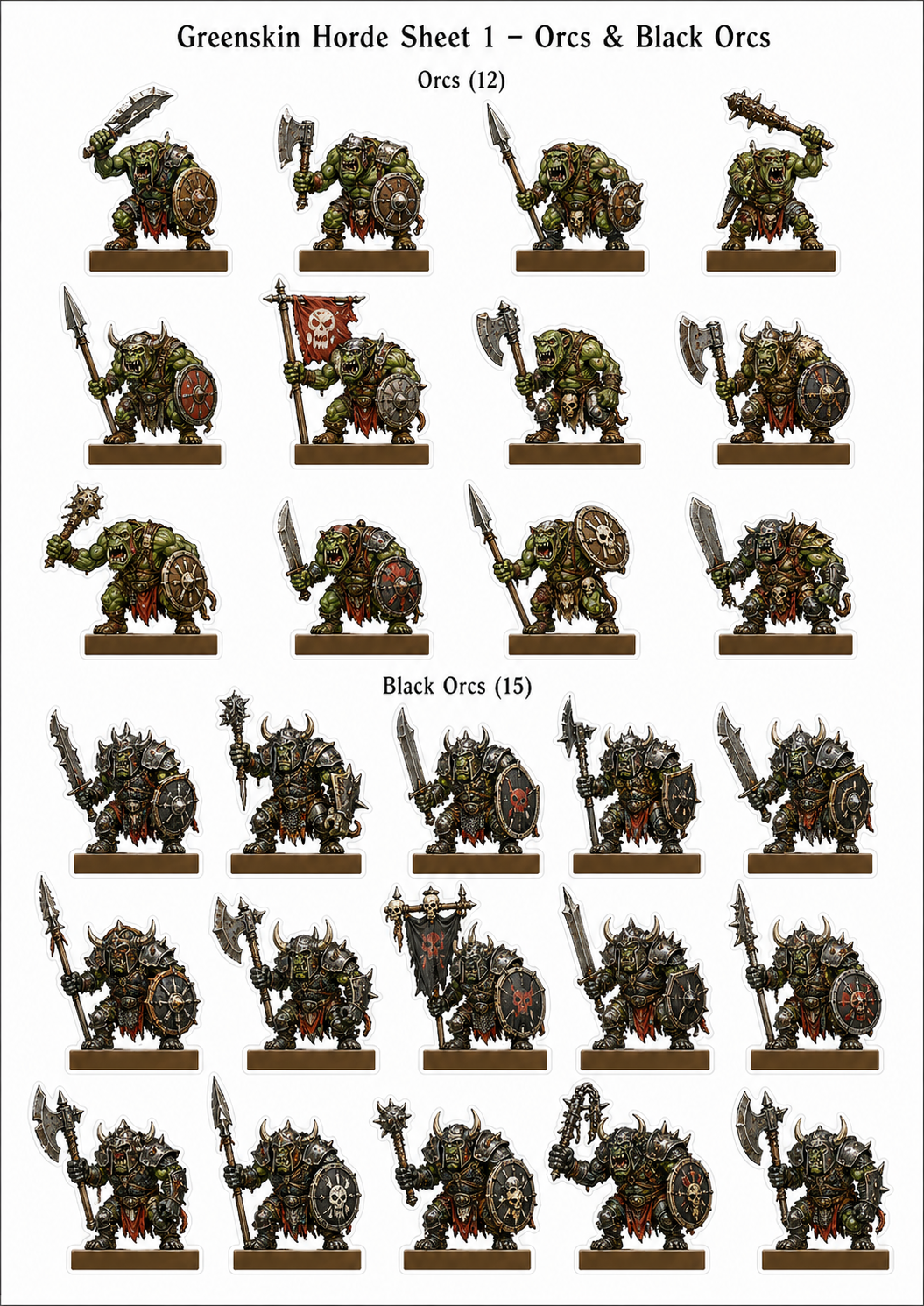
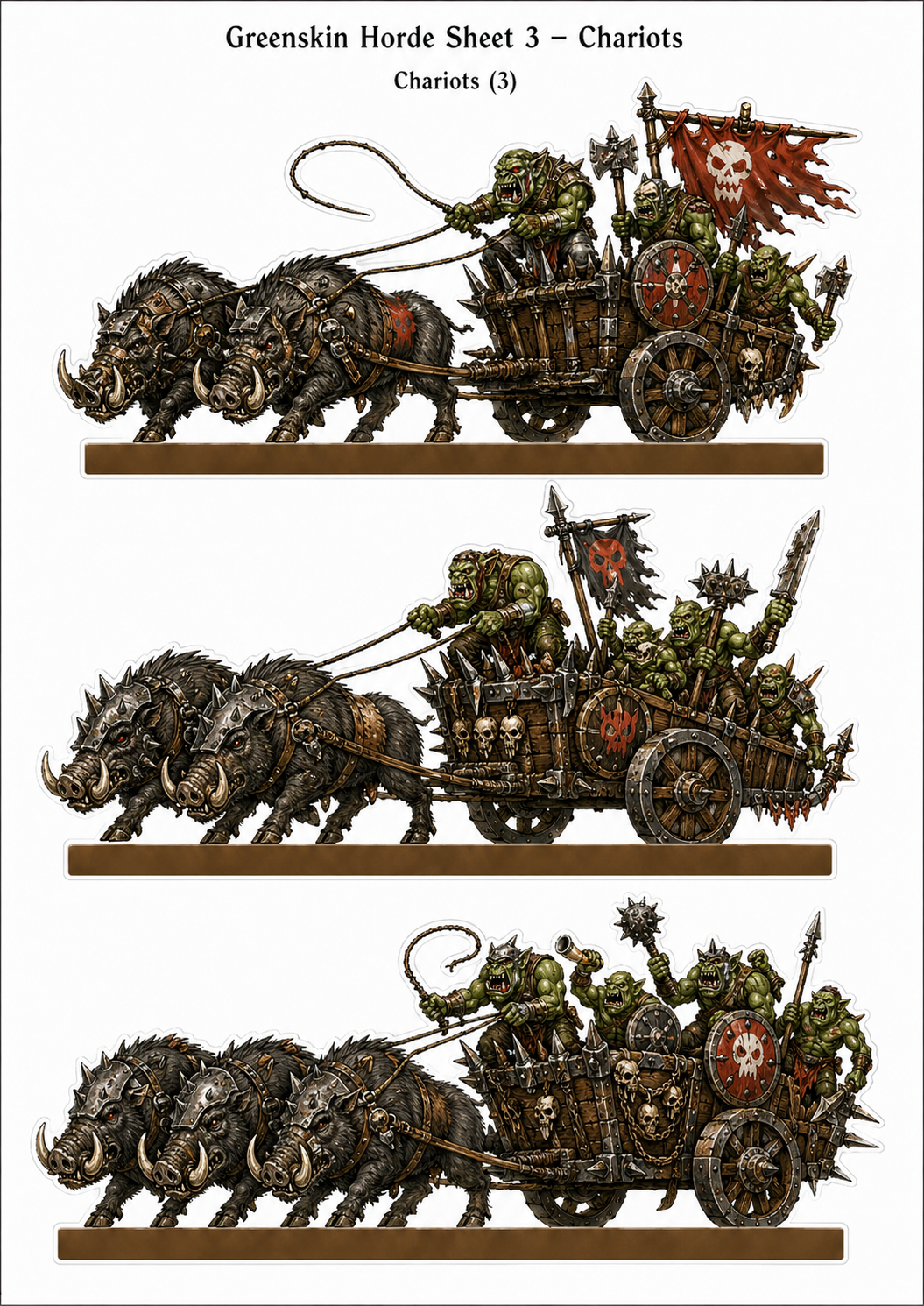
A few details got clarified right away:
- goblins were meant to be regular goblins
- boars were supposed to have riders
- Black Orcs should feel more like Warriors of Chaos in visual weight
- and apparently there was even a Nasty Skulker vibe sneaking in there, which we absolutely appreciate
That kind of quick feedback loop is exactly why this approach feels useful. You don’t need to sculpt, print, or paint anything before answering basic questions like:
- does the unit read correctly at tabletop distance?
- does cavalry need a different angle?
- are elite troops visually distinct enough from core infantry?
The real trick: it wasn’t hand-made from scratch
One of the funniest and most relatable moments in the chat was Michał explaining that he hadn’t sat there painstakingly drawing all of this manually. Instead, he said it plainly: he built a prompt for AI, tuned it, fed it inspiration and a template, and then let the rest generate.
And honestly? That’s the actual hobby tip here.
AI on its own isn’t the workflow. Prompt + references + template + iteration is the workflow.
That means the useful skill isn’t “press button, receive army”. It’s more like:
- know what visual style you want,
- know what footprint the unit needs to fill,
- give the generator enough constraints,
- and then edit toward playability.
That’s a very different thing from random image generation, and it’s why the results looked coherent enough to get everyone excited.
Then Bretonnia entered the chat
Once Wilini saw the Orcs and the earlier ratmen experiments mentioned in passing, the obvious next question appeared: could we do the same thing for Bretonnia?
Specifically, the request was for a showcase set with things like:
- archers
- men-at-arms
- mounted knights
- grail knights
- pegasus knights
- maybe even a hippogryph
But without going full hero-hammer with characters like damsels, dukes, or the Green Knight.
The comparison that came up was brilliant: this whole thing feels a bit like Total War as a board game. And yes, that’s exactly the charm. Big blocks, readable troops, strong faction identity, and a fast route from idea to table.
Michał then threw together some Bretonnian examples as well:
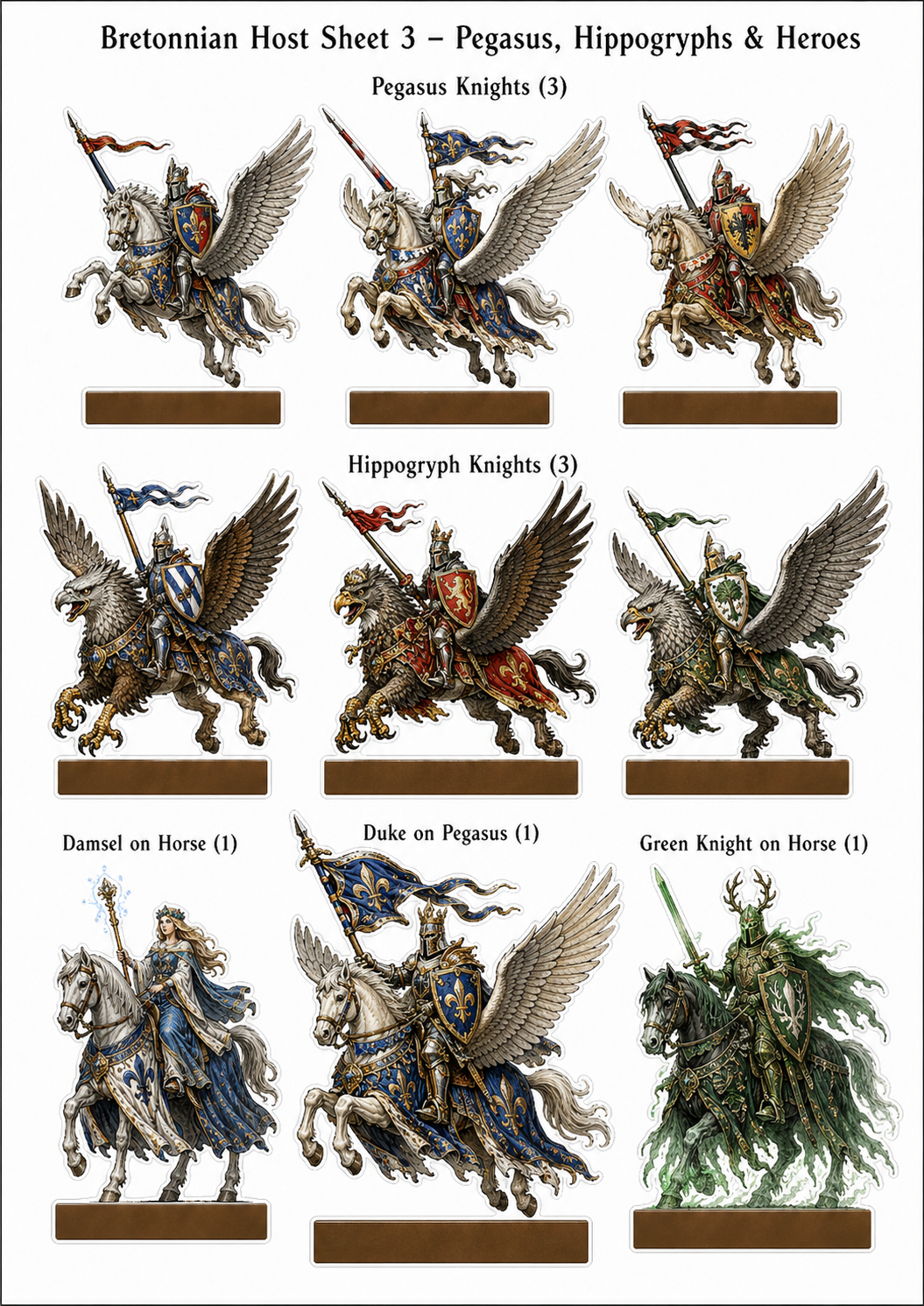
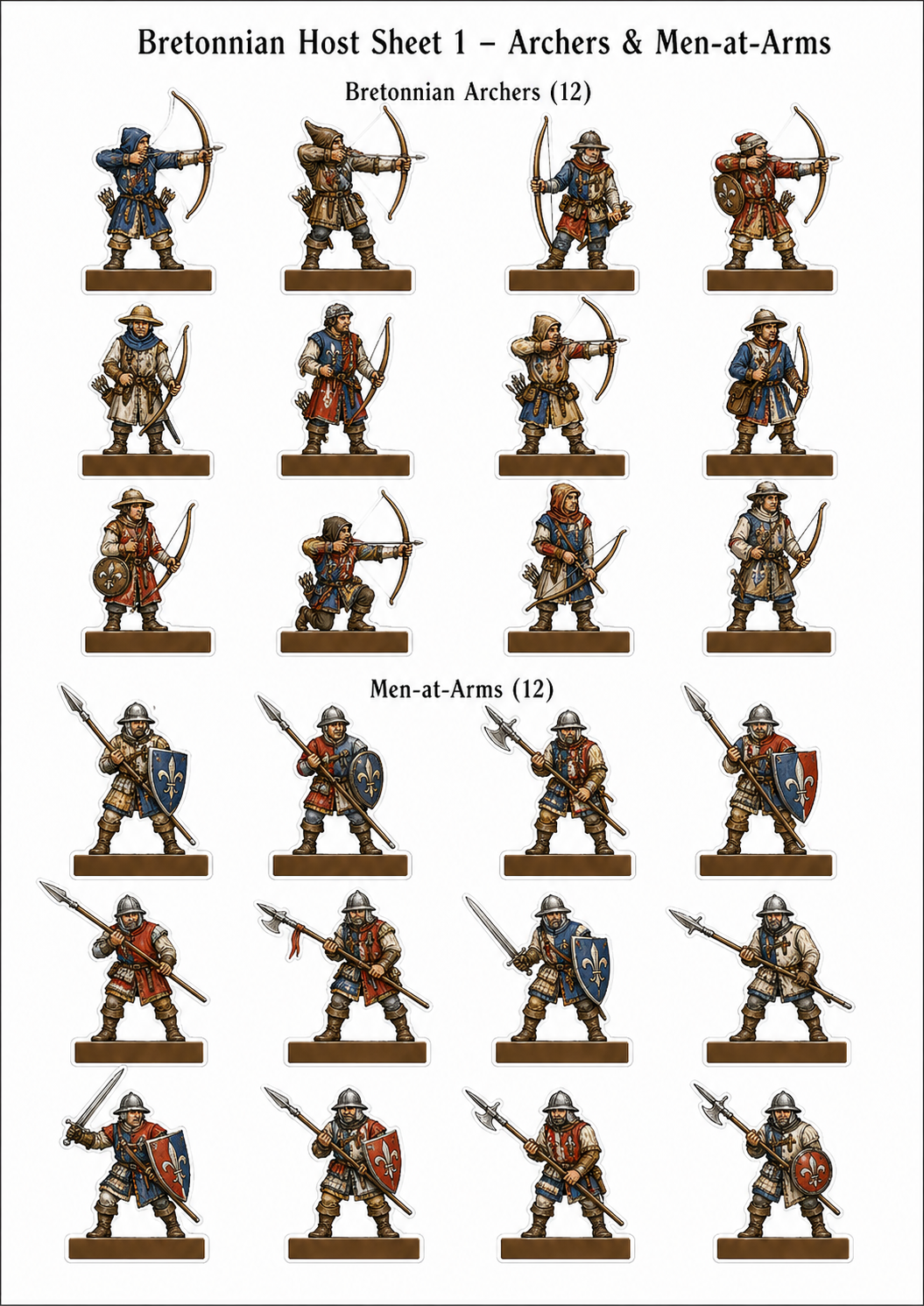
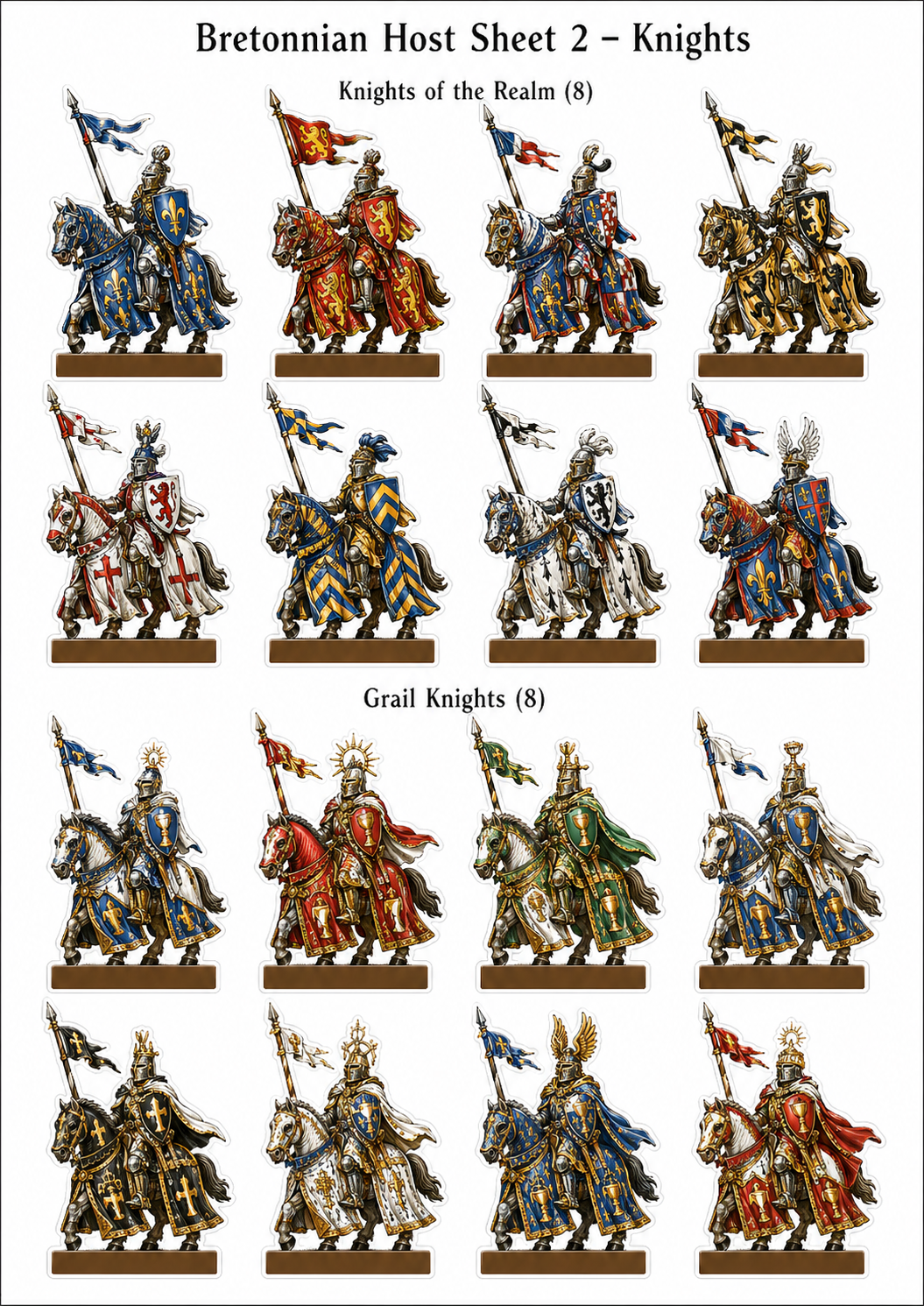
And the verdict was short and sweet: kozak.
A note on cavalry perspective
One particularly useful point came up the next morning, when Stas looked at acrylic standees from WoFun and noticed that their cavalry is often shown in a much more shortened, front-facing way.
That makes a lot of sense for ranked movement trays. Cavalry takes up awkward space visually, and if you show horses too much from the side, they can become difficult to fit cleanly into a compact footprint.
Here’s the reference Stas mentioned:
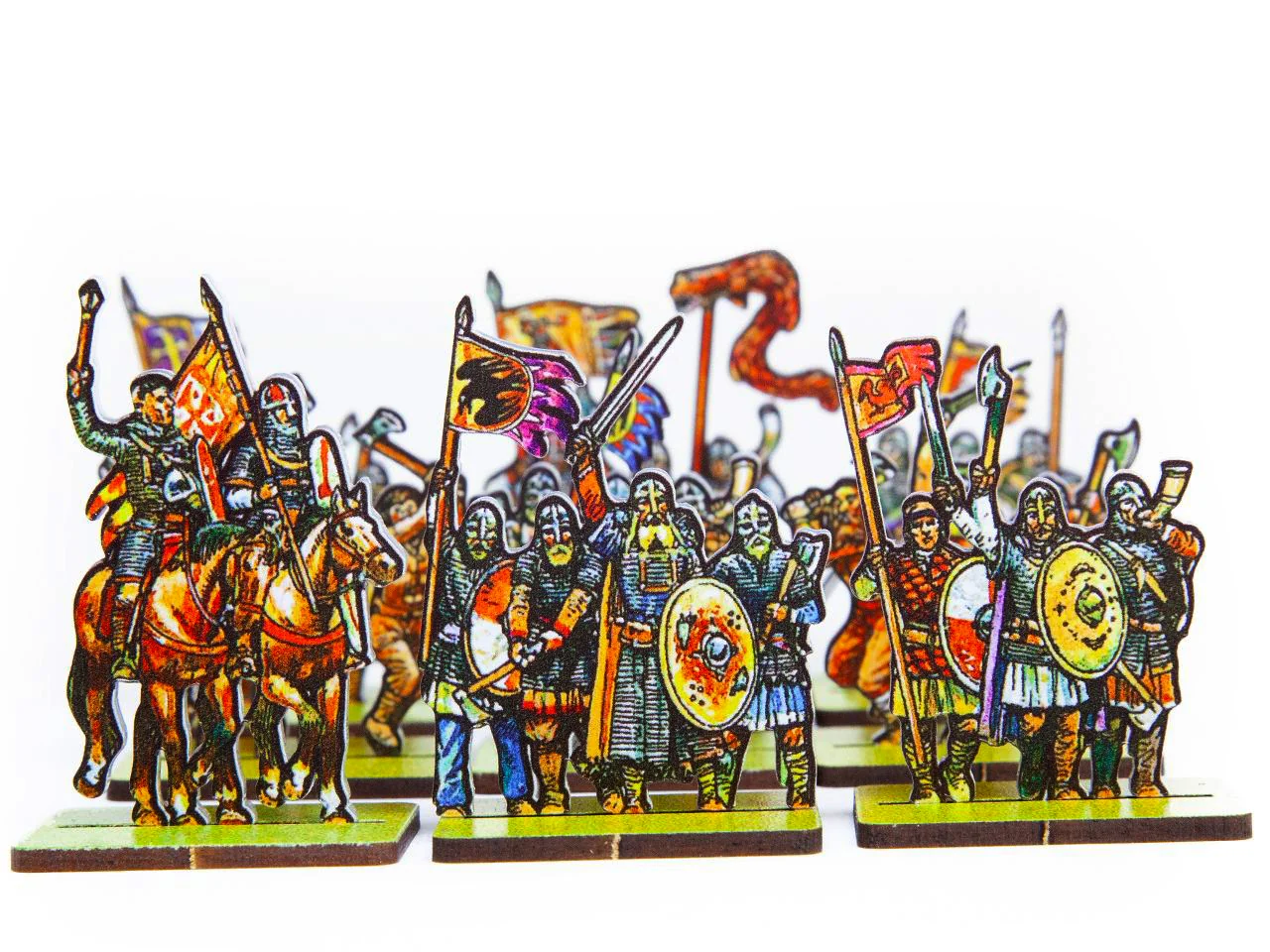
The conclusion for this first iteration was very practical though: if one base fits either two horses or four infantry, then we’re probably in a good place already.
Michał also mentioned that he had tried the more front-facing cavalry approach, but the results were only middling, so for version one it made more sense to keep portraits more side-on.
That’s another very solid takeaway: don’t over-optimize the first pass. If the first version is readable, scalable, and usable, that’s already a win.
Why we like this as a hobby tool
What we really enjoy here is that this isn’t trying to replace miniatures. It’s solving a different problem.
These kinds of cardboard armies are great for:
- testing army composition before buying models
- checking whether giant infantry blocks actually look fun on the table
- trying alternate factions without starting a full new collection
- demo games
- campaign maps and side battles
- experimenting with movement tray density and frontage
And maybe most importantly: they let us get to the “does this army feel cool?” stage almost immediately.
That matters a lot in a system like Warhammer: The Old World, where the spectacle of ranked units is a huge part of the appeal.
Our current method, in short
If we had to boil this conversation down into a repeatable hobby tip, it would be this:
1. Start from the unit size
Don’t begin with individual models. Begin with the formation you want on the table.
2. Estimate density per base
Figure out how many infantry, cavalry, monsters, or chariots fit naturally in your intended footprint.
3. Make only a few variants
Three good repeating patterns are usually better than dozens of unique pieces for a prototype army.
4. Separate troop types clearly
Core troops, elite infantry, cavalry, and chariots need distinct silhouettes.
5. Iterate after seeing them together
A single standee can look odd on its own and perfect once ranked up.
6. Don’t chase perfection in version one
Readable and playable beats “technically ideal but never finished”.
Final thoughts
This whole exchange was a great reminder that some of the best hobby progress happens when we stop thinking in terms of “final collection” and start thinking in terms of useful prototypes.
The Orcs came out great, the Bretonnia test looked surprisingly convincing, and now we’re very tempted to keep pushing this idea further for other factions too.
Also, yes — being good at using AI really is a hobby skill now.
If we keep going with this, we’ll definitely want to show the next iterations, especially once the basing format, scale, and cavalry presentation get refined a bit more.
For now though, we’re just happy that the idea went from “2000 points in cardboard?” to “wait, this actually looks awesome.”