What Does “Tabletop Standard” Actually Mean?
A funny, slightly painful, and very hobby-real discussion kicked off in our chat this week: what do people actually mean when they say “tabletop standard” painting?
It started with Michał sharing a situation that would probably make a lot of hobbyists stop and squint at the screen for a second. He had commissioned some miniatures to be painted at tabletop level, priced at 60 PLN per model, and when the minis arrived, he was… let’s say, not fully convinced.
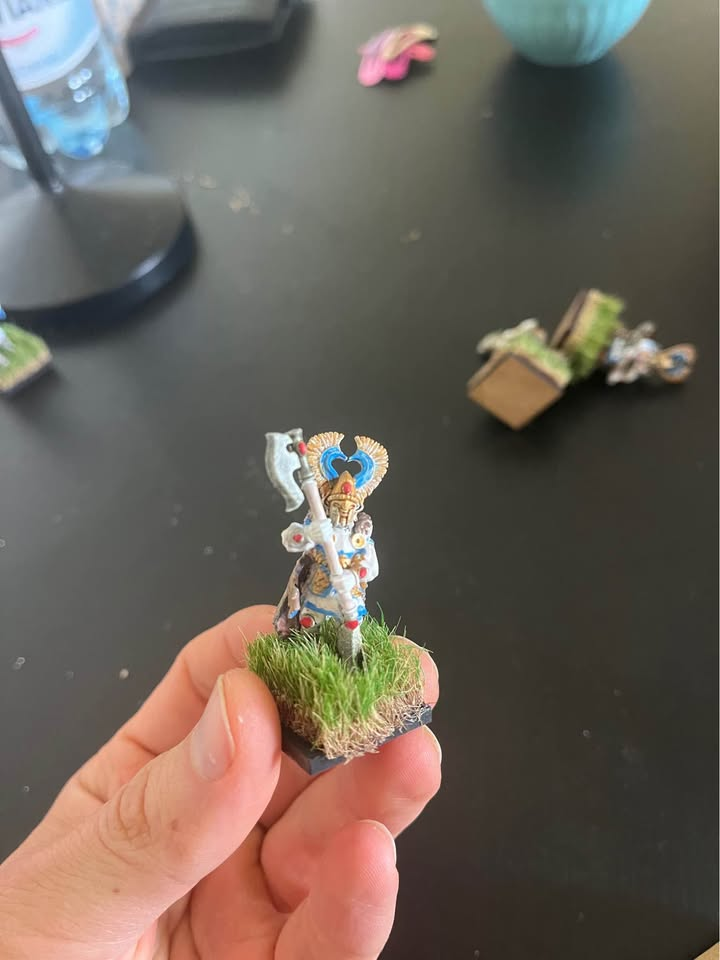
His immediate reaction was extremely relatable:
Maybe I should just start painting minis for money and quit IT :D
And honestly, that line alone probably captures the mood of half the hobby internet whenever commission painting drama appears.
So… is this tabletop standard?
The answer from our side was: technically, probably yes — but also this is exactly why “tabletop standard” is such a dangerous phrase if nobody defines it properly beforehand.
Ender summed up the common understanding of tabletop painting pretty well:
Tabletop level painting is a standard of miniature painting designed for efficiency, where models are painted well enough to look good at arm’s length on a gaming table, rather than to a competition display standard.
And in many events, especially competitive ones, the requirement is really minimal. We’ve all seen versions of the classic rule:
- at least three colors
- each major area has some paint on it
- and ideally a finished base
That’s it. Not “blended highlights”, not “clean edge work”, not “display-ready”, not even “looks great in close-up photos”. Just: painted enough to clearly not be bare plastic.
Ender even recalled a Kill Team event standard that was basically: every surface has a color, there are at least three different colors, and you’re good to go. Someone had a model with black primer, blue armor, and a silver weapon, painted the evening before — and it passed.
So from a strict, event-style definition? Yeah. That can be tabletop.
The real problem: expectations
This is where the whole thing gets interesting.
Because when most people outside tournament regulations say “tabletop standard”, they often mean something more like:
- neat basecoats
- at least a wash or some shading
- maybe basic highlights
- a finished base
- and a model that looks solid not only from across the table, but also when picked up
In other words, what many people imagine as tabletop is often closer to TT+ or “good gaming standard” rather than the absolute minimum accepted by event organizers.
That mismatch is where disappointment happens.
If one person hears “tabletop” and thinks fast army standard, while the other hears “clean and presentable commission quality”, both can walk into the same deal and come out unhappy.
Why pricing makes this feel worse
The 60 PLN per miniature part is also important here.
We’re not going to invent extra details about the sculpt, scale, or exact agreement, because we simply don’t have them. But in practice, price always changes expectations. Even if something technically fits a broad tabletop definition, once money changes hands, people naturally start asking:
Is this the level of finish I expected for that rate?
And that’s not just a painting question — it’s a communication question.
The brutally literal version of tabletop
At one point Ender posted the perfect meme-response to the situation: an image that represents the ultra-literal reading of “every area has color and there are at least three colors”.
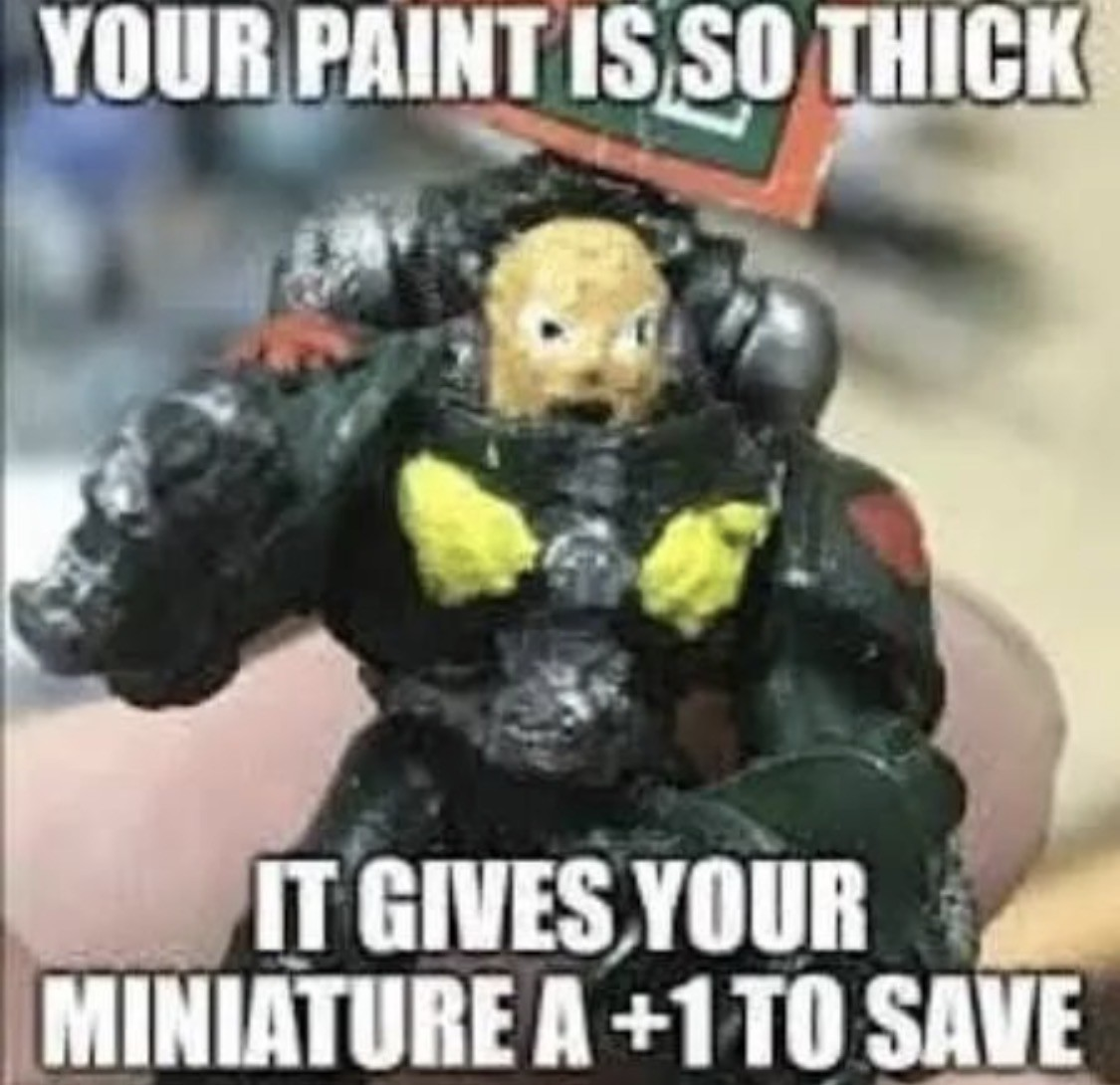
It’s funny, but it also makes the point perfectly. If the definition is too vague, then someone can defend almost anything with:
But it is tabletop standard.
And, annoyingly, they may not be entirely wrong.
What would we do in that situation?
Based on our chat, the answer is pretty simple:
- Ask for clarification before commissioning anything — ideally with reference photos.
- Don’t rely on the phrase “tabletop standard” alone.
- If you want something cleaner or more polished, ask specifically for TT+, “high tabletop”, or send examples of the exact finish you expect.
- Make sure the base is part of the agreement too, because for many people that’s part of the final impression.
If we were ordering a commission ourselves, we’d want to agree on things like:
- whether there will be washes/shading
- whether highlights are included
- how clean the details should be
- what the base should look like
- and, most importantly, sample photos of previous work at that exact tier
That last one solves most problems before they start.
Hobby lesson of the day
This whole exchange was a good reminder that hobby vocabulary can be weirdly slippery. Terms like tabletop, battle ready, TT+, or display standard sound obvious until two people use them differently.
So yes — we had a laugh about it, because the situation was absurd enough to deserve one. But there’s also a genuinely useful takeaway here:
in commissions, “tabletop” is not a specification. It’s a conversation starter.
And if that conversation doesn’t happen, you may end up with a result that is technically defensible, but still very far from what you thought you were paying for.
For us, this was one of those classic hobby moments: a little drama, a little sarcasm, and a surprisingly practical lesson hidden underneath.
If nothing else, it also gave us one more reason to keep painting our own stuff — even if, apparently, we should all consider quitting IT and going pro.