Amphitheatrum Flavium for the poor? Our first cramped Warhammer 40k brawl
Sometimes the best battle reports start before the first dice roll — with someone asking in chat whether anybody has the rules handy.
That was exactly the case here. Michał was looking for the Colosseum setup, End3r dug out the essentials, and a quick rules clarification turned into an immediate: “thanks, awesome — we’re playing.” Honestly, that is one of our favorite hobby energy levels.
Quick pre-game: what even is Colosseum?
From the chat, the setup was pretty straightforward:
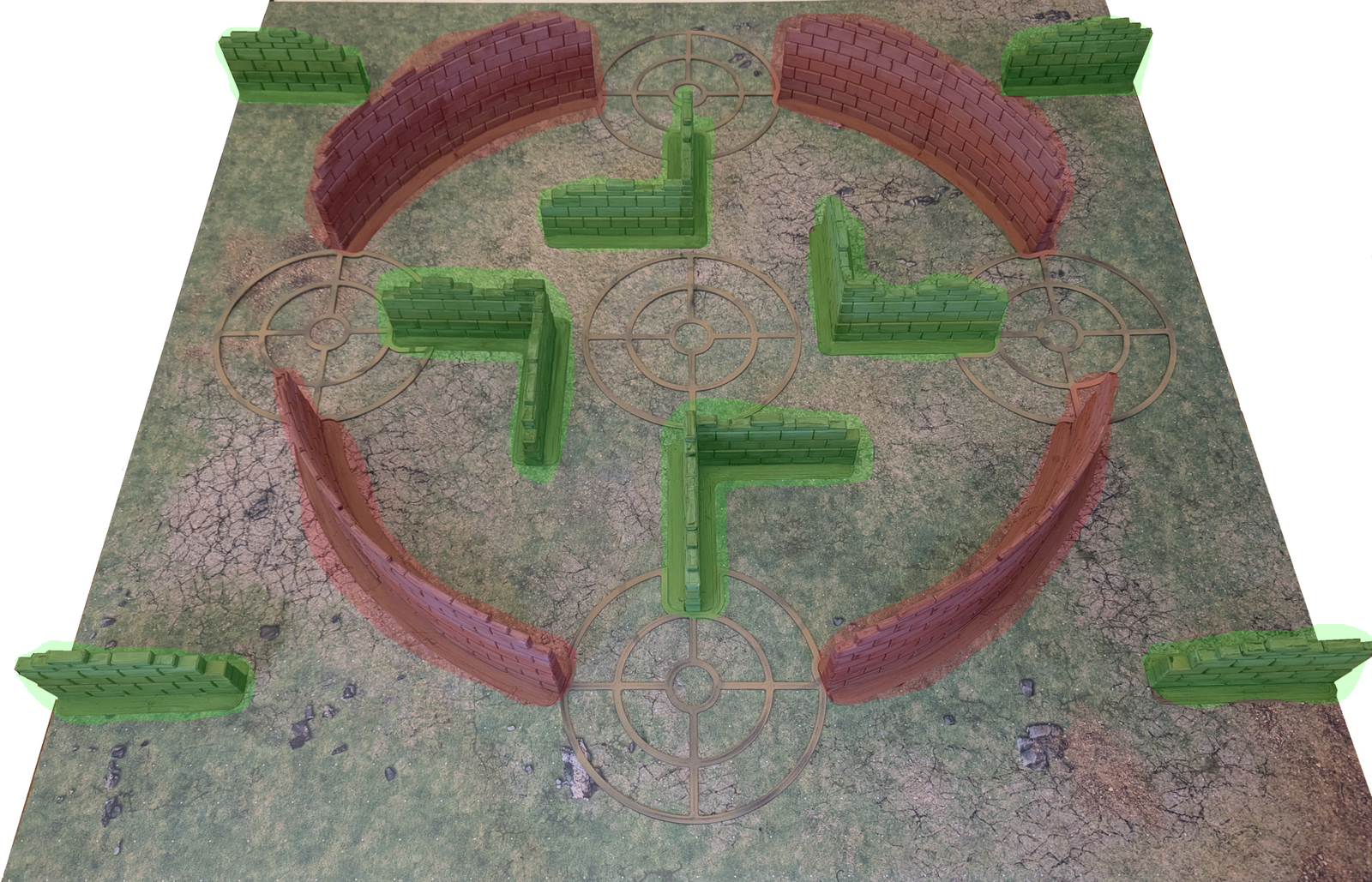
- End3r had the deployment map and the 2d6 league document.
- The rest was basically played like regular Warhammer 40k.
- The attacker chooses the mission, the defender chooses the twist.
- Tactical secondaries are the random ones, just like in 40k.
- For this format, they are played as random secondaries rather than fixed ones.
There was also a bit of classic pre-game confusion between twists and secondaries, which feels extremely relatable. In the end, the important bit was that only one twist is selected from the available options, while secondaries follow the tactical/random approach.
End3r also mentioned that in their games so far, they mostly stuck to the simpler options:
- Take and Hold, because it is the classic objective game
- Ruinscape, because infantry can move through the red walls, which is both useful and very funny
And here is the deployment map that kicked the whole thing off:
The most important terrain rule: make do with what you have
Michał summed up the table with the perfect phrase: “Colloseum dla ubogich ;)”
And honestly? We love that. Not every game needs a perfect tournament setup. Sometimes you just build a compact arena from what is on hand and get stuck in.
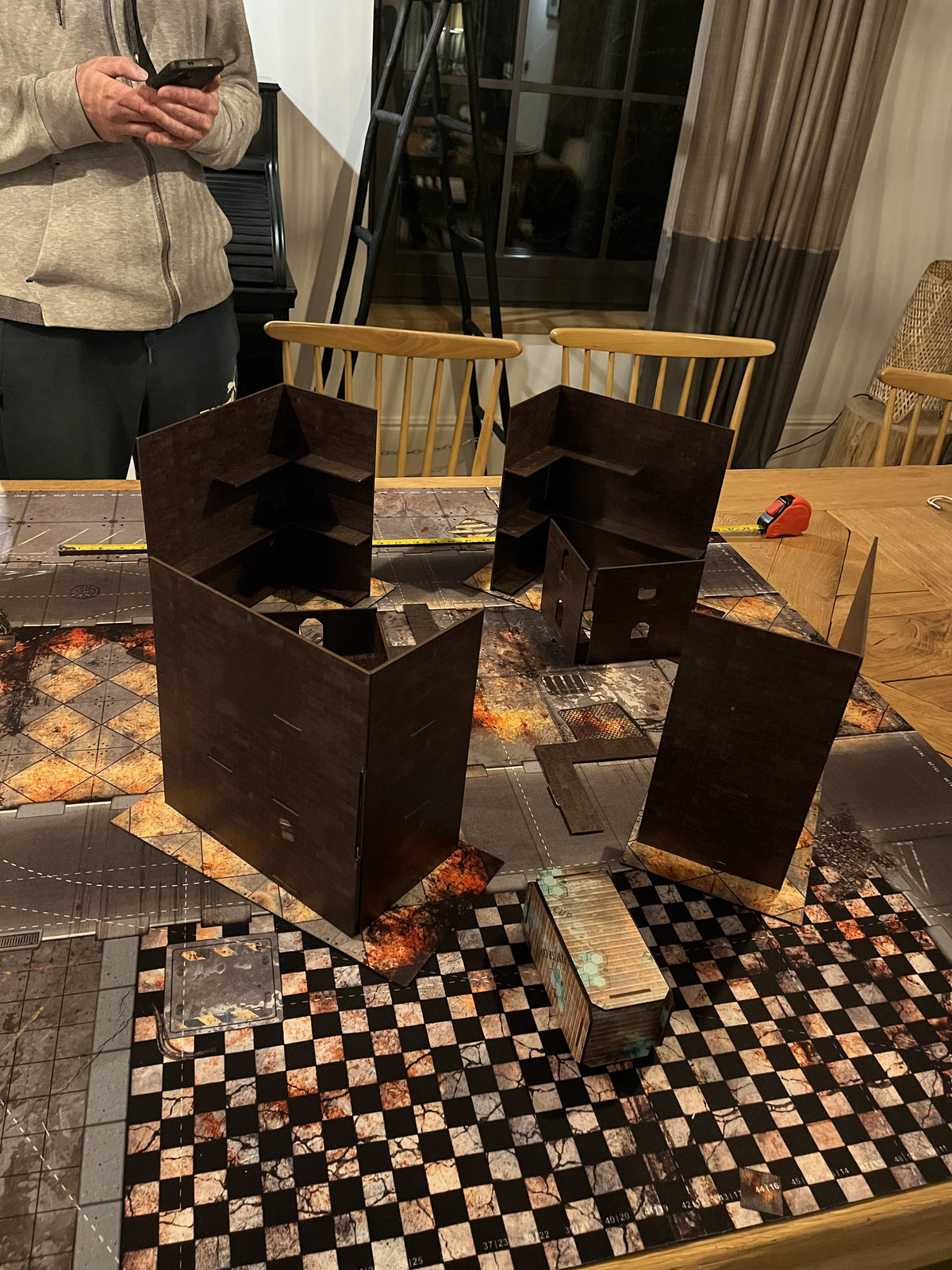
End3r immediately replied that he had played his intro version on Volkus terrain from Kill Team, which also sounds like exactly the right kind of hobby improvisation.
So yes: this was definitely a Warhammer 40k game, but with a bit of that joyful use whatever cool board you can assemble spirit that overlaps nicely with Kill Team terrain culture.
The event link
Michał dropped the event link once the first game got going, so naturally we had to include it here:

It was not just a one-off test either — this was part of a full event, which made the whole thing feel even cooler.
Early game: close score, lots happening
By round two, the score was sitting at 4:4, which suggested a pretty tight game early on.
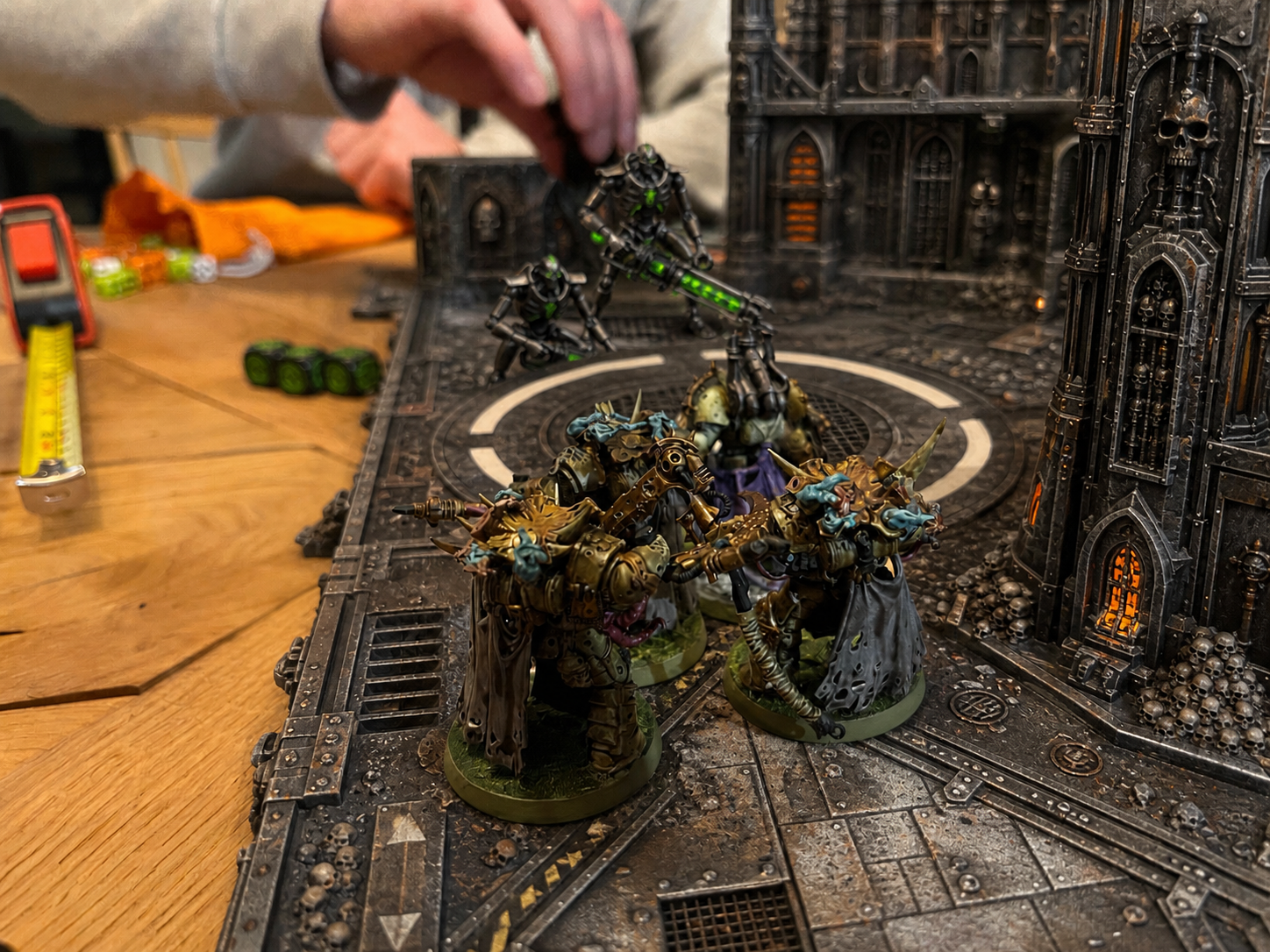
And that tracks with Michał’s later summary: a lot happens in Colosseum. The board is tight, there is not much dead space, and that means maneuvering actually matters all the time. Units are in the game quickly, pressure starts early, and it sounds like there is very little of the slow staging you sometimes get on larger tables.
The matchup: Death Guard into Necrons
From the comments after the game, we can piece together the broad shape of the battle:
- Michał was playing Death Guard
- The opponent was playing Necrons
- Deathshroud Terminators hit hard and were very durable
- A mower drone also put in work, with its T9, W10 profile being called out specifically
On paper, that sounds like the kind of compact-board brawl Death Guard should enjoy. Tough units, short distances, lots of pressure. And for a while, it sounds like that promise was there.
Then the Necron nonsense kicked in.
“Marek hits on 2s… and wounds on 3s”
At one point in the game, Michał reported the kind of sentence every opponent loves to hear:
Marek hits on 2s.
Followed immediately by:
And wounds on 3s.
Which is exactly the sort of update that tells you somebody across the table is having a very comfortable phase.
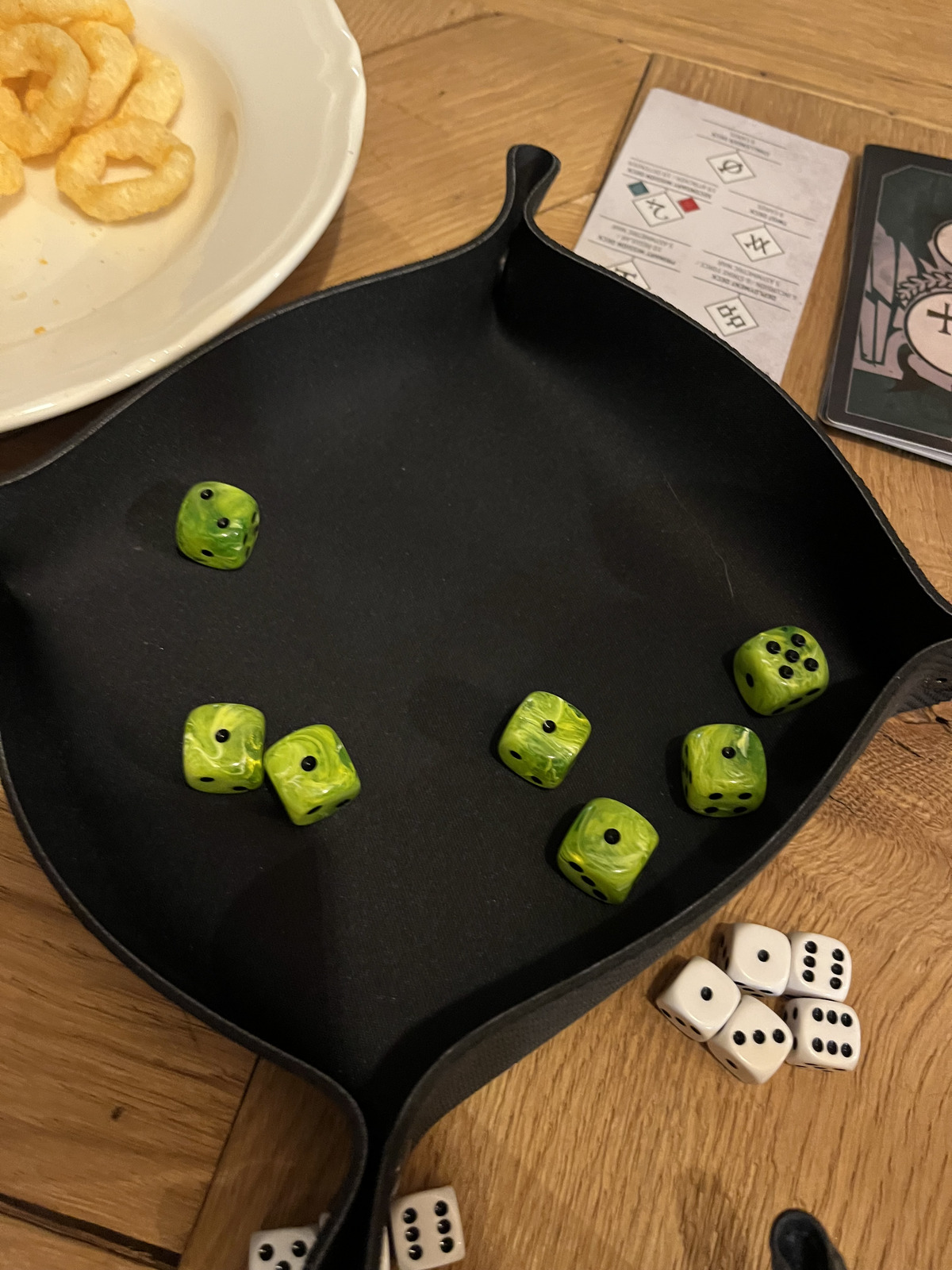
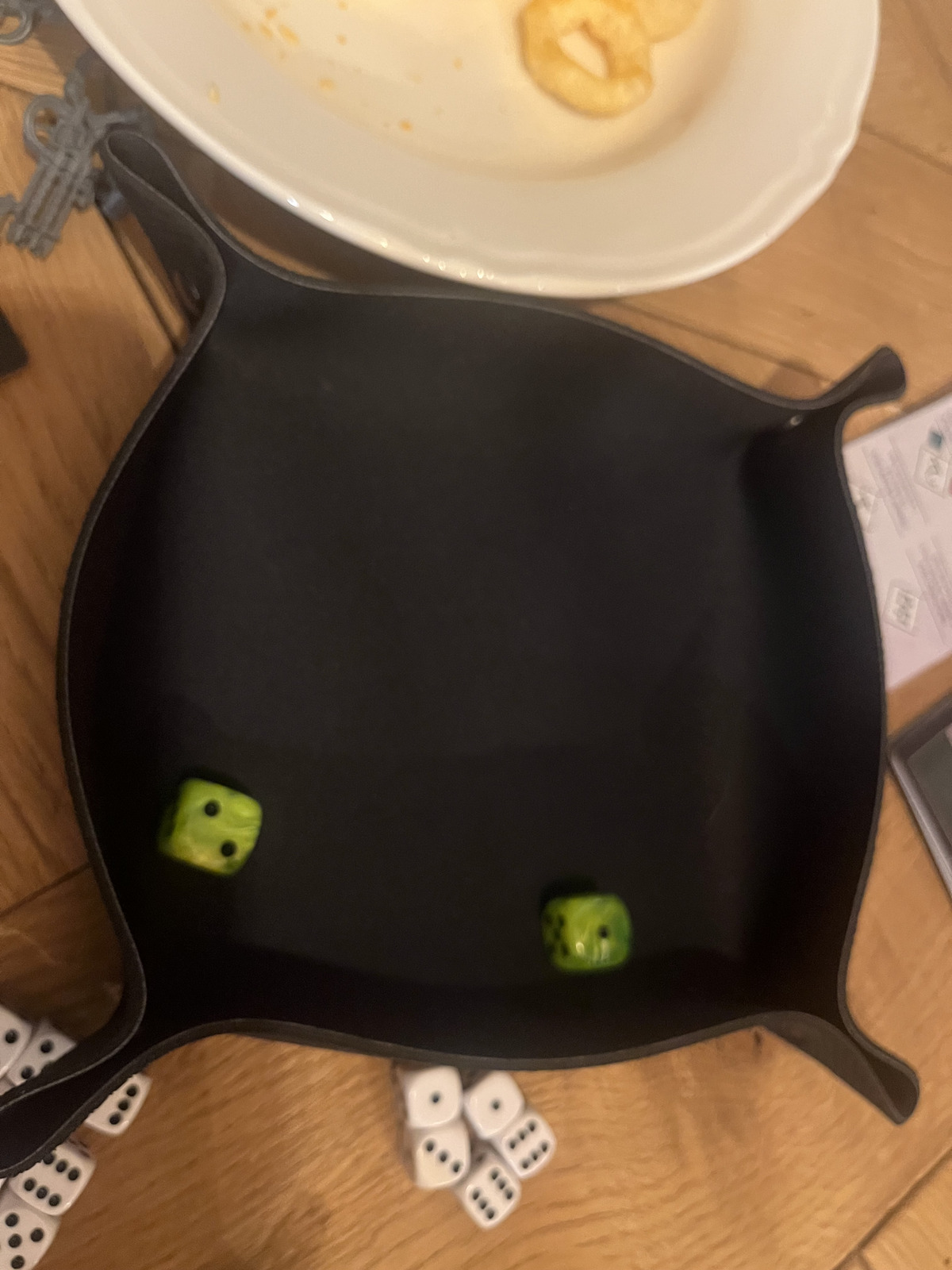
We do not have the full blow-by-blow turn sequence, so we are not going to invent one, but the post-game summary painted a very clear picture: the Death Guard units were tough, but the Necrons simply refused to stay meaningfully damaged.
What decided the game
Michał’s summary was brutally honest and very funny at the same time.
The key problem was that despite Death Guard having some real durability and punch, the Necrons kept recovering. According to Michał, for every wound dealt, the Necrons were bringing back D3 wounds in every unit, and the Plasmancer (lovingly renamed the fingermancer / palecmancer in chat) was casually handing out 4 mortal wounds every turn, even in combat.
That is the kind of attrition swing that becomes absolutely miserable on a tight board. If you cannot finish units cleanly and they keep healing back up, eventually the whole game starts to feel like punching a wall that is repairing itself while also electrocuting you.
Michał also mentioned that Terraform looked rough for shooting armies because it costs an action, meaning no shooting, and End3r had previously called that out as especially awkward for his Salamanders. On the other hand, Linchpin was apparently obscure enough that even the league organizer had struggled to explain it, which is also very on-brand for niche mission packs.
The collapse in turn four
In the end, the game reached a very definitive conclusion:
- by turn four, all of Michał’s units were gone
- the final score was 15:5
- they forgot about challengers, so the score might have been a bit better otherwise
That is a rough finish, but it did not sound like a miserable game. Quite the opposite, actually. Michał said outright that Colosseum was very fun, that a lot happens, and that despite the final result he was not salty at all.
That is probably the best endorsement a format can get after a loss like that.
The funniest post-game stat of the night
This line was incredible:
The wound balance at the end, because of all the healing and other Necron shenanigans, was basically 100% preserved wounds on their side and 0% preserved wounds on the Death Guard side.
If that is not a perfect one-line summary of fighting Necrons in a cramped arena, we do not know what is.
The final scene
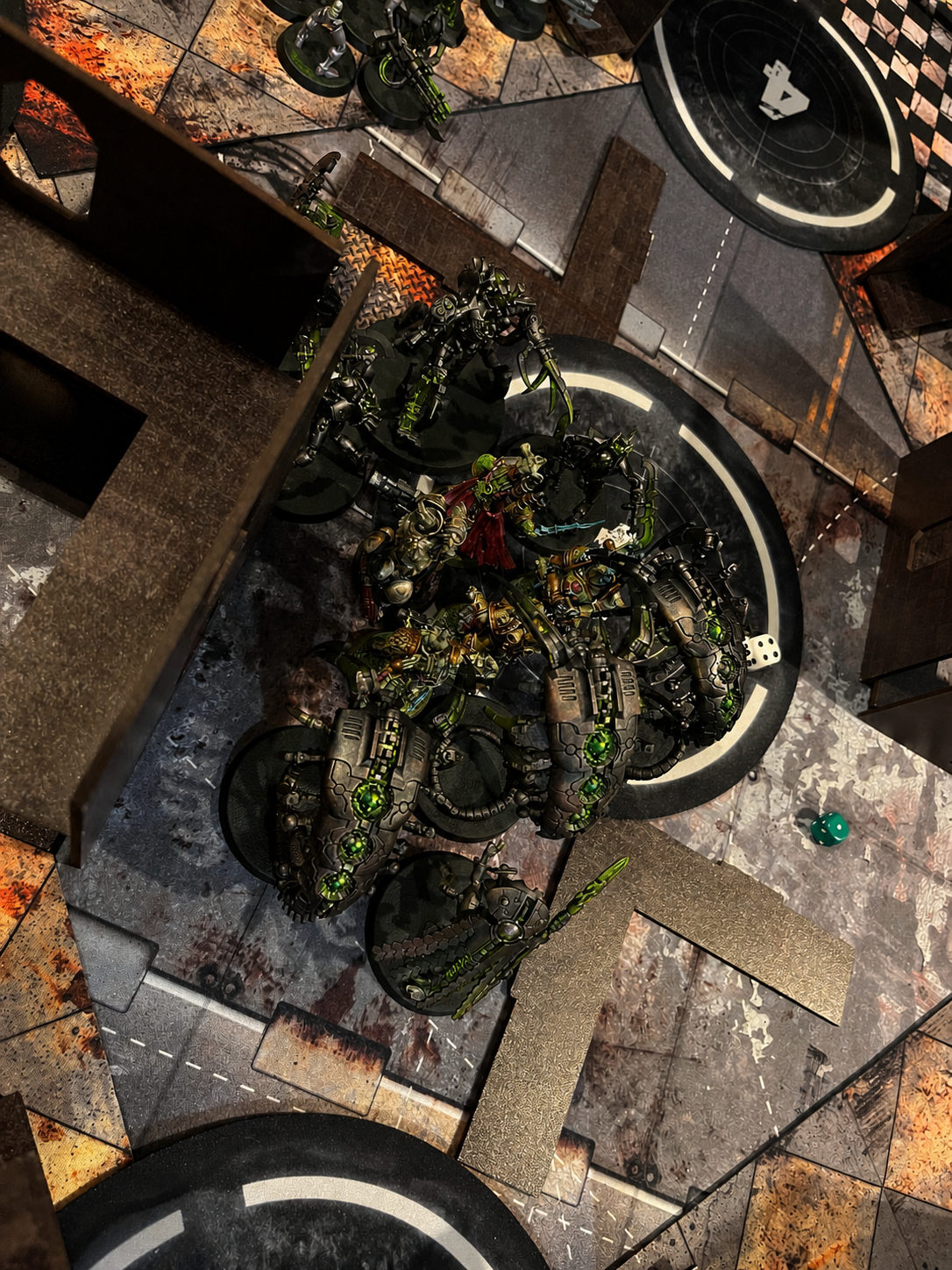
The game ended with what Michał described as all Necron units piling into five Plague Marines — then immediately corrected himself that no, actually, the Immortals and the Plasmancer were hanging back, so it was almost everything.
Either way, the image says enough on its own:
Our takeaway
This little chat-born battle report sold us on Colosseum more than any polished rules review probably could.
What we took from it:
- the format seems fast and active
- the tight board makes movement and pressure feel important
- even a makeshift table works if everybody is on the same page
- Necrons remain absolute gremlins when they start stacking healing and mortal wounds
- getting tabled by turn four does not automatically mean you had a bad game
Most of all, we love how naturally this one happened: rules question, deployment map, improvised board, event link, live score update, and then a late-night postmortem about Deathshroud, drones, healing nonsense, and a final heroic cluster of Plague Marines getting mobbed.
That is hobby life.
If we get more Colosseum games in, we are definitely curious to see how other armies handle the format — especially ones that really thrive in tight, messy mid-board fights.