Toxic Lists, US Comp, and Why We’re Still Thinking About the Fellblade
We recently fell into one of those very Old World rabbit holes: a tournament-winning list, a weird comp system, some properly nasty spell-item combos, and finally the kind of magic weapon that makes us want to play a game purely for the story it might create.
It started with this article about the Richmond Open 2026 winning list:
The first reaction in our chat was basically: Dwarfs. Nice. Also… wow, that looks miserable to play against.
Wilini summed it up in the most honest possible way: some of these lists just feel incredibly toxic. The kind of thing where, if you sat down across from it without warning, you might seriously consider conceding on the spot rather than spending the next few hours being slowly fed into a rules-engine.
And honestly? We get it.
The weird charm of US comp
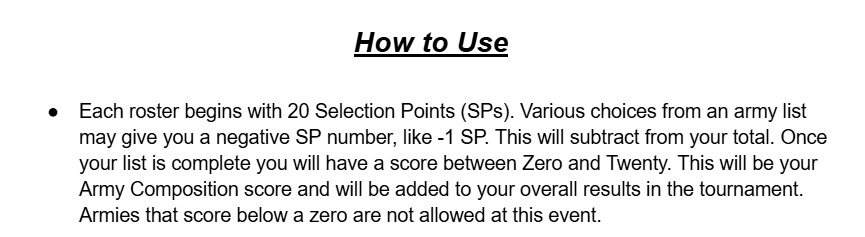
What made the whole thing even more interesting was the comp system being used. Michał pointed out that some US events effectively give you 20 points during list building, and then deduct points for taking specific units, items, or combinations. Those comp points are then added to your tournament result.
That means your army strength is being judged before the game even starts, and the final standings reflect both your in-game performance and how “hard” your list was judged to be.
Here’s one of the screenshots Michał shared while explaining it:
And another one showing more of how the penalties are structured:
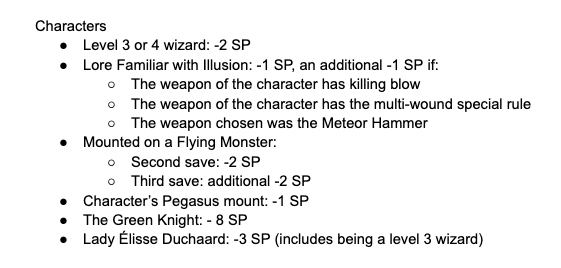
The key point is that these penalties are not just a side note. They can massively swing standings. Michał gave a brutal example: if two players draw 10:10, but one of them brought a heavily penalized list and the other didn’t, that “draw” can become a very lopsided result in the final ranking.
Stas immediately noticed how absurd that can get in practice: you can lose the game on the table and still come out ahead overall if your opponent’s list was hit hard enough by comp.
That is fascinating from a tournament design perspective, even if it also feels a little wild.
For reference, this is the full comp document we were looking at:

Comp as a tier list in disguise
One thing we did like about the document: it makes the meta very visible.
Even if you don’t agree with every single penalty, a comp pack like this basically functions as a community-written “these are the strongest things in the game” list. If something is getting hit hard, it probably means enough people have suffered through it already.
Michał also shared the generic restriction that applies across armies:
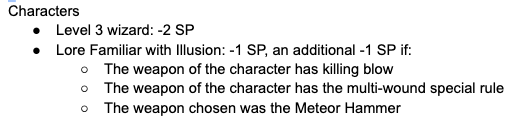
That immediately led us into one of the classic Old World discussions: spell and item interactions that are technically legal, deeply unpleasant, and weirdly fascinating to dissect.
Spectral Doppelganger, Lore Familiar, and the kind of combo everyone somehow already knows
A big part of the conversation was about why some players seem so confident they’ll always have access to Spectral Doppelganger. The missing piece, as Wilini noticed, was Lore Familiar.
That explains a lot.
Instead of hoping to roll into the spell, you just build around reliably getting it. And once you start thinking in those terms, the combo logic becomes very obvious, very quickly.
Michał highlighted the key part of the spell:
A single enemy unit the caster is engaged in combat with suffers 2D6 hits, resolved using the characteristics and special rules of the caster and of any weapon they carry.
And from there the discussion basically writes itself. If the spell uses the weapon’s special rules, then the natural next step is to ask: what is the most disgusting weapon we can attach to this?
That’s where things like the Meteor Hammer came up, because if the weapon has rules that bypass the usual assumptions about Strength and wounding, the spell starts looking extremely silly.
Wilini originally wanted to try a version of that combo on a Damsel, but once we looked more closely at item allowances and the actual cost of Lore Familiar, it became clear that some of the nastier online versions need a more expensive or more capable character chassis to function properly.
There was also a nice little hobby moment in that exchange: the realization of why certain magic weapons cost what they cost. Sometimes a price tag that looks absurd suddenly makes perfect sense the moment you see the combo it is preventing.
And of course, even after discovering one version doesn’t quite fit, the immediate response is not “okay, fair enough.” It’s “right, so what is the next filthiest version that still works?”
That is a very Warhammer way to think.
The list-building side we actually enjoy
For us, this is the fun side of army-building talk. Not necessarily because we want to chase the most oppressive thing possible, but because pulling apart these interactions teaches you a lot about the game.
You learn:
- which rules are genuinely powerful,
- which item costs are there to stop abuse,
- which combinations are strong but manageable,
- and which ones make everyone at the table sigh before deployment even starts.
That kind of discussion is useful even if your end goal is actually the opposite of hard optimization. If you want to build lists that are fun for both players, it helps to understand where the danger zones are.
But let’s talk about the real star: the Fellblade
After all the comp talk and toxic combo analysis, Michał dropped the idea that probably captured our imagination the most: just playing a game built around The Fellblade.
Not because it’s “balanced.” Not because it’s “healthy.” But because it sounds gloriously narrative.
Here’s the item reference:
The appeal is simple: it is a ridiculous weapon with ridiculous upside and a built-in chance to slowly kill its wielder.
That immediately creates the kind of scenario we love imagining. You spend points on this terrifying blender of a character, line up the big dramatic charge, and then… the sword itself starts eating the bearer before they even reach combat.
That is objectively hilarious.
Michał’s pitch was basically that even at 1250 points or more, a game featuring a Fellblade character would be worth it for the story alone. We completely agree. There is something deeply satisfying about a weapon that can either annihilate a hero in one glorious duel or turn the whole battle into a tragicomic disaster because its owner implodes at the wrong time.
Wilini quite reasonably pointed out that the viability depends a lot on how many wounds the character has. On a tougher character, maybe you risk it. On a more fragile one, maybe the sword is less a weapon and more an elaborate self-destruct button.
Still, that tension is exactly what makes it memorable.
Where we land on all this
So where did we end up after this whole discussion?
Probably here:
- We absolutely understand why some top-tier Old World lists get called toxic.
- We think comp systems like the US one are fascinating, even when they produce some very strange outcomes.
- We enjoy digging into nasty spell/item interactions, if only to understand what the game is really rewarding.
- And, maybe most importantly, we still have a soft spot for spectacularly stupid narrative choices like taking the Fellblade and seeing what happens.
That last part is probably the most “us” conclusion possible.
Because yes, we can spend an evening discussing why a list is oppressive, how Lore Familiar enables a combo, and whether a comp pack correctly prices the Green Knight.
But at the end of the day, we are also the kind of people who hear “there’s a chance your insanely expensive murder-sword kills its owner before combat” and immediately think:
okay, but now we really want to put that on the table.