From One Box to Too Many Options: Our Warcry Warband-Building Spiral
We had one of those very relatable hobby conversations recently: it started with a simple question about whether a single box is enough, and within minutes we were already at “maybe we need three more guys, another general, some support, and possibly an entirely different build too”.
In other words: classic Warhammer army-building energy.
It starts innocently enough
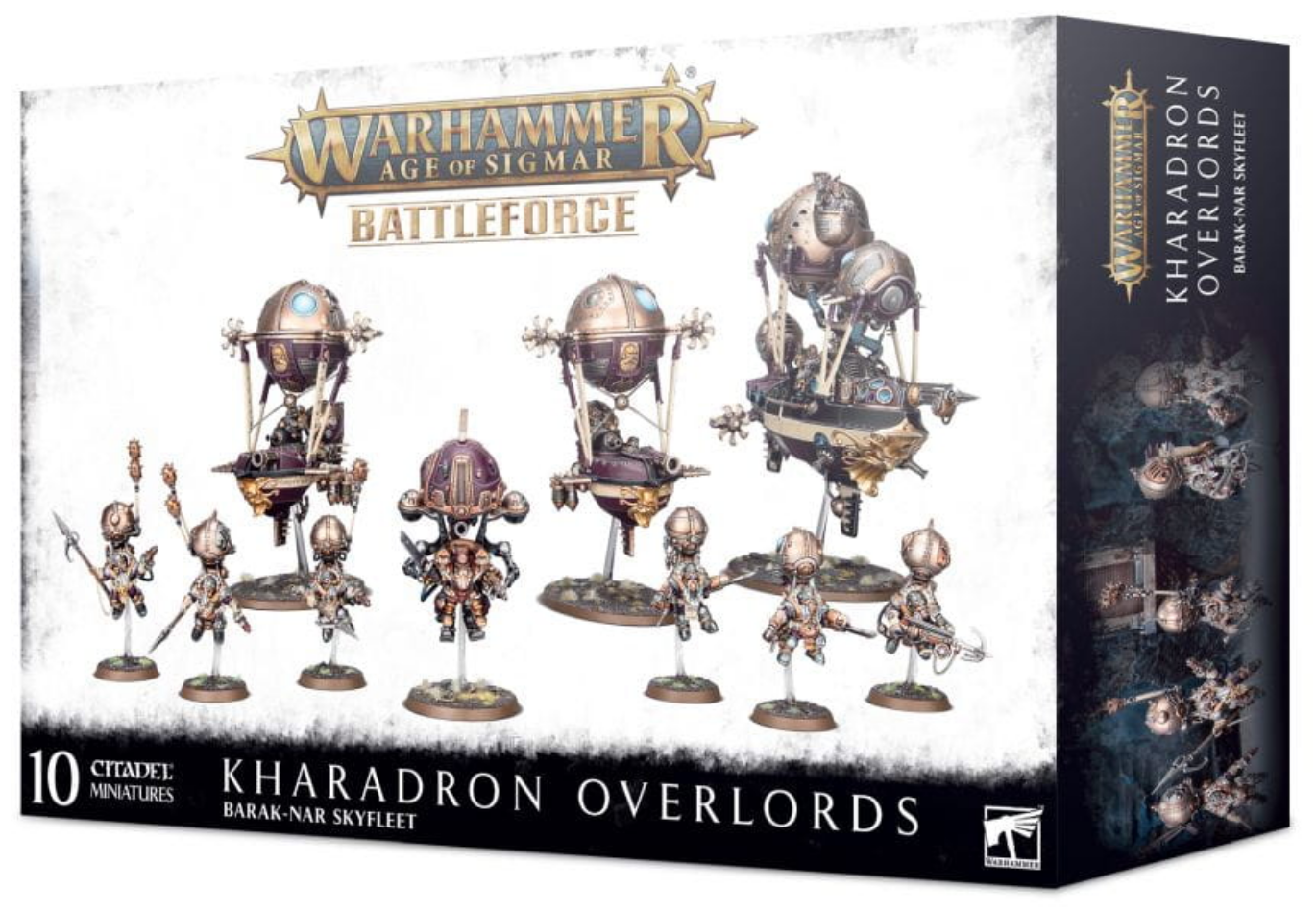
The spark this time was Spearhead boxes and the idea of building Warcry warbands out of them. end3r was looking at his Kharadron Overlords stuff and doing the very natural math:
- Warcry warbands are often around 8 fighters
- the box has 15 models
- so even without the frigate or buying Thunderers separately, there should already be quite a lot of room to build something playable around 1000 points
At basically the same moment, Stas was thinking along exactly the same lines, just with vampires instead.
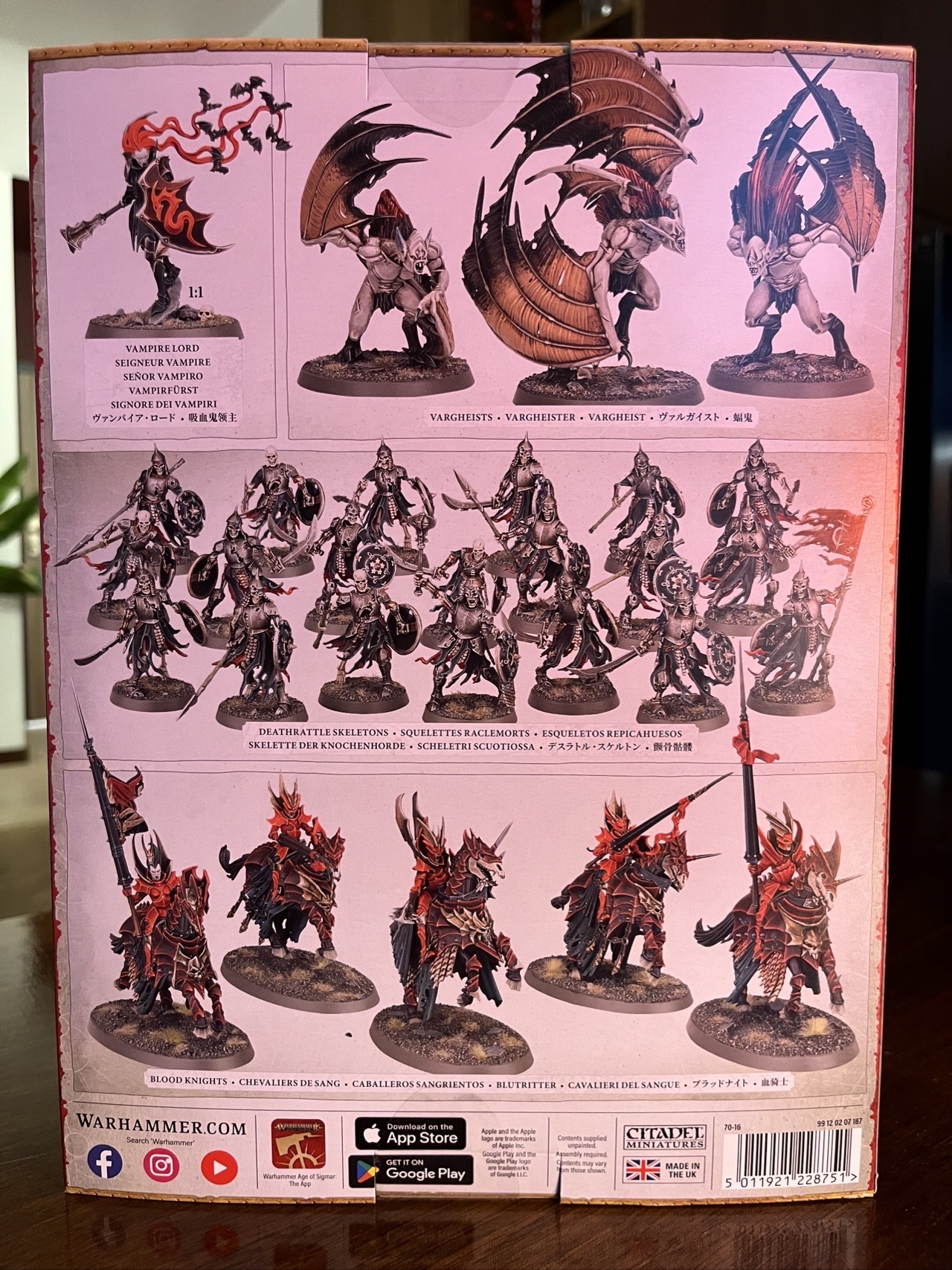
And honestly, this is one of our favorite parts of the hobby: that moment where a box stops being just a pile of sprues and starts becoming options.
Then the rabbit hole opens
Of course, the next phase comes immediately after the first optimistic one.
At first the thought is: “yeah, something playable can definitely be built from this.”
Then you read more.
Then you discover different builds.
Then you decide you probably also want:
- a different leader
- a support piece for a different matchup
- another couple of specific fighters
- maybe a faster version of the list
- maybe a harder-hitting version too
And just like that, the collection starts growing before the first proper list is even locked in.
Michał summed it up perfectly: you start with confidence, then you read about builds and suddenly it becomes “I still need three more of these guys, and that general, and this support option…”
That escalation feels extremely real.
There is no “ideal setup”
One of the most interesting conclusions from the discussion was that the more we read, the less meaningful the idea of an ideal universal build seemed.
end3r went looking for something like “Kharadron best Warcry universal build”, which is exactly what most of us do when entering a new system. We want a shortcut. A safe answer. A list that simply works.
But the deeper he looked, the more it turned out that Warcry seems well balanced in exactly the fun way: different builds do different jobs, and none of them are universally correct.
That led us into a broader point. Dubry brought up old Warhammer Fantasy Battle thinking: good army-building was never really about finding one perfect list for everything. It was about building a force broad enough and balanced enough to support different tactics.
His example was great: in old Fantasy, Empire might want to bring lots of artillery against undead, but invest more into cavalry against other armies. So what would an “ideal setup” even mean if the opponent and mission matter so much?
That same logic clearly applies to Warcry too.
Mission matters
Stas asked a very practical question: in Warcry, do we choose the objective first, or the band? Can we adapt the band to the goal?
That cuts right to the center of why list-building is so interesting.
As Michał pointed out, even within vampire warbands there are different approaches depending on what you expect:
- something meant to kill key enemy fighters
- something better for treasure hunts
- something better at controlling objectives
So even at this smaller skirmish scale, the tension is the same:
- do we want something that hits like a truck?
- or something that runs fast and plays the mission?
That is also why the lack of one obvious best build is actually a very good sign. As Stas said: that reflects well on the game.
The hobby economics problem, as always
At some point the conversation naturally reached the traditional hobby solutions:
- buy more boxes forever
- get a resin printer and start solving problems the dangerous way
- take out a mortgage and buy everything
We are not saying any of these are good ideas.
We are also not saying we did not laugh because they sounded emotionally correct.
Our plan for the next games
For now, we landed on a very sensible approach.
The next game should be at 1000 points, and the idea is to build our warbands in advance so that game night is actually about playing, not spending eight hours hovering over rosters.
end3r suggested something we really like: each of us can prepare a PDF roster of our 1000-point build and share it a day before the game. That way everyone can quickly read what the others are bringing, what the units do, what sort of ranges and damage they have, and generally arrive at the table with at least a rough idea of what is going on.
For us, that feels like a very practical middle ground:
- we still learn our factions
- we still make list-building decisions
- but we avoid turning one evening into a giant rules-reading session
That said, we also fully agree with Stas’s counterpoint: sitting around and theorycrafting together is also quality time, and not wasted at all. Honestly, that is half the fun.
Random games first, campaign later?
The longer-term idea got even more ambitious.
Michał proposed that after a few games we could build a proper campaign that mixes different formats:
- some episodes as Warcry
- some as Path to Glory
- some as regular battles
- some in 2-player games
- some in 3- or 4-player games
All tied together by one narrative thread.
That sounds extremely like us.
But before we get there, the first step is probably the right one: play a few more relatively “random” Warcry games, get familiar with units and tactics, and only then start building something more structured and story-driven.
The real takeaway
The best part of this whole conversation is that it reminded us of something important: army-building is not really a problem to solve once.
It is an ongoing part of the hobby.
You start with a box. Then a playable idea. Then a slightly better idea. Then a side-grade. Then a scenario-specific option. Then suddenly you are discussing campaigns, roster sharing, and whether your future self needs access to every possible tool for every possible battlefield problem.
And honestly? That is great.
Because if the game gives us meaningful choices instead of one solved answer, then building warbands stays interesting for much longer.
So yes: we are absolutely still at the stage of reading, testing, overthinking, and discovering more options every time we look.
Which, in Warhammer terms, probably means we are doing it correctly.