How We Read Flying Movement in Warcry — and Why It Matters for Tall Terrain
A tower idea turned into a rules rabbit hole
It started with a very good kind of hobby problem: we wanted to build a big vertical tower, something with 6–7 platforms stacked up and then actually play on it.
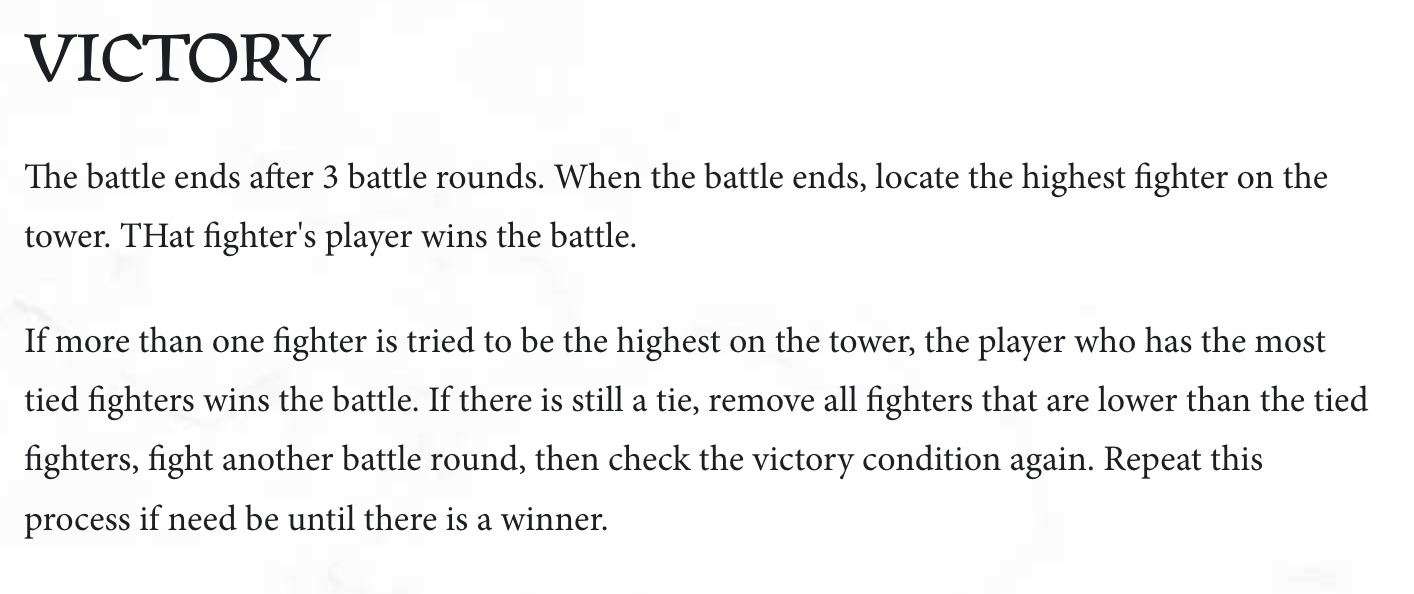
As soon as that idea landed, the obvious question came up: how do flying fighters actually move on something like this in Warcry?
And honestly, this is exactly the kind of discussion we love. One cool terrain idea, one innocent rules question, and suddenly we are all re-reading movement rules and imagining whether somebody can just launch themselves from platform to platform like the board is nothing.
Our first reading: walkers climb, flyers go point-to-point
At first, we were reading it like this:
- non-flying fighters have to move normally, so they approach a wall, spend movement getting there, and then spend more movement climbing;
- they also cannot end a move hanging in the air — they need to finish standing somewhere;
- flying fighters seemed like they would measure movement directly from where they start to where they want to land.
In practical terms, that gave us a neat mental model:
- walkers move along the two sides of a right triangle;
- flyers move along the hypotenuse.
That interpretation would make flying very strong on tall boards, but still limited by the actual distance between start and end points.
Then came the Warcrier quote
And then Stas brought in the important bit from Warcrier, which points toward a different reading:
Fighters with the Fly runemark can fly during a move action. If they do so, the fighter can move through the air vertically and horizontally. Count the horizontal distance moved towards the number of inches that fighter can move in total in that move action as normal, but do not count the distance moved vertically. Flying effectively allows a fighter to pass over terrain features and other fighters.
If we read that literally, then flying fighters count only horizontal distance, while vertical movement during that move is effectively free.
And that changes a lot.
Why this matters so much on a vertical table
On a normal board, this is already useful. On a tower with 6 or 7 levels? It becomes absolutely central.
Because if flyers really only count horizontal movement, then a fighter can go from low to high platform without paying extra for the climb, as long as the horizontal displacement fits inside their Move.
That means:
- tall terrain becomes much more dynamic for warbands with lots of Fly;
- climbing-focused choke points matter less against flyers;
- vertical boards may strongly reward some factions more than others.
And yes, that immediately led us to the obvious reaction:
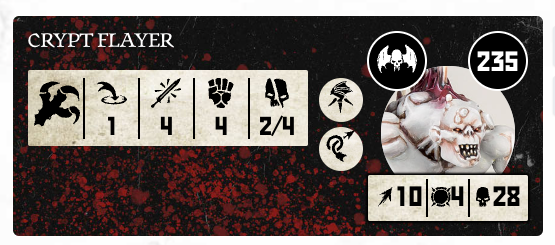
if this reading is correct, then Flesh-eater Courts start looking extremely spicy in Warcry, because so many of their fighters fly and they are not exactly fragile either.
The practical takeaway for hobby and table design
For us, this was a great reminder that terrain ideas and rules interpretation go hand in hand.
It is very easy to sketch a cool board concept first and only later realize that one keyword can completely reshape how it plays.
So if you are building a very vertical Warcry board, it is worth checking a few things before committing to the final layout:
1. How many access routes do non-flyers have?
If the only way up is one ladder or one wall section, some warbands may feel painfully slow.
2. How rewarding are the upper platforms?
If the top of the board is too important, flyers may gain a huge advantage just by reaching it first.
3. Are jumps between levels short in horizontal distance?
This is the big one. If platforms are almost directly above each other, flyers may move between levels very efficiently.
4. Do you want realism, spectacle, or balance?
Sometimes the coolest board is not the most balanced one — and that is fine, as long as everyone knows what kind of game you are setting up.
Where we landed
At the moment, the Warcrier wording suggests that flyers count horizontal movement only, which is a much stronger rule than our initial read.
We are still in the camp of “read carefully before building the whole scenario around one assumption”, but this already changed how we think about the tower project. If we do build it, we will want to make sure it is fun not only for flying warbands.
And to be fair, this is part of the charm of Warcry. The game really comes alive when terrain matters — but that also means every unusual board idea invites a rules deep dive.
Which, let’s be honest, is half the fun anyway.
Have you played on very tall Warcry boards?
We are curious how other people handle this in practice:
- Do you play Fly as horizontal only movement cost?
- Have you built multi-level boards where flyers felt too strong?
- And how high is too high for a Warcry table before movement starts getting weird?
Because now, obviously, we want to build the tower even more.