Windows, Obscuring, and the 3" Rule: Our Attempt to Finally Understand 4th Edition Terrain
Windows, Obscuring, and the 3” Rule: Our Attempt to Finally Understand 4th Edition Terrain
Sometimes a hobby evening turns into painting. Sometimes into list-building. And sometimes into a group debugging session where three grown men try to understand how shooting through a window works.
This was one of those days.
We were talking through terrain rules in 4th edition Age of Sigmar and, more specifically, how visibility, obscuring terrain, and the famous 3” rule interact. The good news: by the end, we felt like it started making sense. The bad news: only after going in circles through windows, walls, melee through openings, and a lot of “wait, what?”
The key thing we had to untangle
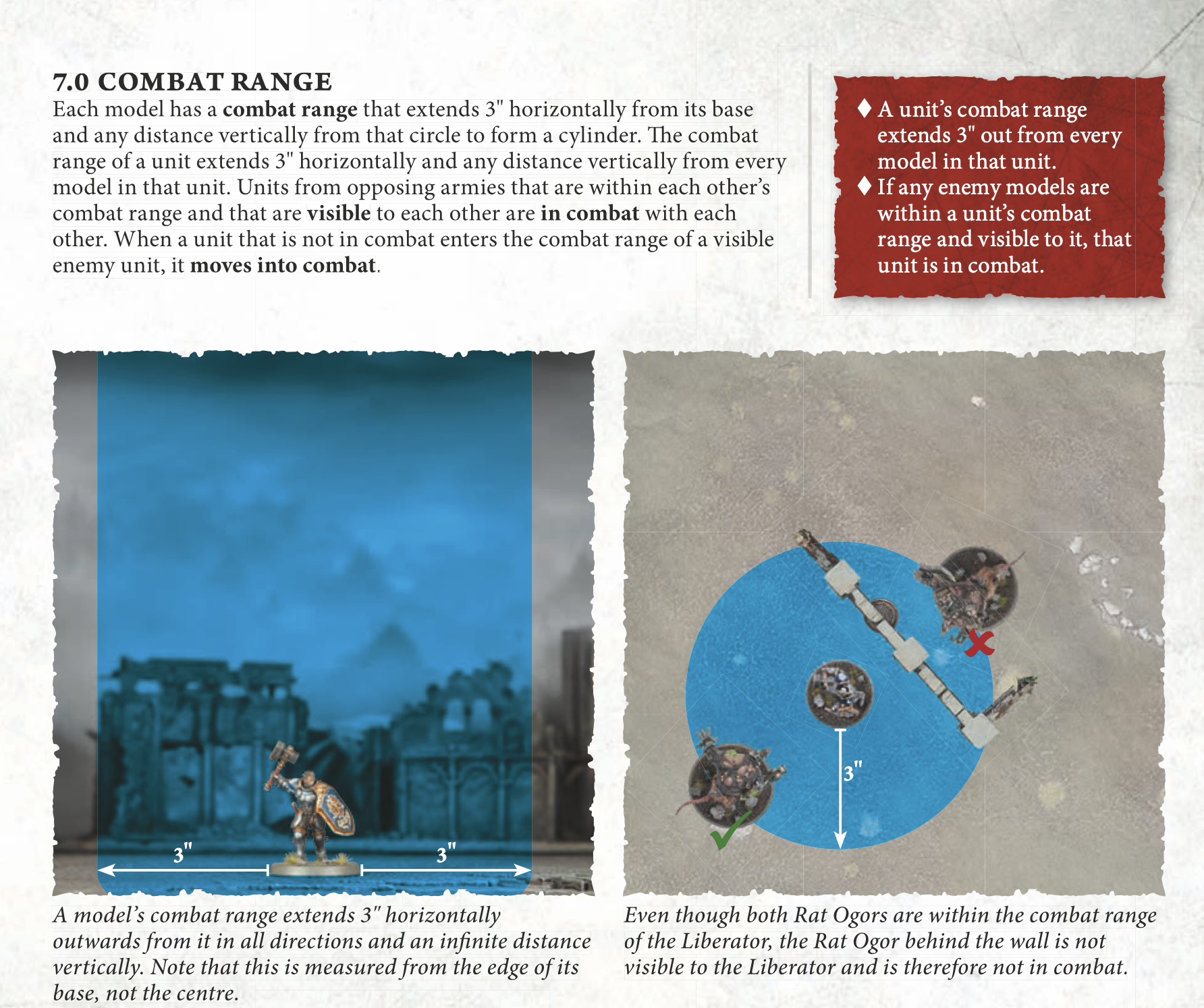
As Michał reminded us right at the start: in 4th edition, which we’ve been playing since last summer, there are no weapon ranges for melee like in older editions — combat range is always 3”.
That led us into the real headache: terrain.
What Ender initially understood was this:
- you can’t shoot through holes or over terrain if that terrain is Obscuring
- but you can shoot if even a tiny part of the target model is sticking out from the side of the terrain
- visibility is checked per model, not for the whole unit
And that per-model part turned out to be one of the most important takeaways from the whole discussion.
Visibility is 3D, cover/obscuring is 2D
This was probably the single most useful summary from the whole chat:
- Visibility is checked in 3D
- Cover and Obscuring are checked in 2D, from above
That sounds simple written out like that, but in practice it led us into exactly the kind of question you’d expect:
If there is a wall with a window, can models see and attack each other through the window?
Our conclusion was basically: yes, if there is actual visibility through the window.
Without a window, no visibility means no shooting. Simple enough.
With a window, things get more interesting.
So can you shoot through a window?
Yes — but not automatically.
What we eventually landed on was:
- Each attacking model must have visibility to the target unit.
- If that visibility goes through Obscuring terrain, then the Obscuring rule may still stop the shot.
- The exception is when the attacker is within 3” of that terrain edge/opening in the direction of the target.
So the window doesn’t magically ignore Obscuring by itself.
The important part is:
- visibility through the window lets you pass the first test
- being within 3” of the terrain lets you get around Obscuring for shooting
If you’re farther away than 3”, then — as we understood it — Obscuring wins.
The ELI5 version we wish we’d had earlier
At one point Stas boiled it down into an almost perfect mini-algorithm, and honestly that’s the version we want to remember for future games:
Can this model shoot?
- Does it have visibility to the target unit?
If not: no. - Is that visibility going through Obscuring terrain?
If not: yes. - If yes, is the attacker within 3” of that terrain edge/opening?
If yes: yes.
If not: no.
And separately from that, if units are close enough to be in combat, then normal restrictions like Shoot in Combat still matter.
That was another moment of confusion in the chat: we mixed up being within 3” of terrain with being within combat range of an enemy unit. Those are two completely different checks.
And yes, melee through a window is apparently a thing
This was maybe our favorite part of the discussion, because it sounds ridiculous until you follow the logic.
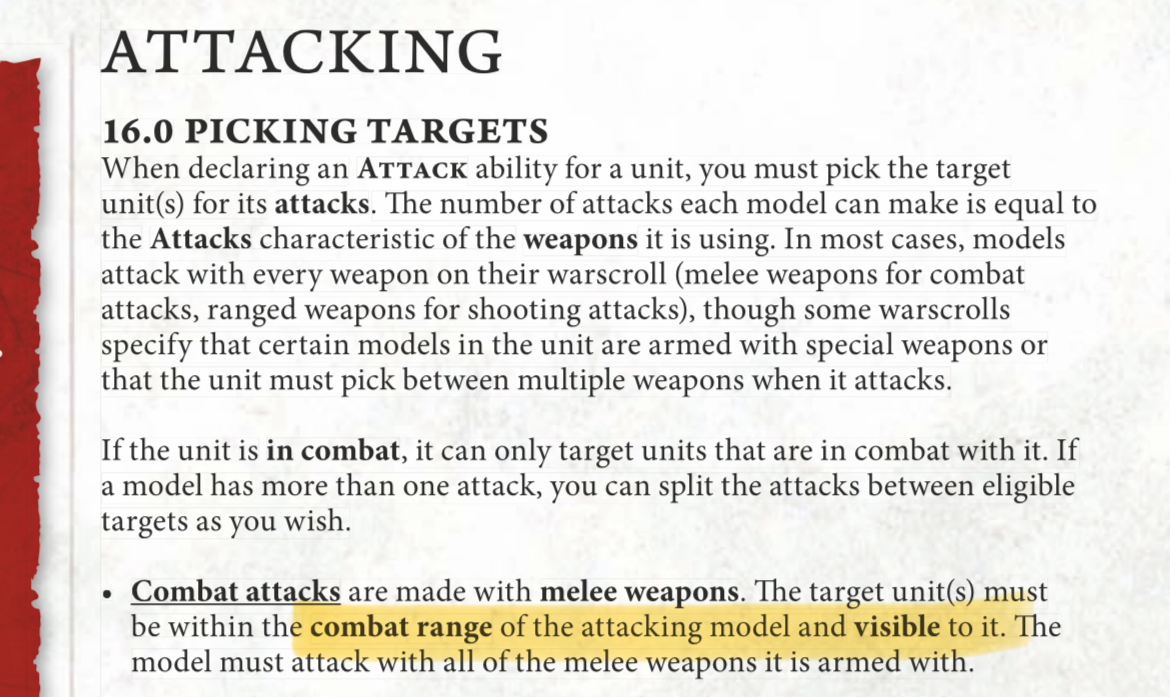
If there is visibility through the window, then the units can be considered in combat if they’re within the universal 3” combat range.
But — and this is the bit that made it feel both weird and weirdly elegant — the whole unit may be in combat, but only the models that actually have visibility can fight.
So yes, our reading of the rules led us to the wonderfully silly image of warriors punching each other through a window.
Warhammer remains a beautiful game.
The practical takeaway for our games
What mattered most for us wasn’t some tournament-level edge case. It was that we wanted a usable table-side understanding for future games.
Our working summary now is:
- melee/combat range in AoS 4 is always 3”
- visibility is checked per model
- visibility is 3D
- Obscuring is judged in 2D
- you can potentially shoot through a window if you can actually see through it
- but if that line goes through Obscuring terrain, then you generally need to be within 3” of the terrain/opening for the shot to be allowed
- if there is no visibility, there is no shooting
- in combat, only models with visibility can actually make attacks
Is this slightly cursed? Yes.
Does it also kind of make sense once you stop fighting the wording? Also yes.
Screenshots that helped us get there
We had a couple of screenshots in chat while trying to piece this together, and they genuinely helped move the discussion from pure confusion to “okay, I think I get it now.”
Side quests, as always
Because no rules discussion in our group ends cleanly, this one also drifted into hobby plans.
We officially started talking about next Thursday’s game, Ender considered finally gluing together the hull of the Frigate, and Michał declared that he was painting trees that day.
There was also a very relatable side topic about paints: Ender wanted to swing by and test painting a single dwarf, mostly to see how Michał’s metallics and leather/boot recipe would come out before buying similar paints for himself. Extremely sensible hobby behavior, honestly.
And then, naturally, we ended up admiring a Soul Grinder.
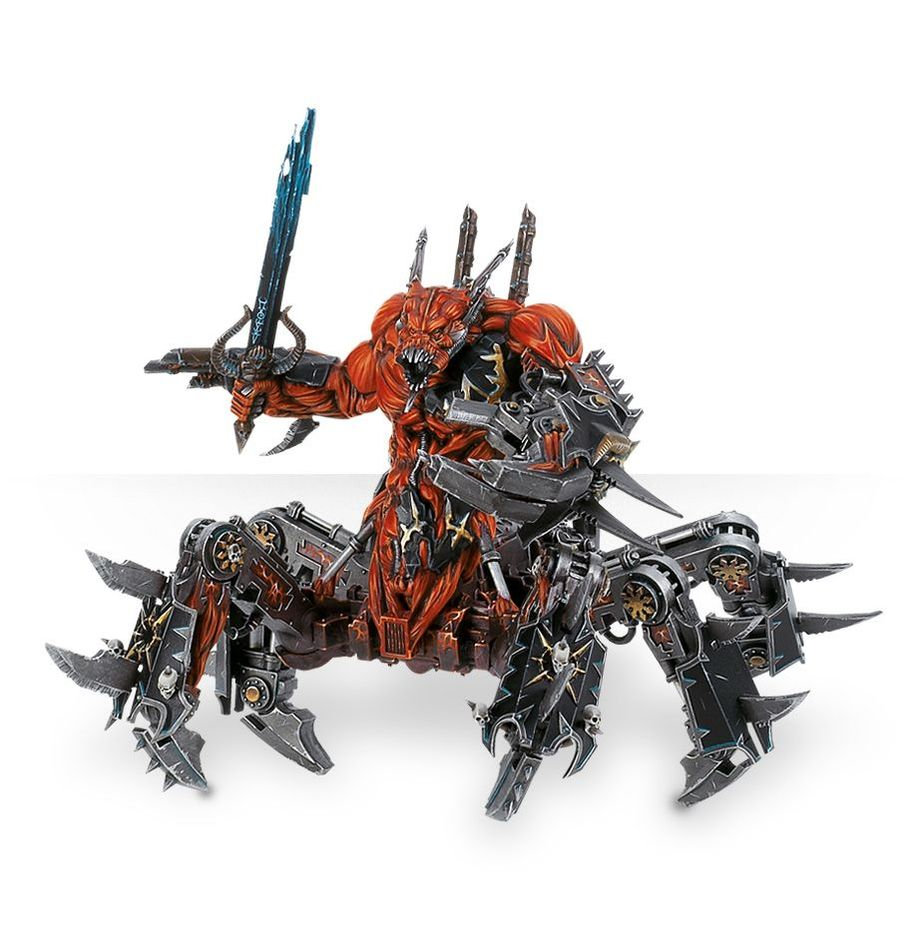
That led to the important public service announcement that it works in Warhammer 40k and Slaves to Darkness in Age of Sigmar, but is apparently Legends in AoS, so not exactly a safe pick for official matched play in “bigmar”.
Final thought
We love these moments because they are such a huge part of the hobby for us.
Not just playing, not just painting, but collectively wrestling the rules into something understandable, making jokes about fighting through windows, and then immediately getting distracted by dwarfs, metallic paints, scenery, and giant daemon engines.
If nothing else, we now have one very useful lesson for future games:
When in doubt, check visibility per model — and never underestimate the tactical importance of a window.