Second Reading #1: When Can a Unit Move Through Another Unit?
We immediately loved Staś’s idea for a small recurring series, so here we go: Second Reading. The premise is simple and very relatable — after a first read-through of the rulebook and a few games, we go back to the rules from the beginning, this time more carefully, to refresh things, catch what we missed, and notice the bits that did not fully click the first time.
Staś started doing exactly that a few days ago, and the plan is to drop one such little discovery or rules curiosity every day for the next several days. Honestly, this is exactly the kind of thing we like reading ourselves: not polished tournament wisdom from on high, but real hobby-table questions that come up when someone actually sits down and reads the book again.
So this is Second Reading #1, and today’s question is a very good one: when exactly is a unit allowed to move through another unit, and when is it not?
The first screenshot that triggered the whole discussion was this one:
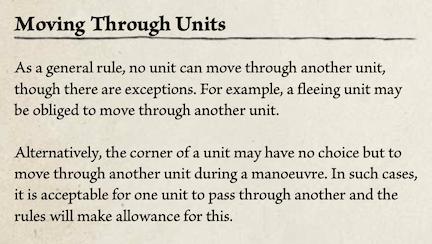
Staś’s reaction was basically: okay, but then when is it allowed, when is it not, and what is the difference between the whole unit moving through another unit and just a corner clipping through another unit during movement?
And honestly, that is a very familiar kind of rules question. On paper, it sounds obvious. On the table, once wheels, corners, pivots, and charge alignments enter the picture, it gets muddy fast.
Then there was a second rule fragment added to the discussion:
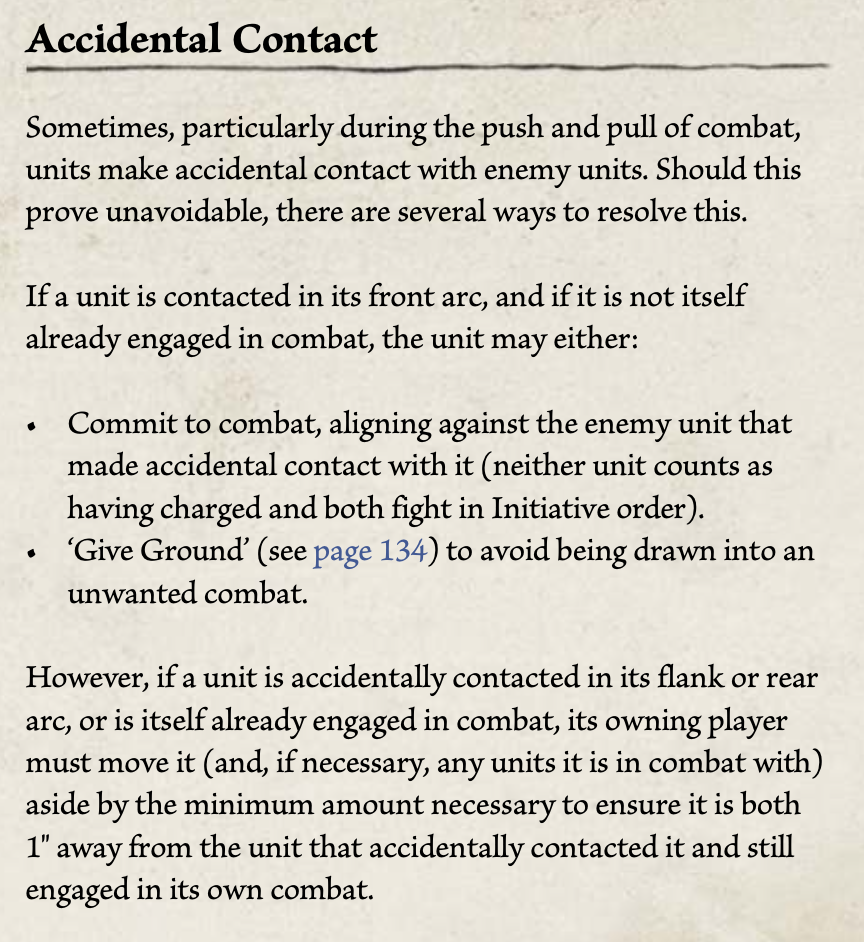
Which naturally led to the follow-up question: does this refer to situations like making a second wheel during a charge and accidentally catching another unit on the way?
That is exactly the sort of thing we want this series to highlight. Not because we already have the perfect answer wrapped up in a bow, but because these are the places where the rulebook stops being abstract and starts interacting with actual miniatures on an actual table.
Why this felt blogworthy
What we like here is that this is not some obscure edge case pulled from nowhere. This is a question born directly from rereading the rules with a bit more experience than during the first pass. The first time through a rulebook, we usually focus on the big structure: movement, shooting, combat, psychology, army building, and so on. On the second pass, the tiny wording differences start to matter much more.
And here, the wording seems to raise a few practical distinctions:
- moving through another unit,
- a unit’s corner passing through another unit’s space during a wheel or pivot,
- and accidental contact during movement, especially while charging.
Those are close enough to be confusing, but different enough that the rulebook probably intends them to mean different things.
The real value of rereading
This is also a nice reminder of how useful a second full read of the rules can be. We have all had that moment where a paragraph suddenly makes sense only after a few games, because now we have a board-state in our heads to attach it to. A sentence that seemed trivial at first becomes a source of questions later.
So yes — we are fully on board with turning this into a series.
Second Reading begins
For now, we wanted to capture the question itself, because it is a good one and a very honest one:
When can a unit move through another unit, when can it not, and how should we understand cases where only part of the movement path — like a corner during a wheel — seems to overlap another unit?
And the related practical version:
If, during a charge, we make that extra wheel and accidentally touch another unit, is that the kind of situation this second rule is talking about?
If you have had the same doubt while reading or while playing, welcome — this is exactly why Second Reading exists.
We are pretty sure this will not be the last time a seemingly simple movement rule turns into ten minutes of staring at diagrams and moving trays back and forth by two millimetres.
And honestly? That is part of the charm.
What comes next
Staś plans to keep posting one such rediscovered rule, weird wording, or interesting little catch each day for the next few days. So this is the start of a small series about rereading the book not as complete beginners, but as players trying to understand what we previously skimmed, misunderstood, or simply failed to notice.
If the rest are anywhere near as discussion-worthy as this one, we are going to have a lot of fun with it.