Second Reading #3: Why Rank Bonus and Disruption Matter More Than We Thought
We really like this kind of hobby content: the moment when a rule we initially skimmed over suddenly turns out to be absolutely central on the tabletop. Over the last two days, Staś shared another round of notes from his ongoing “Second Reading” series for Warhammer: The Old World, and this time the spotlight was on Rank Bonus and Disruption.
This is very much in the spirit of our group: reading rules, misreading some of them, testing them in games, then coming back wiser and slightly more suspicious of every “small” paragraph in the rulebook.
Second Reading, episode 2 and 3
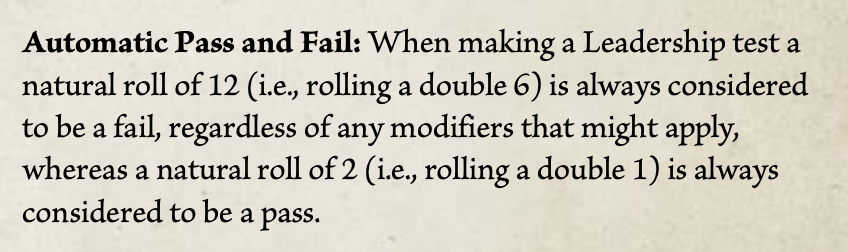
Staś first dropped episode 2:
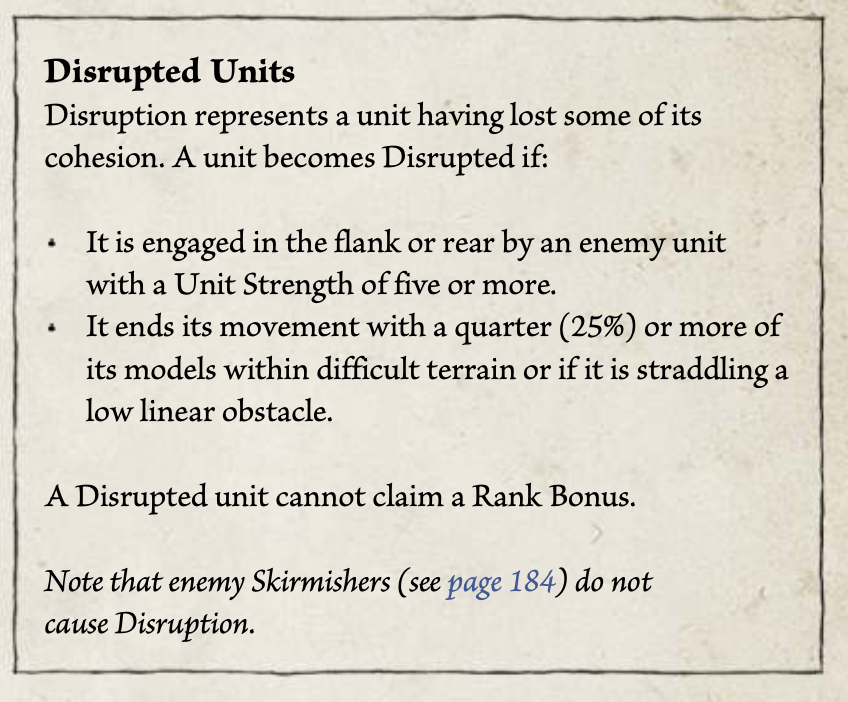
And then followed it up with a short third episode focused specifically on Disrupted and Rank Bonus:
The big realization: rank bonus is not “just 1-2 points”
As Staś wrote, when he first read these rules last summer, it was easy to think: how important can rank bonus really be? Maybe it is just a point or two here and there.
But once we started getting more games in, that stopped looking like a minor detail and started looking like one of the key building blocks of combat.
At 500 points, infantry blocks are still pretty small, so the effect is there but not always dramatic. Once we move up to 1000-1250 points, though, we start seeing units of 30 models, and suddenly max rank bonus becomes a regular part of the game rather than a rare bonus.
That matters even more for armies that rely on infantry doing the boring but essential work: holding space, sticking in combat, and forcing the opponent to spend time and resources shifting them.
Why Warband makes this even stronger
One of the most interesting observations from Staś was how much stronger this becomes once Warband enters the picture.
If a unit adds its rank bonus to combat resolution, and then Warband also lets it add that same rank bonus to Leadership, then in practice that rank bonus starts pulling double duty.
The example he gave was a block of goblins with a champion and Ld 6:
- +3 combat resolution from ranks
- +3 Leadership from Warband
And that means we can almost think about it as a kind of effective +6 swing in how that unit functions in combat and morale terms. For cheap infantry, that is huge.
That was also one of Staś’s takeaways from the Dragon tournament. His Night Goblins — which he had often treated as basically disposable delivery systems for fanatics — kept surviving much longer than expected. They were not there to rack up wounds, but they were doing exactly the kind of work infantry is often supposed to do:
- taking up space,
- tying enemy units down,
- contesting or taking objectives,
- and simply refusing to disappear when it felt like they should.
That is a great reminder that a unit does not need to kill a lot to be valuable.
So what does Disruption actually do here?
This is where the rule interaction gets really spicy.
If we can make the enemy unit become Disrupted, then that rank-based durability can suddenly vanish. Staś pointed out two main ways this can happen:
- forcing or catching a charge in difficult terrain,
- or hitting the enemy in the flank.
And if the enemy loses rank bonus, then units relying on that bonus for both combat resolution and Leadership through Warband can suddenly feel very different. A combat that looked stable can turn into a failed break test very quickly.
That is why this is not just a small technical rule. It changes the arithmetic of combat in a big way.
Heavy chariots and the magic number: Unit Strength 5+
Another neat practical point from the discussion: not every flank charge causes disruption.
To do it, the charging unit needs Unit Strength 5+.
That is why Staś was so happy about heavy chariots having US 5. A single heavy chariot hitting the flank can be enough to shut off the opponent’s rank bonus, and because those chariots are fast and maneuverable, that creates a very real tactical threat.
When that happens, the whole combat resolution math can suddenly swing hard in our favor.
Then came the corrections — which is also very “us”
Of course, the best part of group rules discussions is that someone will always catch the part we overlooked.
Michał pointed out an important detail: for a charge through difficult terrain to count as disrupted, it is not enough for just one model to be standing in the terrain. At least 25% of the unit has to be in difficult terrain.
That is a very relevant clarification, and apparently one we had already tripped over in an earlier game.
He also raised a second interesting question: what exactly does it mean that skirmishers do not cause disruption?
Our reading here is that even if skirmishers charge a flank and have enough models, they still do not disrupt the enemy in the same way a more solid formation would. Staś’s interpretation was that this probably reflects the way skirmishers fight: not as a dense block smashing into a flank, but in a more loose, fluid, “swarming” way.
We are not going to pretend this is the final word on the topic, but it is definitely one of those rules interactions worth revisiting separately.
Why we like this kind of exercise
What we enjoy most in these “Second Reading” posts is that they are not just dry rules summaries. They are the bridge between:
- reading the rules,
- playing actual games,
- making mistakes,
- and then discovering what really matters on the table.
It is also a good hobby tip in the broad sense: if a rule looks minor on first read, it may still be a cornerstone of the game once units get bigger and the board state gets more complex.
And honestly, that is one of the most satisfying things in The Old World right now — seeing apparently modest infantry mechanics turn into the reason a unit survives, holds an objective, or breaks the enemy at exactly the right time.
Staś already teased that the next episode will look at a curious detail related to magic, so we are definitely waiting for that one too.