Second Reading, Episode 2: Snake Eyes, Break Tests, and Tiny Rules Discoveries in The Old World
We love these moments in Warhammer when a quick rules question turns into a proper little expedition through the rulebook. You know the type: someone throws out a “wait, how does this actually work?”, then five minutes later we are deep in edge cases, screenshots, and increasingly excited messages.
This time, our group chat gave us exactly that kind of hobby-tip rabbit hole for Warhammer: The Old World. It started with a practical battlefield question and ended with a very satisfying reminder: sometimes the rule is actually written down, and sometimes a second reading really does pay off.
Snake eyes and the “surely this can’t pass” break test
Stas kicked it off with a very relatable observation: sometimes combat resolution gets so high that rolling a Break Test feels completely pointless. On the table, we have all had that moment where the enemy smashed us so hard that we are already mentally picking up models before the dice even hit the table.
But then came the key reminder: even if the chance is tiny, double 1 always passes if the rules say the modifiers don’t matter. That is only a 1/36 chance, but it is still a chance.
At first, we got tangled in an important distinction: is a Break Test just a Leadership test by another name, or is it its own separate thing? And if snake eyes passes “regardless of modifiers”, does combat resolution count as a modifier here?
That led us into the classic Warhammer rules-discussion rhythm:
- one of us is pretty sure it works one way,
- another says “hmm, not sure”,
- someone finds a screenshot,
- and suddenly the whole thing becomes much more interesting than it had any right to be.
Here was one of the first screenshots we were passing around while trying to pin the wording down:

And then another one, which pushed the discussion forward in exactly the best way possible: by showing that the rules really do talk about the values added to Leadership as modifiers.

That was the turning point. Michał found the wording, had the proper “EJ MASZ RACJĘ” moment, and suddenly this stopped being a vague feeling about how Warhammer usually works and became an actual rules-based answer.
The useful hobby tip: do not skip the roll
The practical takeaway here is simple and very useful:
If you are taking a Break Test in The Old World, do not assume the roll is irrelevant just because combat resolution is brutal.
If the rule says snake eyes passes regardless of modifiers, and combat resolution is being applied as a modifier, then there is still that tiny window where the unit hangs on.
That does not automatically mean every successful result becomes the same battlefield outcome, and that was another part of our discussion. We were also talking through whether a passed test means Give Ground, whether overwhelming outnumbering changes the result, and how these specific test outcomes interact. The important thing for us here was narrower and cleaner: the roll itself may still matter, even in seemingly hopeless situations.
“Wait, it is actually in the rulebook”
The funniest part of the whole exchange was that for a moment it looked like this might be FAQ territory. Then Stas found the relevant bit in the book after all.
A beautiful little victory for reading the correct paragraph instead of the nearby paragraph.
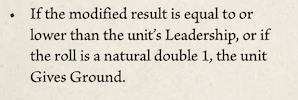
And honestly, this is maybe the most relatable part of the whole story. We all do this. We remember the general shape of a rule, we look in the place where we think it should be, we do not see it, and our brain immediately goes: “ah yes, classic Warhammer, the edge case is probably nowhere.” Then it turns out the answer was there all along.
So yes: second reading, episode 2 was a success.
Panic tests: Leadership tests, or something adjacent?
Of course, once we had one rules thread open, we immediately pulled on another.
Stas noticed that the wording around Panic Tests made them sound suspiciously like a subclass of Leadership tests, which would matter for the same snake-eyes logic.
This screenshot was the spark for that part of the discussion:
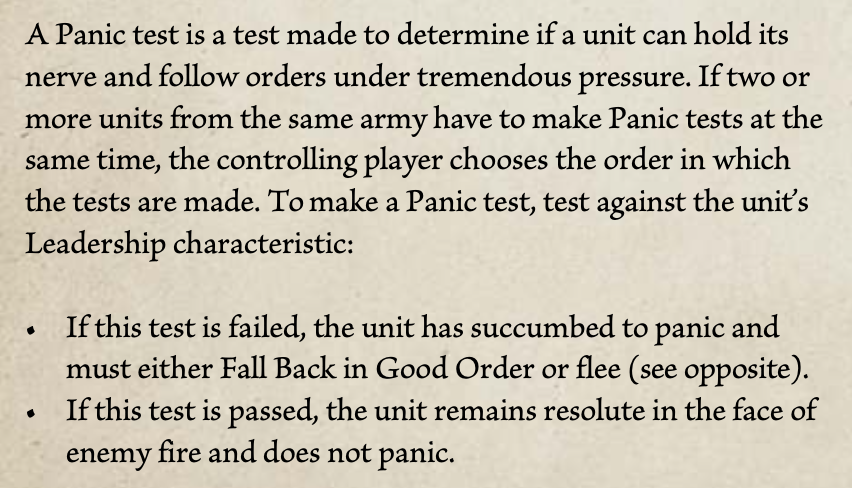
Michał’s initial read was that a Panic Test is a test against the Leadership characteristic, but not necessarily the same thing as a formal Leadership Test. Which, to be fair, is exactly the kind of wording distinction Warhammer loves to make matter.
Then another screenshot appeared, and the wording seemed to support the broader interpretation:
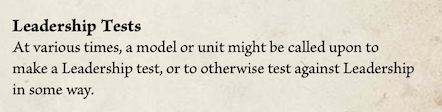
That “or otherwise test” phrasing was the kind of line that makes a rules discussion instantly more promising.
We are not turning this post into a courtroom ruling on every possible interaction, but as a hobby tip this is a great reminder of something we keep rediscovering in The Old World:
- terminology matters,
- similar tests are not always identical,
- but sometimes the wording is broader than we first assume.
Then, naturally, we wandered into Unit Strength
Because no good rules conversation ever ends where it started, the chat later drifted into Unit Strength.
Michał asked whether a light chariot keeps Unit Strength 3 per model regardless of how many wounds it currently has. That is exactly the sort of question nobody asks for months, and then once it appears, everyone immediately wants to know the answer.
Here is the screenshot that kicked off that branch of the discussion:
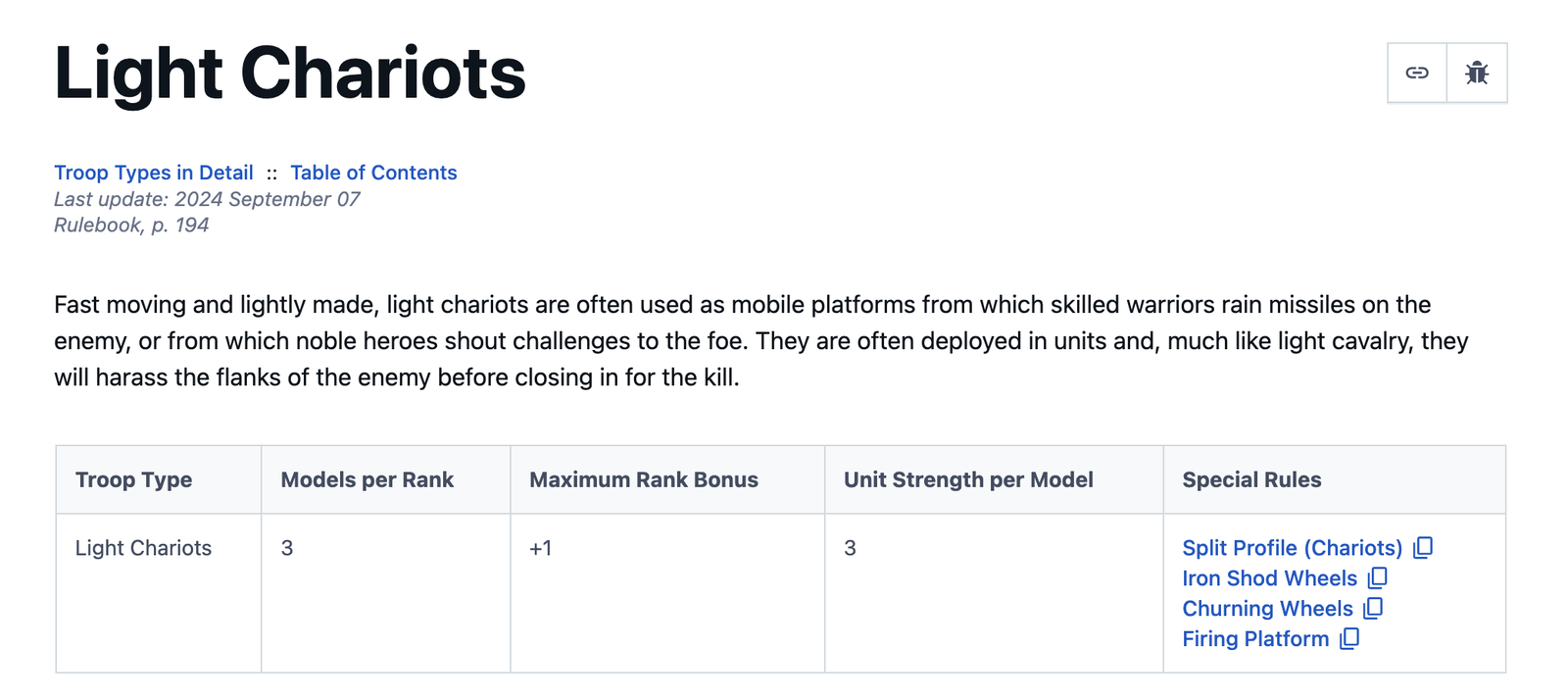
And of course, from there Stas immediately escalated the example in the best possible way:
if a Warboss on Wyvern is down to 1 wound, does it still count as 7 Unit Strength because that was its starting value?
A very Warhammer question. A very important question. A very “we are definitely not done with this topic” question.
The relevant screenshot from that part of the chat:
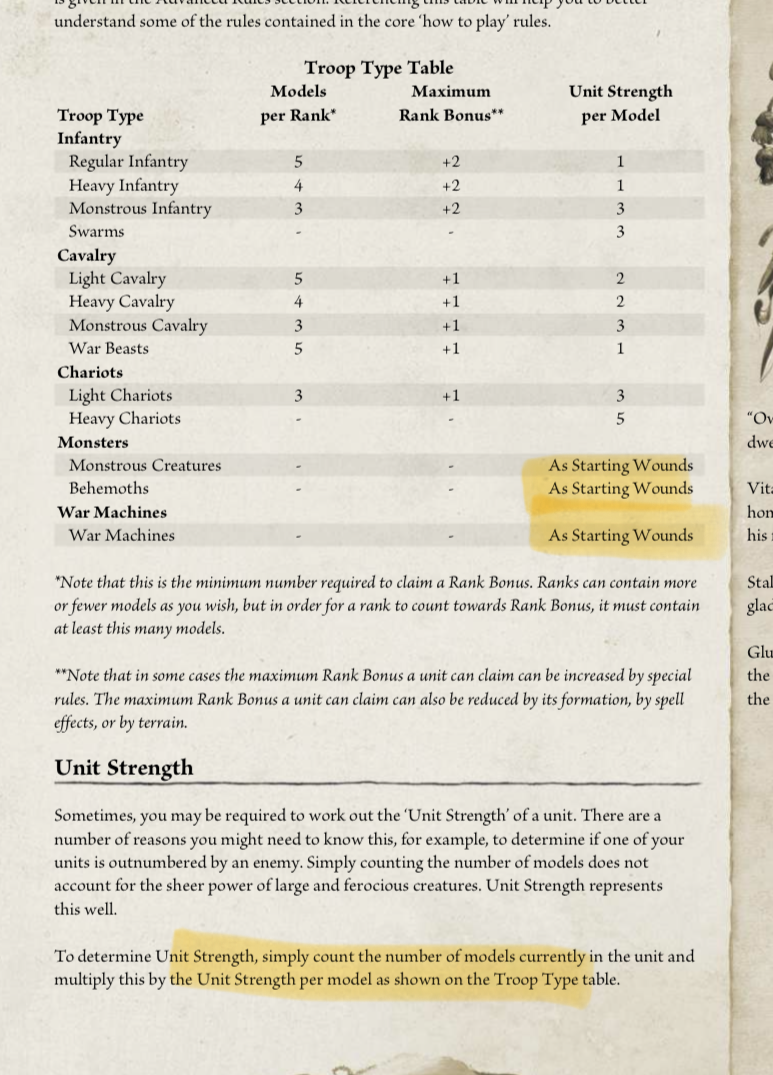
We did not fully close that topic in this conversation, but we did get one especially fun observation out of it: a heavy chariot with 4 wounds and Unit Strength 5 is a wonderfully odd little rules nugget. Stas was immediately delighted by that, and honestly, same.
Why we like these tiny discoveries
This was not a battle report. Nobody painted a full army because of it. No grand campaign was decided.
But this is still one of our favourite parts of the hobby.
A small rules discussion like this does a few useful things:
- it helps us play tighter games,
- it reminds us not to skip “impossible” rolls,
- it makes us reread the rulebook more carefully,
- and it gives us those lovely little moments where the game surprises us by actually being clearer than expected.
That last one may be the rarest treasure of all.
Our takeaway for the table
If we had to boil this whole chat down into one practical hobby tip for The Old World, it would be this:
Roll the dice, then check the wording
Even when a Break Test looks hopeless. Even when you are sure an edge case must be FAQ-only. Even when your “I know how Warhammer works” instincts are telling you the answer already.
Sometimes snake eyes really do save the day. And sometimes the second reading is the one that finally gets it right.
If you enjoy this kind of rules archaeology as much as we do, we will almost certainly have more from our ongoing second reading adventures soon.