Second Reading #4: a few surprisingly weird magic rules in Warhammer: The Old World
We had one of those very Wiatry Magii mornings recently: someone checks one small rule, then suddenly we are knee-deep in targeting, front arcs, dispels, miscasts, old-edition memories, and the metaphysics of whether a fireball actually comes out of a wizard’s hands at all.
This one started with Stas doing rules homework and sharing a couple of screenshots from the rulebook/FAQ. The result? A very nice little hobby-tip style reminder that in Warhammer: The Old World, magic has a few interactions that are easy to miss on first reading.
Do spells need line of sight?
Stas started by checking the rules for magic missiles, then specifically Fireball, then FAQ and errata. His first conclusion was glorious: maybe fireballs do not shoot out of the wizard’s hands at all — maybe they just fall from the sky.
Why? Because some spells can be cast without line of sight.
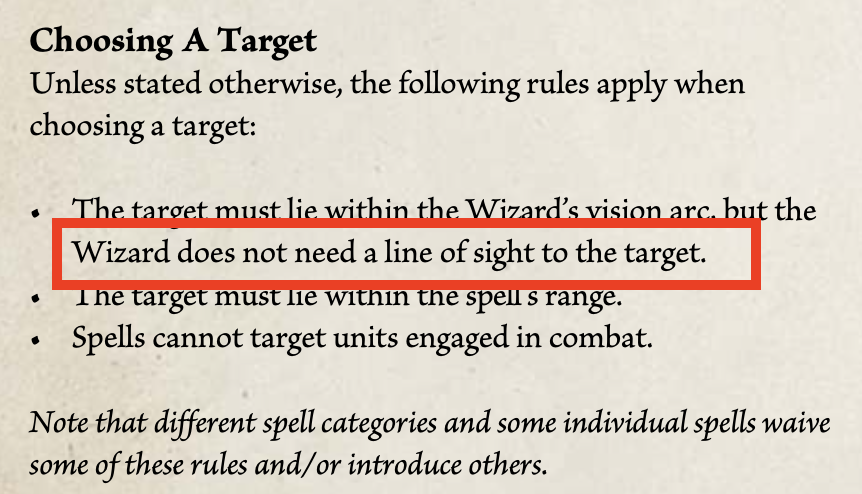
That naturally led us to the weird but very Warhammer question: if a wizard does not need LOS to affect a target, then why does front arc still matter?
Michal had our favorite in-universe explanation of the day, and honestly we are adopting it immediately:
The wizard does not need to see the target with his own eyes, because he senses auras, souls, and the flow of magical energy across the battlefield. He can weaken enemies with a Hex or strengthen allies with an Enchantment behind a hill, forest, or another unit by bending the Winds of Magic in their direction. But if he does not need to see the target, why can he not cast behind himself? Because spellcasting requires intense concentration, complex gestures, and incantations. The wizard has to focus his will and project power in a specific direction. The front arc represents the direction in which he is projecting that power.
Honestly? That is a much more satisfying explanation than just shrugging and saying “because rules”.
But Fireball is not completely falling from the sky
A few minutes later, Michal came back with the classic correction: not quite.
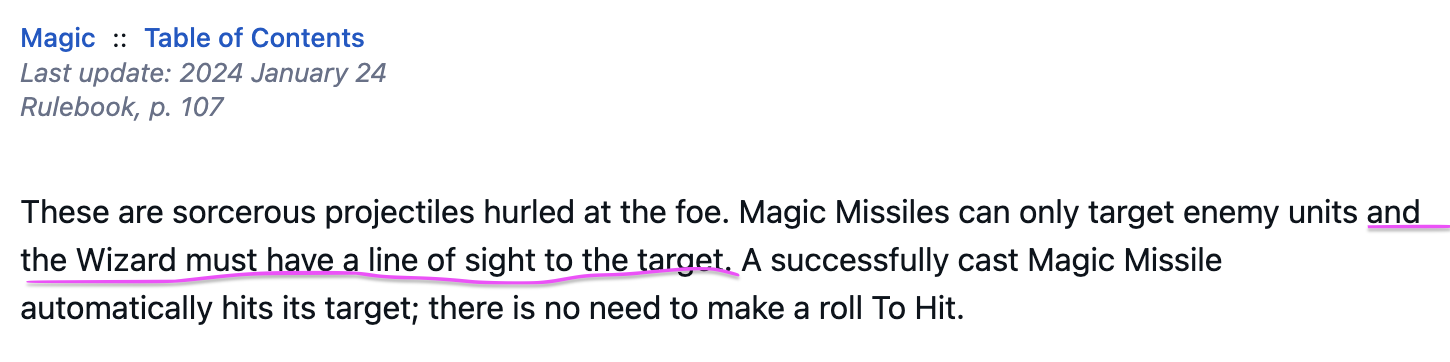
And then Stas found the exact bit he had missed:
So the cleaner takeaway is:
- Hexes and Enchantments can do that neat “I do not need to see you, but you must still be in my front arc” thing.
- Fireball is not the perfect example for “magic from nowhere” after all.
Which is still a fun rule interaction, and definitely one of those things worth bookmarking before a game.
Second Reading: even impossible-looking spells can still be stopped
Then Stas dropped what he called a very short Second Reading, and it turned into three genuinely useful reminders.
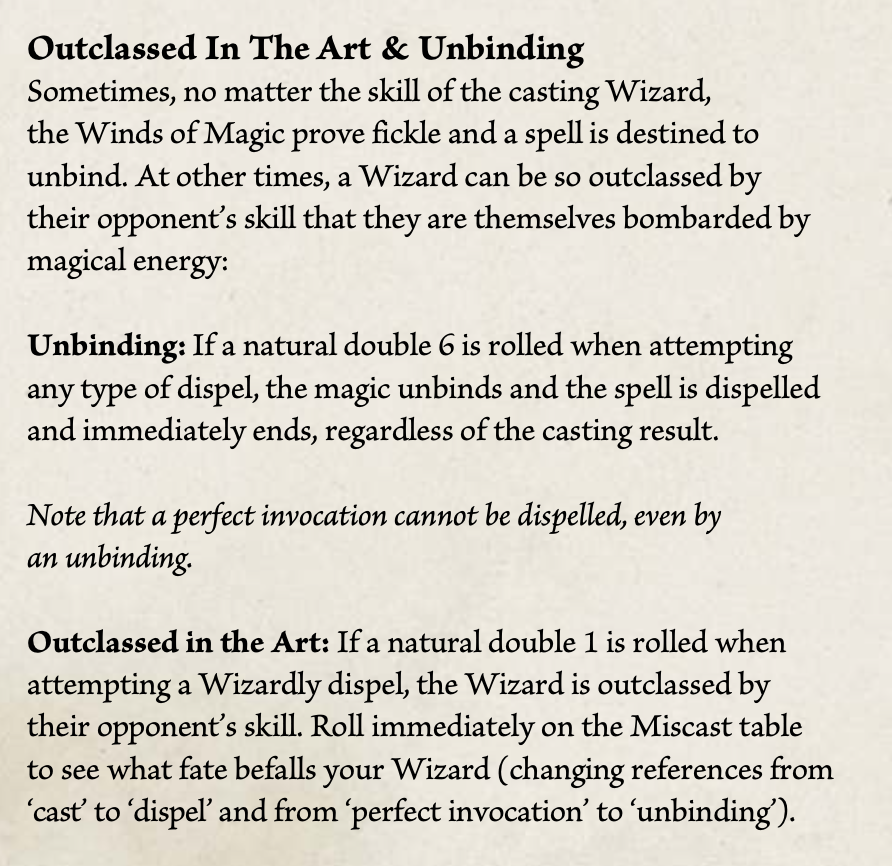
1. Double six on the casting roll is special
If the casting roll contains two natural sixes — what Stas called a “perfect invocation” — then that spell cannot be dispelled.
That is the big one.
2. Other huge casts can still be dispelled
Even if a spell reaches some absurd total thanks to wizard level bonuses, warpstone, or other modifiers — for example, effectively needing a 16+ on 2D6 — it can still be dispelled by double sixes.
That is a very Warhammer kind of rule: even the hopeless attempt is not fully hopeless.
3. You can miscast while dispelling
Or, as Stas wonderfully put it, maybe we should call it a mis-dispel.
That is exactly the sort of edge case many of us vaguely assume cannot happen until it suddenly does.
One extra bound spell note
Michal added an important extra detail: bound spells cannot miscast.
They can, however, still be dispelled.
And because no rules discussion is complete without an old-edition detour, he also reminded us that in 6th edition, bound spells worked differently: they were cast automatically, and you rolled mainly to determine how much the opponent needed to beat on the dispel. Which is also a lovely reminder that if you are coming back to the hobby after twenty years, your memory may be full of rules that are no longer legal.
We felt that one deeply.
Side quests: tools, miniatures, and absolute maniacs with Impetuous armies
Because this was our chat, the rules discussion naturally wandered off in a few excellent directions.
First, Stas shared his collection of work-in-progress tools for Warhammer: The Old World:
If you like hobby utilities, campaign helpers, or just seeing what fellow players are building around the game, it is worth a look.
Then Michal got distracted by pretty plastic soldiers, which, to be fair, is always relatable:

And finally, there was a brief but very accurate summary of some army design philosophy in The Old World: if everything is Impetuous, then this is probably not going to be a delicate festival of tactical subtlety. It is going to be a proper brawl.
As it should be.
Final takeaway
If we had to boil this whole conversation down into a few quick hobby tips for Warhammer: The Old World, they would be these:
- Do not assume line of sight is required for every targeted spell.
- Do not forget that front arc still matters, even when LOS does not.
- Check the exact wording of Magic Missiles versus Hexes/Enchantments, because they do not all behave the same.
- A spell cast with double natural sixes is a different beast from a spell that merely reaches a huge total with modifiers.
- Yes, you can get into weird territory while dispelling too.
- And if you are relying on memory from older editions, always do a fresh read — because Warhammer loves punishing confidence.
Also, if anyone is wondering whether we now want a full bedtime-rules-reading series for the group, that question was asked too:
And honestly? Given how useful this little Second Reading turned out to be, we would not say no.