A Weird Old World Rules Nugget: Why Saurus Can’t Take Magic Armour
We love it when a casual rules chat turns into one of those “wait, what?” moments that completely changes how we look at army-building. This time, Michał dropped a genuinely spicy Warhammer: The Old World rules interaction into our chat, and it sent us down a proper little rabbit hole.
The topic was simple on the surface: when can a character actually take magic armour or a magic shield?
According to the rulebook, a model can only take a magical version of an armour or shield if it has the option to take the non-magical version first.
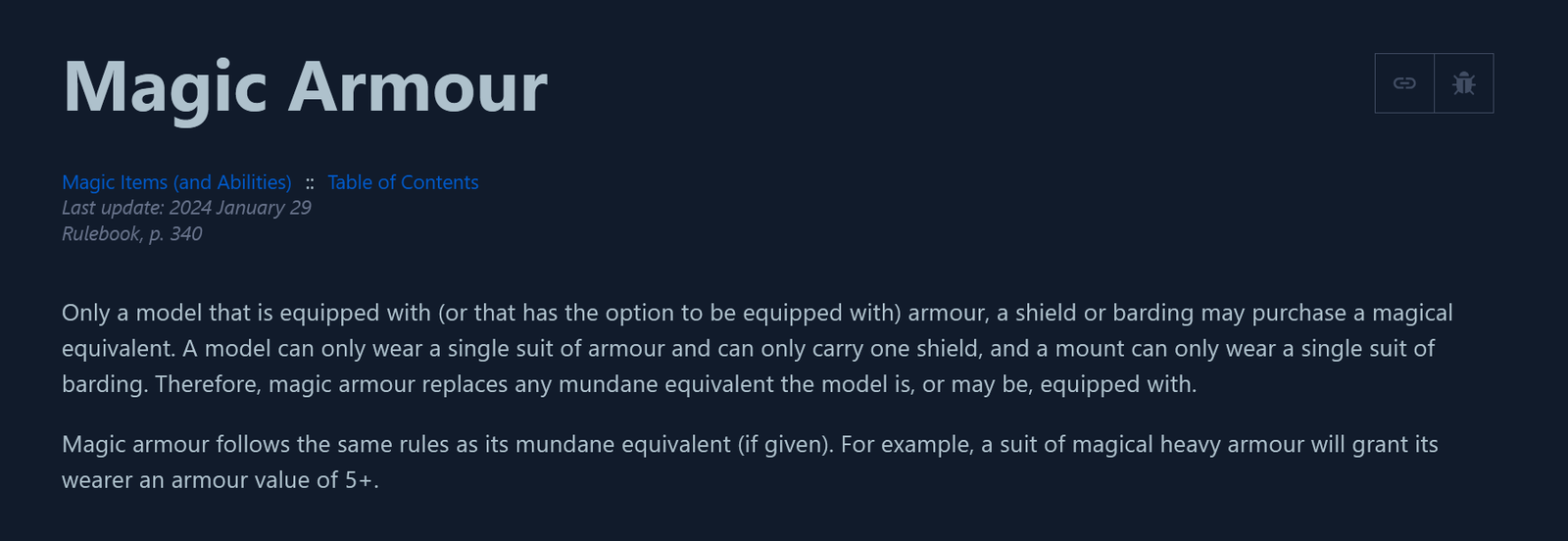
That sounds straightforward enough… until we get into cases where a model has something that acts like armour, but isn’t quite the same thing in rules terms.
Natural armour is not the same as having armour
Michał pointed out one of the classic examples: some characters have armour not because they bought it from an equipment list, but because of their biology, hide, scales, or similar special rules. In the Lizardmen case, this shows up as Scaly Skin.
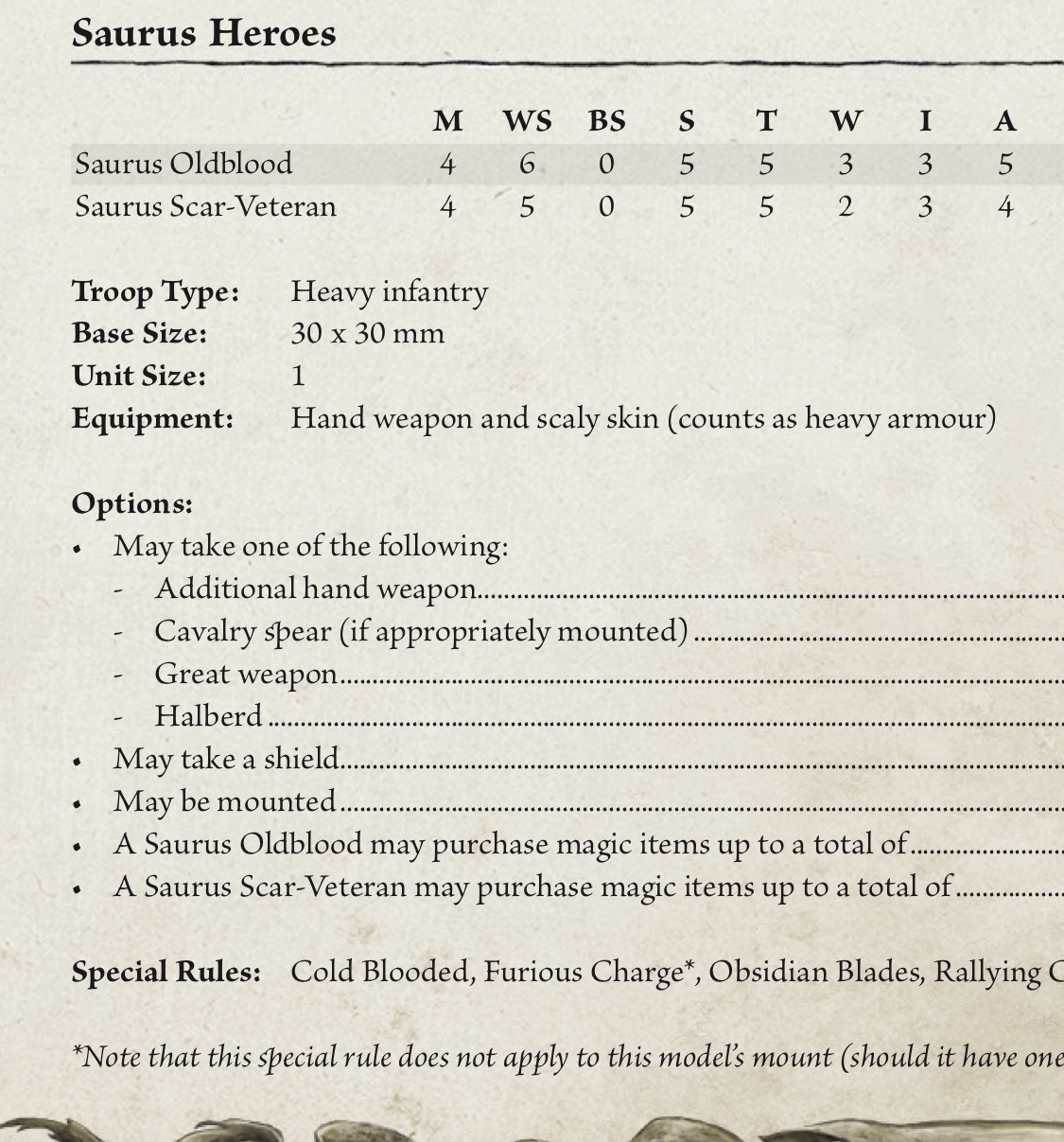
And here’s where it gets properly awkward: the wording says it counts as heavy armour. Not that the model has heavy armour, but that it counts as it.
That distinction matters a lot more than we’d like.
The FAQ makes it even clearer
Then Michał dug up the relevant FAQ from the rulebook.
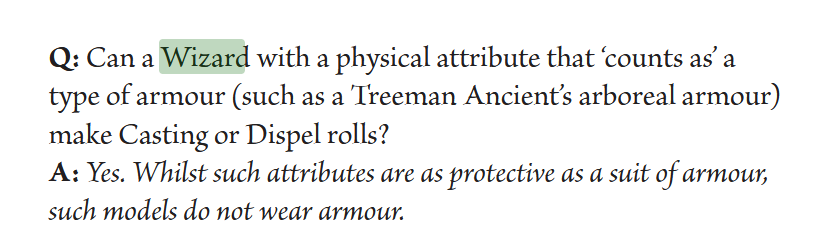
Based on that FAQ, the conclusion is that if something “counts as” a piece of equipment, that does not mean the model actually possesses that equipment for the purpose of buying upgrades.
So the end result is this:
- a Saurus character may have Scaly Skin,
- Scaly Skin may count as heavy armour,
- but because the model does not actually have the option to take normal heavy armour,
- it cannot take magic armour.
And yes, that is exactly the kind of ruling that makes everyone stop mid-list-building and stare at the page for a minute.
It’s weird, but it does kind of make sense
Michał summed it up in the only appropriate way: it’s messed up.
And honestly? We get it. This is one of those rules interactions that feels deeply unintuitive at first. If a model is walking around with scales tough enough to function like heavy armour, our hobby brains immediately go: surely magical armour should be fine too.
But from a strict rules-reading perspective, Stas was absolutely right in the chat: it’s a complicated argument, but in the end it actually makes a lot of sense. “Counts as” is not the same as “has.” And once you accept that distinction, the ruling follows pretty cleanly.
Why this matters for army-building
This is exactly the sort of detail that can trip us up when writing lists for Warhammer: The Old World. It’s easy to read a defensive rule, see an armour save, and assume that magical armour options are open. But the game is asking a much narrower question:
Does this model have the option to take the mundane version of that equipment?
If the answer is no, then the magic version is off the table too.
So if we’re building lists for Lizardmen or any other faction with natural armour, monster hide, scales, or similar special equipment wording, it’s worth double-checking whether the model actually has access to armour as equipment, rather than just an ability that imitates it.
It’s a tiny wording issue, but one with very real consequences for list legality.
Our favourite kind of rules discovery
These are honestly some of our favourite hobby conversations: not because they make the game simpler, but because they reveal just how much of army-building in The Old World lives in the fine print. Sometimes the weirdest interactions come from a single phrase like “counts as”.
Annoying? A bit.
Interesting? Absolutely.
And, most importantly, exactly the kind of thing we want to remember before turning up with a list that looked legal at 1 AM.