Second Reading Surprises in The Old World: Characters, Ranks, and Open Order
We haven’t had a proper second reading rules post in a while, but this week Michał ran into a couple of really interesting Warhammer: The Old World details while updating our Wiatry Magii army builder. And honestly, this is exactly the kind of stuff we love: tiny rules interactions that can completely change how we think about units on the table.
Suggested category from the conversation was hobby-tips, and that actually fits pretty well — because this is less about big strategy theory and more about those practical rule nuances that are easy to miss if you’ve been playing on habit.
A small rule, a big question: characters in the fighting rank
The first find was about how many characters can actually fit into the fighting rank.
Michał spotted this while checking the rules and immediately asked a very practical question: if we have a unit that is 5 models wide and 2 ranks deep, can we really put 3 characters into the fighting rank?
Here’s the rule snippet that started the whole discussion:
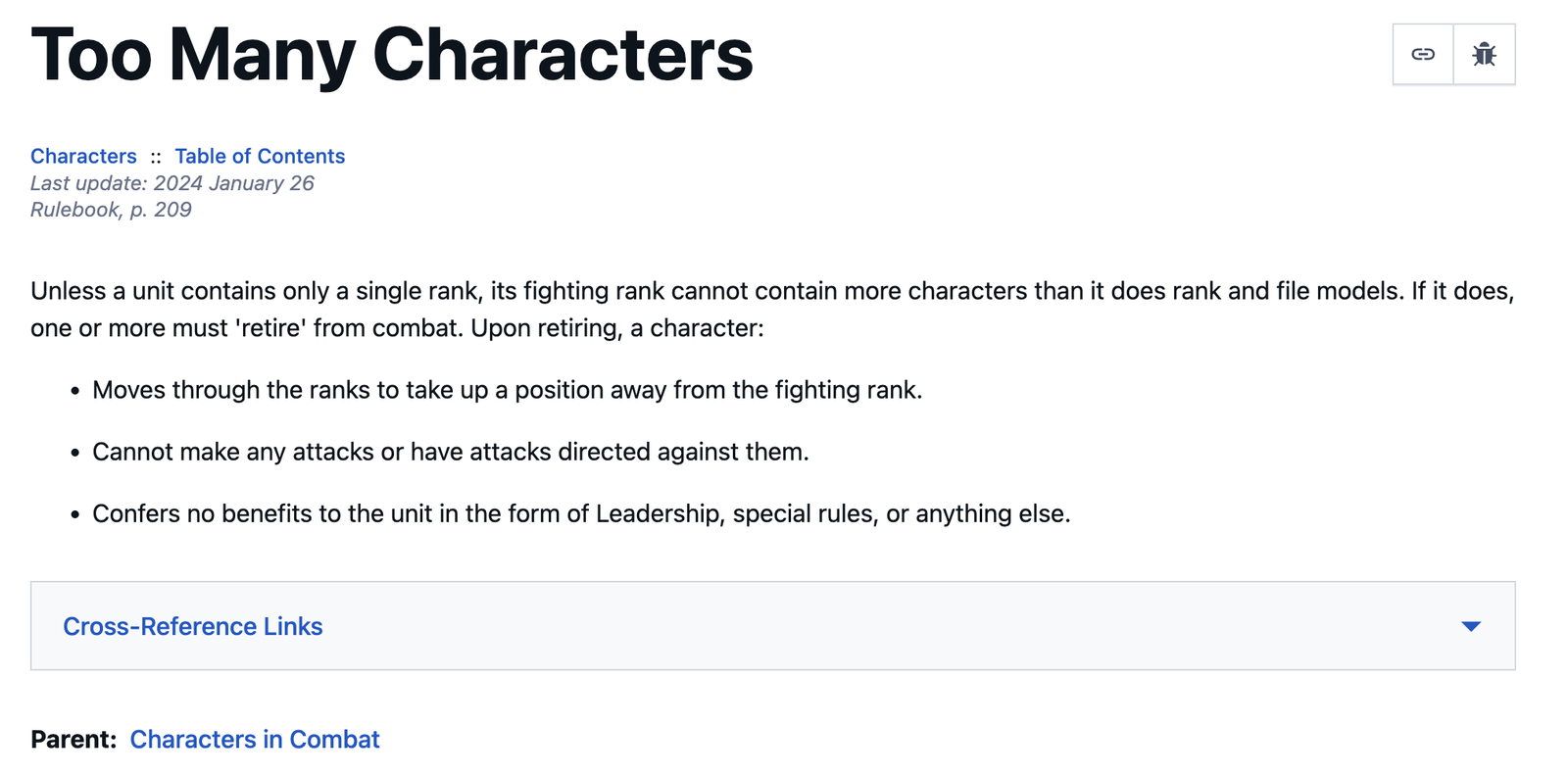
At first glance, it’s one of those rules that can easily slide past you during normal play. We don’t often run units stuffed with multiple characters, so it just hasn’t come up much for us yet. But as Staś pointed out, it’s exactly the kind of thing worth remembering for edge cases — especially if someone is building around a big centerpiece model or trying to optimize a character bunker.
He also immediately connected it to dragon lists, which feels very on-brand for us: we may not use a rule every game, but the moment a dragon enters the conversation, suddenly every weird interaction becomes worth checking.
Models per Rank: we were close, but not quite right
The second discovery was even more useful in day-to-day play.
Michał noticed that every unit type has a minimum Models per Rank value. For regular infantry, that value is 5.
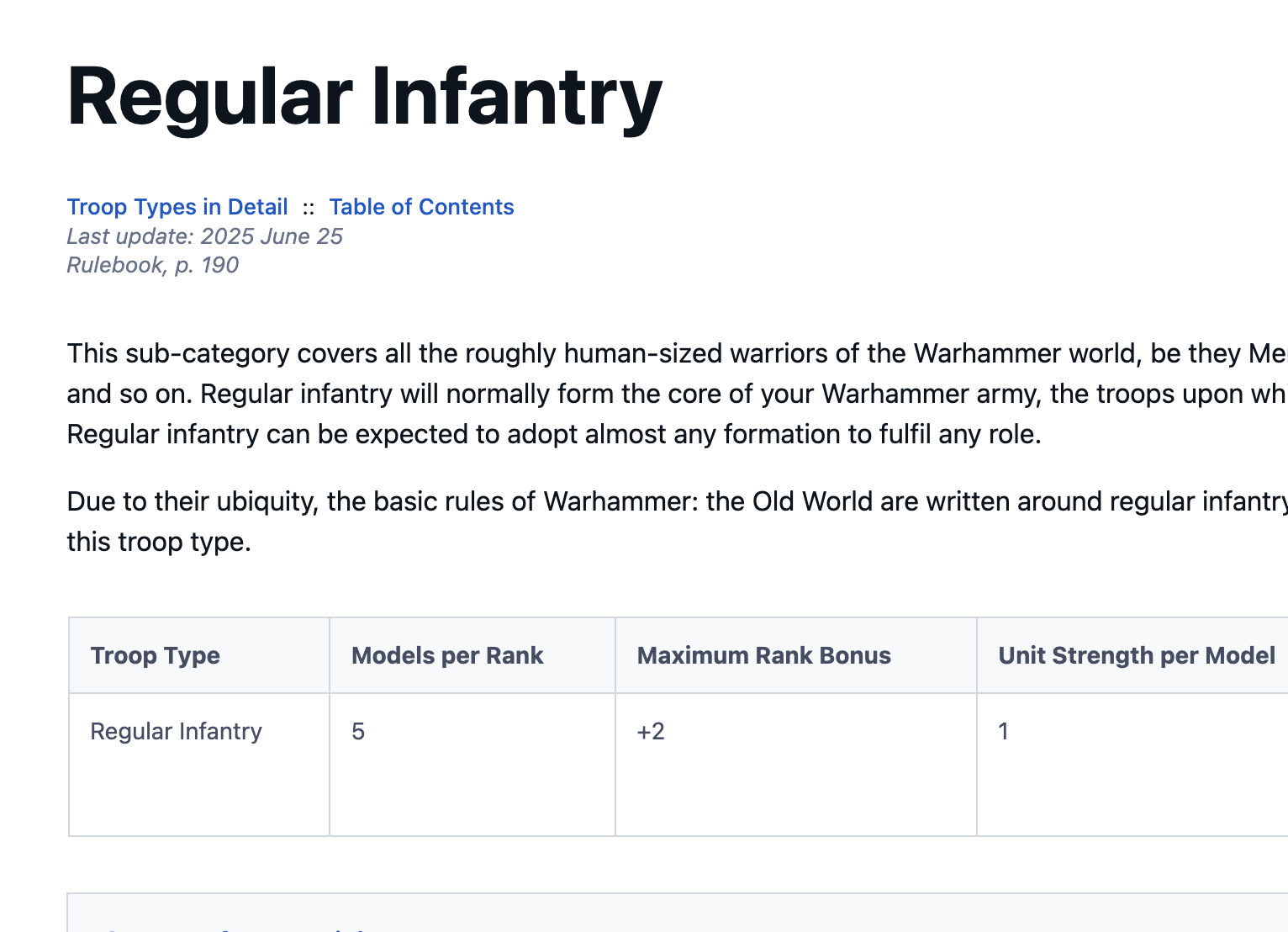
We had basically been playing this almost correctly, but with an important assumption: that a rank bonus only counted when the rank was fully filled in the way we physically arranged the unit.
But the actual rule is a bit kinder than that.
If the last rank is not full, but still contains enough models to meet the unit type’s minimum Models per Rank, it still counts for rank bonus.
And yes — that applies in both Close Order and Open Order.
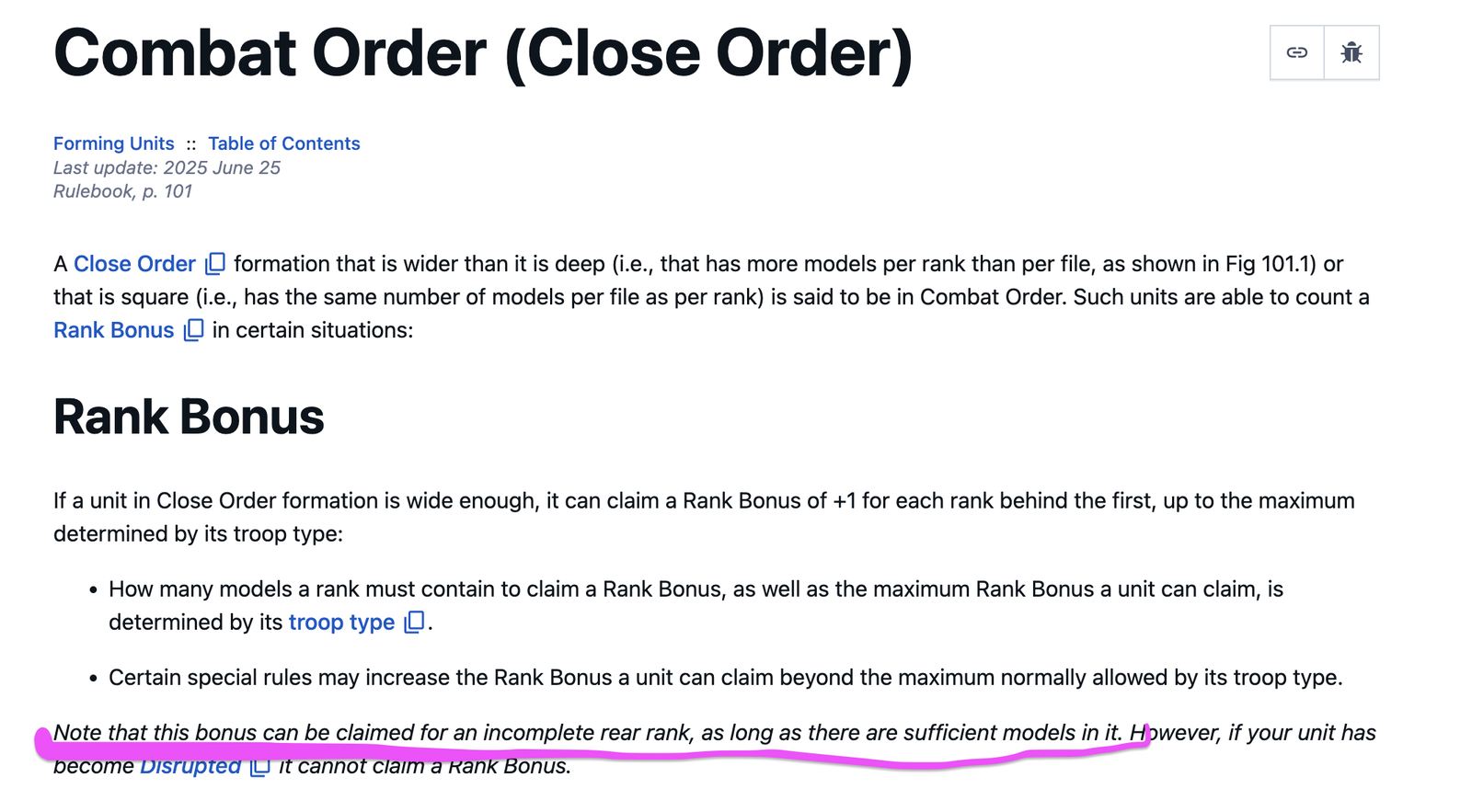
That’s a fantastic little clarification, because it means some formations stay effective longer than we might have assumed.
Staś gave a great real example here: when he played his goblins with the dragon list, he ran 30 goblins in a 6x5 formation so they would be wider than deep and stay in combat order rather than effectively becoming a marching column. In that kind of setup, losing a single goblin from a rank doesn’t automatically mean losing the rank bonus, as long as the remaining models still meet the required threshold.
Michał also mentioned he had exactly this kind of situation with hobgoblins before — and at the time had no idea that the rule worked this way.
That’s probably the most relatable part of this whole exchange: sometimes we don’t discover a rule because it’s hidden, but because our army sizes and unit shapes just haven’t naturally pushed us into that corner yet.
Open Order vs Close Order: two differences worth remembering
While digging through this section, Michał also highlighted a nice summary of the practical differences between Open Order and Close Order.
The way we boiled it down in chat, the important differences are:
- Open Order does not get +1 combat resolution for close order
- Open Order can make a Quick Turn after moving (a 90-degree pivot)
- Open Order is not disrupted by terrain
- but it can still be disrupted by a flank charge
That’s a very meaningful package of trade-offs.
Staś was especially excited about the mobility side of it. A free pivot after movement already sounds great, and once you start thinking about units like Wolf Riders, it gets even more interesting. Since they’re also Fast Cavalry, that movement flexibility starts looking really attractive. He also mentioned Wolf Chariots as something he has never really tried and maybe should finally give a chance.
This is exactly the kind of rule interaction that can make a unit go from “seems awkward” to “actually, maybe this has a role.”
The joy and pain of The Old World rule density
Somewhere in the middle of all this, Michał asked a very fair question:
is The Old World fun because of this huge number of rules, or less fun because of it?
And honestly, we like Staś’s answer a lot: you get to decide whether that’s fun or not.
For us, a lot of the charm is in these discoveries. Not because we want every game to become a legal seminar, but because we enjoy seeing how the rules try to describe battlefield behavior. Staś put it nicely: he likes discovering these interactions and mapping them to how units might actually behave in battle.
That feels very The Old World.
Sometimes it’s fiddly. Sometimes it’s a bit much. Sometimes we realize we’ve been playing something slightly wrong for months. But there’s also a lot of satisfaction in those moments when a rule suddenly clicks and makes the formation, maneuver, or unit role feel more believable.
Builder work means accidental rules archaeology
This whole discussion started because Michał was updating our builder, and that’s worth mentioning too. Doing army-builder work has a funny side effect: it forces a kind of systematic reread that normal play often doesn’t.
He mentioned that he had just finished the final Skaven R2.0 implementation and was moving on to Dark Elves, expecting more little discoveries along the way. We’re not surprised at all. Whenever you have to encode rules properly, all the shortcuts in your memory get exposed immediately.
That’s probably why these “second reading” moments are so valuable. They’re not just trivia — they often reveal where our table habits have drifted away from the actual wording.
Final takeaway
So our practical takeaways from this round of second reading are:
- check how characters in the fighting rank actually fit into your frontage
- remember that Models per Rank is the key threshold for rank bonus
- an incomplete last rank can still count, if it has enough models
- Open Order gives up some combat efficiency, but gains some very real movement and terrain advantages
In other words: a few small rules, but all of them can matter.
If you enjoy this kind of rules archaeology, you can also check out our tools here:
We’ll happily take more of these findings, because this is one of our favorite parts of the hobby: reading a familiar rule again and suddenly seeing it differently.