We’re Absolutely Using Building Occupation Rules in Our Old World Campaign
We’re Absolutely Using Building Occupation Rules in Our Old World Campaign
Sometimes a single rules snippet is enough to completely rewire how we look at the table.
That was exactly the case here. Michał dropped a find from the Cathay Arcane Journal rules for occupiable buildings in Warhammer: The Old World, and the reaction was immediate: this is too good not to use in the campaign.
“KURWA JAKIE TO JEST DOBRE”
Honestly, fair.
A small rule, a huge amount of flavor
Up to now, we mostly treated buildings the way a lot of people probably do in The Old World: as nice-looking terrain that blocks movement, line of sight, and adds atmosphere. Cool on the table, but not always central to the battle.
But these occupation rules suddenly make buildings feel like actual objectives, strongpoints, and traps. Not just scenery — something worth fighting over.
According to the rules Michał found, buildings that are at least 4” at their widest point can be designated as occupiable if both players agree. Infantry units with Unit Strength 20 or less can move into them during Remaining Moves, and once they do, the unit is removed from the table and noted as occupying the building.
That alone is already great. It changes how we think about deployment, movement lanes, ranged support, and scenario design.
Why we love this for campaign play
This just screams campaign gaming.
A defended inn. A watchtower on the road. A warehouse full of black powder. A shrine in the middle of a village. Suddenly we have locations that matter in a way that feels very Old World.
And the best part is that the rules seem to create interesting decisions without getting too weird:
- up to 50% of the models inside can shoot or cast spells,
- units firing at the building target the occupants, but they count as being behind full cover,
- templates can hit everyone inside, but only on 5+ because of the protection of the walls,
- cannons don’t just pass through like nothing happened — instead the unit inside suffers D3 Strength 4 hits with AP -1, as debris and shrapnel explode through the structure, and the cannonball stops there.
That last bit is especially juicy. It makes buildings feel sturdy, but not safe. Exactly as they should.
Combat gets messy in the best way
Michał also pointed out a few details that make assaults on buildings even more interesting.
If a unit occupying a building gives ground or falls back in good order, it stays inside. But if it has to flee, it is completely destroyed. That is brutal, cinematic, and very on-brand.
And in close combat, both the attacker and defender count in a special way, basically like skirmishers, with only five models forming the fighting rank. So instead of a giant regiment just deleting everything by frontage alone, storming a building becomes a much more focused, grinding fight.
That sounds fantastic to us. It means a small infantry unit in the right place can genuinely matter. It also means terrain placement suddenly becomes part of army-building and scenario planning, not just decoration.
This is exactly the kind of table we want
Michał found all this while watching a battle report, and the thing that really sold it was seeing proper buildings on the table that units could actually enter.
That visual side matters a lot. If we’re going to use these rules in the campaign, we want those buildings to feel like real contested spaces.
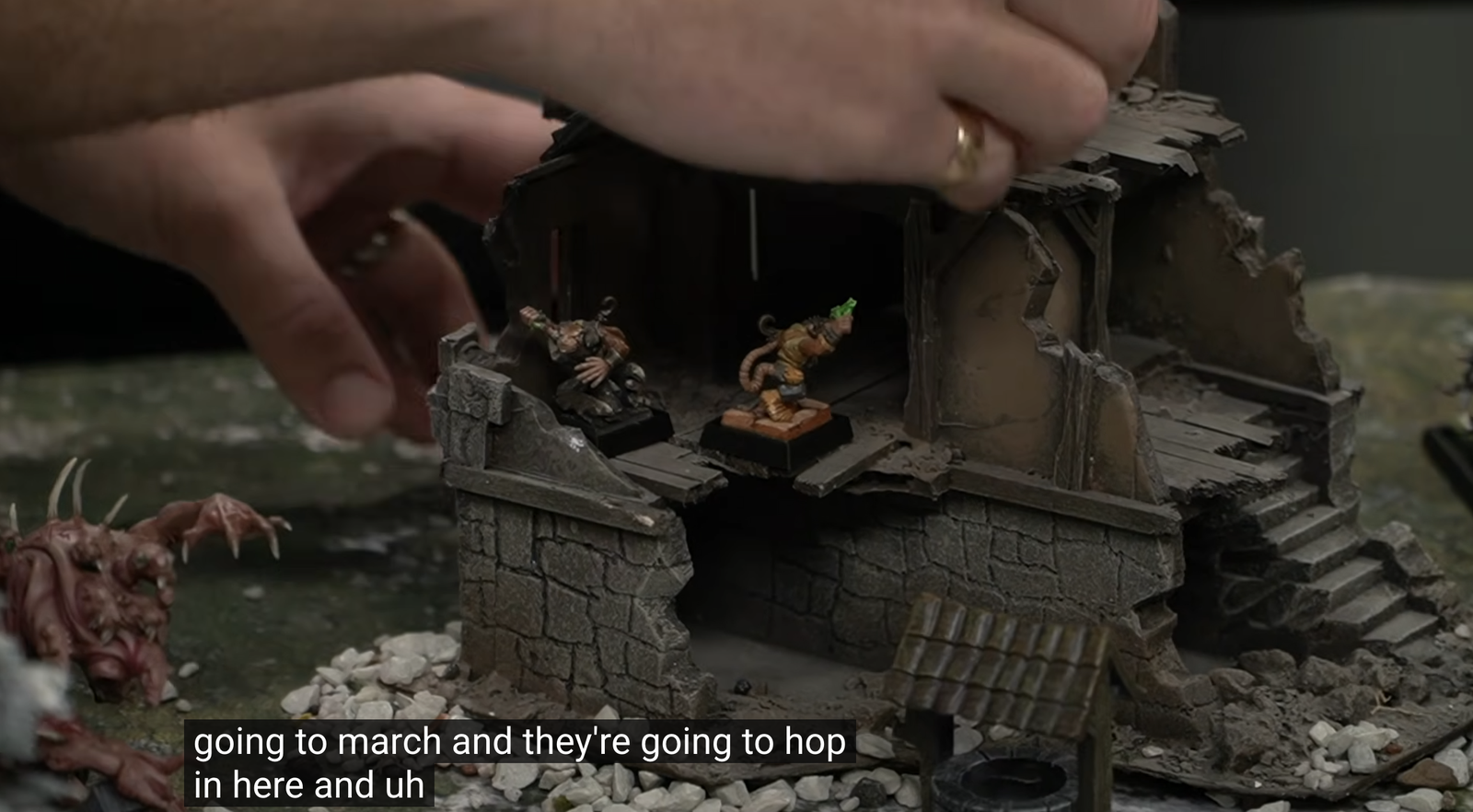
This is the kind of terrain piece that changes the whole mood of a battle. Once a house, tower, or hall can actually be occupied, defended, shelled, and assaulted, it stops being passive scenery and starts becoming the story.
What this means for our lists
Since the suggested category here is army-building, it’s worth saying directly: rules like this make us look differently at smaller infantry units.
A compact missile unit that can garrison a building and fire from cover? Interesting.
A stubborn little infantry block sitting on an objective inside a structure? Also interesting.
A unit that might survive longer because only part of the enemy can really bring attacks to bear in an assault? Very interesting.
We’re not saying every list now needs a “house unit,” but we are absolutely saying that once buildings become active parts of the battlefield, list construction changes. Suddenly mobility, unit size, ranged pressure, and scenario role all matter in slightly different proportions.
And that’s exactly the kind of thing we like in a campaign: rules that don’t just add chrome, but actually push us to make different choices.
We’re using this
So yes — we’re doing this in the campaign.
Because it’s flavorful, tactical, cinematic, and just plain cool. The Old World is at its best when the table tells a story, and occupiable buildings feel like one of those rules that instantly creates memorable moments.
Someone is going to hold a house against impossible odds. Someone is going to get blasted out by artillery. Someone is going to flee from a burning building and get wiped out. And all of us are going to remember it.
If you haven’t looked at these rules yet, here’s the page Michał shared:
We have a feeling this is going to lead to a lot more houses, towers, inns, and fortified nonsense appearing on our tables very soon.