Border Princes 2026 Has Begun: maps, lore, bugs, and immediate hype
Border Princes 2026 Has Begun: maps, lore, bugs, and immediate hype
We’ve finally kicked off our Border Princes 2026 campaign for Warhammer: The Old World, and honestly, this is exactly the kind of hobby chaos we love most: a custom map, faction entries, random landmarks, rule clarifications, improvised tech solutions, and people immediately getting way too invested in where their tiny armies are marching.
This started with Michał dropping the campaign materials and, from that point on, the whole thing snowballed into one of those very Wiatry Magii evenings where every ten minutes there was either a cool new feature, a rules question, or someone discovering a new bit of lore to justify why their army had arrived in this particular corner of the Border Princes.
The campaign docs and dashboard are live
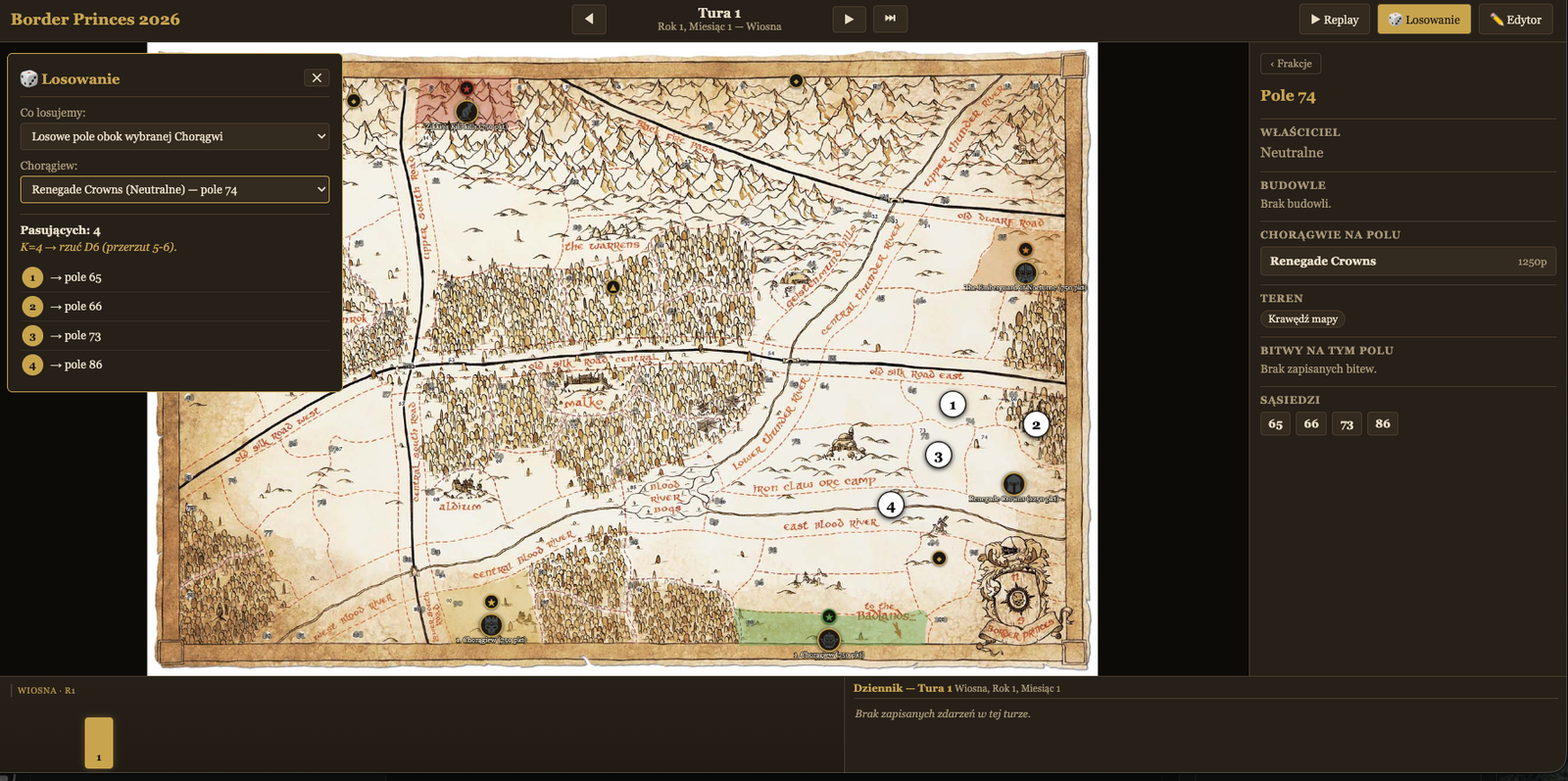
First things first: the campaign has both a written rules document and a proper dashboard. And not just a spreadsheet-with-delusions-of-grandeur kind of dashboard — an actual atmospheric campaign page with a map, faction details, turn navigation, and clickable field references.

Michał also pointed out a very nice dashboard feature: clicking the underlined “POLE X” link zooms the map to that specific field, and the panel on the right can be used to click through factions and see more details as the campaign develops.
That alone already makes the whole thing feel much more like a living campaign than a pile of notes.
Finding our place in the Old World
Very quickly, we moved from “cool, there is a map” to “right, but how did our armies actually get there?”
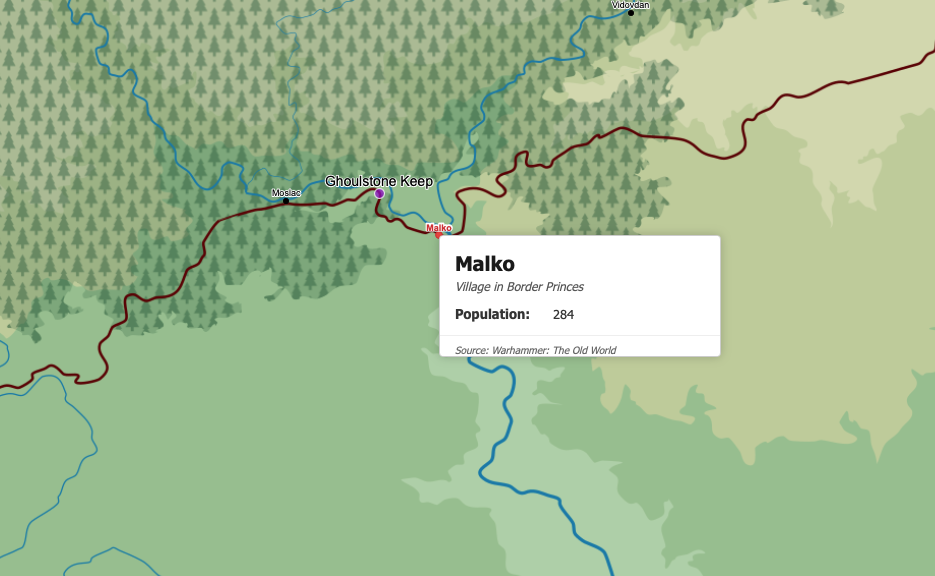
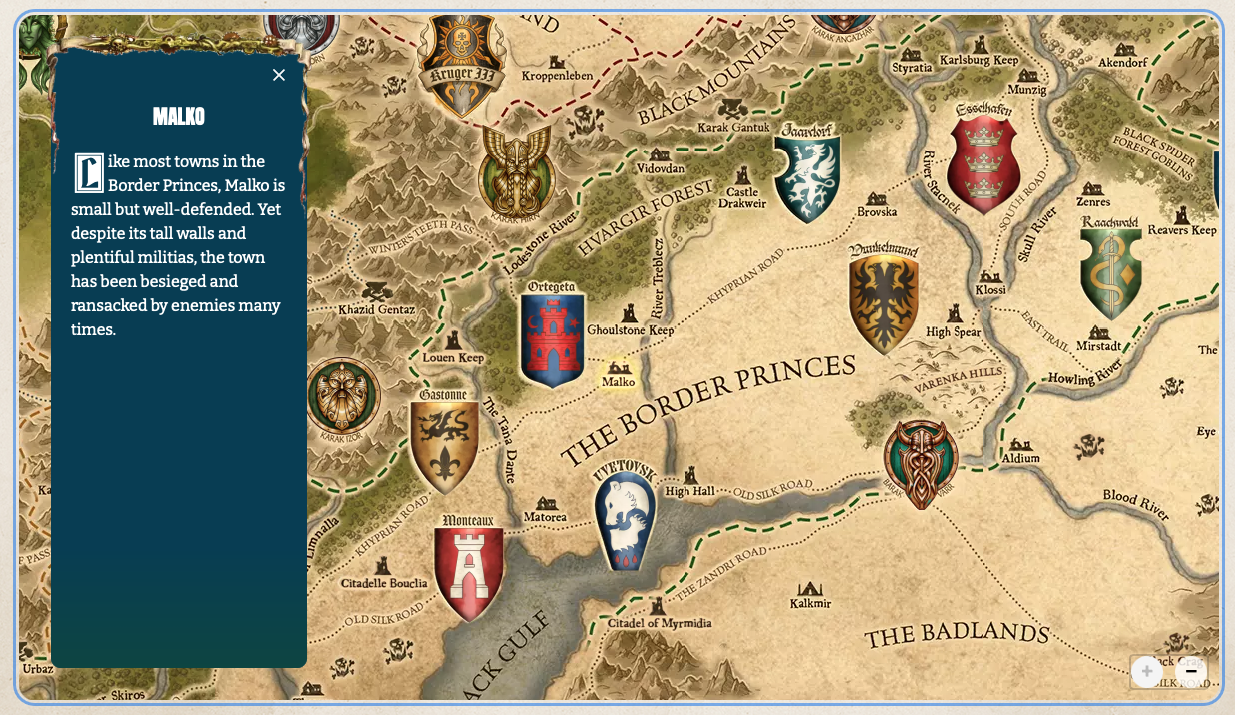
Stas immediately started connecting the campaign area to the wider setting and pointed out that the biggest city on the map is Malko. He also linked a couple of useful resources for locating it in the broader world and grounding our armies’ arrival in actual Old World geography.

And that immediately led to the best kind of campaign talk: everyone roughly figuring out where they were approaching from. A crusade from the west, someone descending from the mountains in the north-east, greenskins coming up from the south via the Badlands, and Pegie’s force apparently requiring a bit more imaginative navigation. The explanation that they basically came inland from the bay by river was accepted with the universal campaign-law standard of “yeah okay, that sounds cool enough.”
Random landmarks, fair rolls, and the first map updates
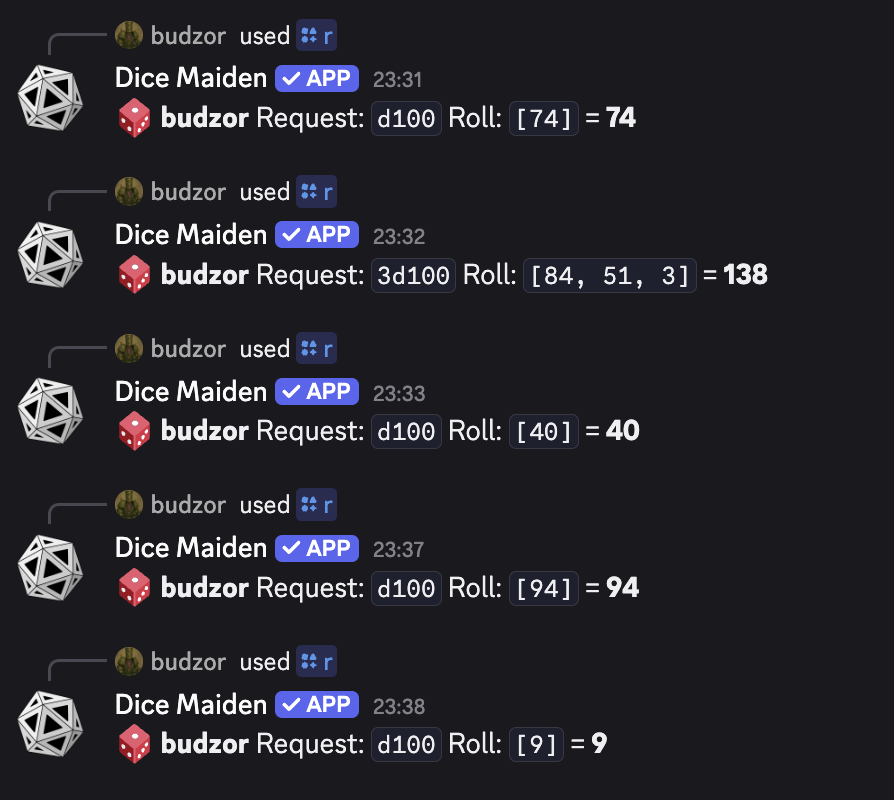
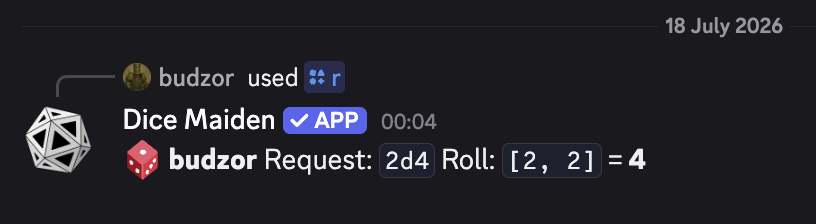
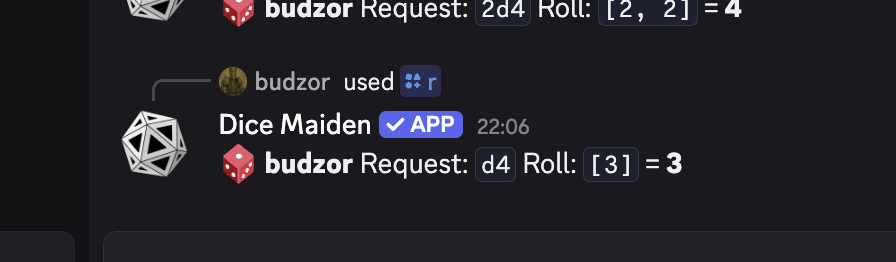
One of the nicest early touches was Michał explaining how special locations were placed on the map. The fields were rolled using virtual dice, with the results visible on the channel so nobody could accuse the campaign organizer of suspiciously placing exciting landmarks next to his own faction.
The order was:
- 1 field for the Renegade Crowns,
- 3 fields for Lizardmen temples,
- 1 field for a Chaos Dwarf ziggurat.
Two of the temple rolls landed on roads, which didn’t work, so they were rerolled to fields 9 and 94. Everything then got added to the map.
At the same time, Michał started populating the dashboard with faction details. The Skaven capital got its name, the general got a name, and most importantly, he got what Michał described as his life motto:
Brass orb does die-die to duke!
That is exactly the energy we want from a campaign.
The caravan is already on the move
Another random result gave us one of those campaign hooks that instantly makes the map feel alive: the Caravan is set to move in Turn 2 of Season 2, in Summer, which means in six turns.
That’s the kind of detail that immediately creates future tension. Even before most armies have properly established themselves, there is already a moving objective looming on the horizon.
Immediate reactions: yes, this looks sick
The general reaction from the rest of us was extremely positive, and very much deserved. Wilini summed it up best: it just looked fantastic, especially considering Michał was basically building a custom campaign site out of thin air and making it feel atmospheric rather than merely functional.
That vibe matters a lot in this kind of project. A campaign like this lives or dies on enthusiasm, and a good-looking dashboard with lore hooks and map interaction does a lot of heavy lifting.
We also started organizing the campaign space itself
Parallel to all that, Pegie suggested setting up a dedicated place for campaign-only discussion so that information would be easier to find. The question was whether we wanted to split things between apps, but the practical answer was basically: yes, probably, because that’s still easier than losing important campaign info in general chat.
A Discord channel got created, with #eventy specifically intended for announcing things that temporarily affect play or need attention.
That feels like one of those small admin decisions that quietly saves a campaign later.
Backstory, capitals, generals — the real important stuff
Even while the rules and tools were still being ironed out, the roleplaying side kicked in almost immediately. Michał asked everyone to start thinking about army names and backstories, and people quickly began asking how to submit general names, capital names, and faction lore for the dashboard.
At that point the dashboard wasn’t directly editable by players, so the process was simple: send the details to Michał and he would add them manually in code.
That also led to one of our favourite moments from the whole exchange: End3r protesting the immersion-breaking placeholder names and demanding proper lore treatment, because Vulkan Ironhammer did not get up in the morning and chronicle the deeds of Nocturne just to be represented as Generic Banner 1 from Capital City.
Correct. No notes.
The map needed bug-fixing, and everyone immediately became QA
Another very familiar moment: once the dashboard was live, everyone instantly turned into terrain auditors.
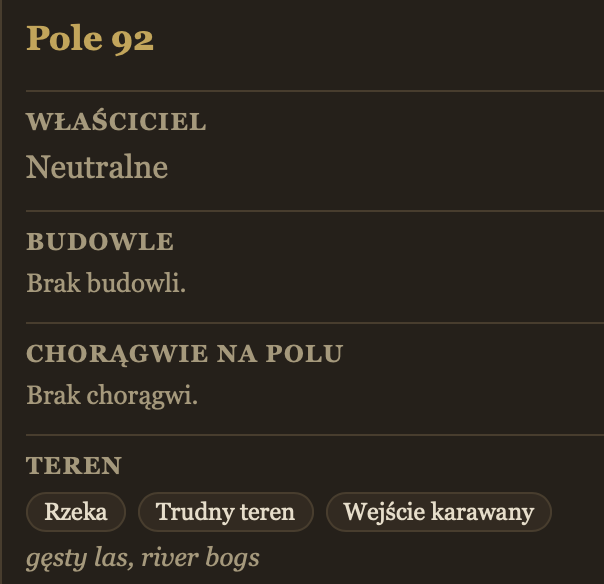
Questions started coming in about whether forests counted as difficult terrain. Michał clarified that they do not; difficult terrain means things like rivers, mountains, swamps, and similar features.
Then people began spotting tag mistakes on specific fields. Field 92 looked wrong. Some areas around East Blood River were tagged oddly. End3r checked nearby fields and reported corrections for 35, 34, 45, 46, and 47.
The working ruling became beautifully practical:
the drawing is law.
In other words, if the map art clearly shows what a field is supposed to be, that takes precedence while the tagging gets cleaned up.
Supply Centers, seasons, and the first proper rules cleanup
As soon as the first orders started going in, we hit the next important clarification: where does the first Supply Center actually come from?
The original intention seems to have been that the first non-road field a player moved onto would become their first free Supply Center. But that created awkward edge cases, especially because some first moves were onto roads, and roads can’t host landmarks under the rules.
After some discussion, we settled on a much cleaner and more intuitive solution:
the capital counts as the first Supply Center.
It can’t be upgraded into a fortress because it is already the capital, but it does generate supply points. Everyone seemed happy with that, and it neatly solved the issue.
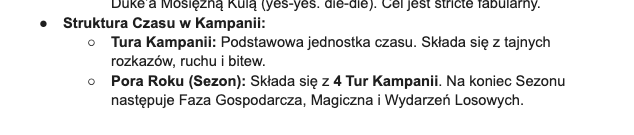
At roughly the same time, there was also a very funny but very real moment of rules comprehension regarding the campaign calendar. Stas had interpreted the timeline differently, thinking in terms of a more normal year structure, before realizing that here a season is four turns. Once that clicked, everything else about recruitment timing and income started making more sense.
Michał’s summary was basically that yes, this is weird, but the compendium insists that three turns per season makes the game worse, so we are embracing the strange calendar. There was then a brief detour into revolutionary-calendar jokes and whether “December” had been sensibly fixed in this alternate reality.
This is exactly the kind of nonsense that tells us a campaign is alive.
Extra tools for the campaign side of the hobby
On top of the campaign dashboard, Michał also updated the army builder with FAQ changes and mentioned that he had added Kislev as a faction he’s working on, based on a mix of 6th edition material and Warhammer Armies Project inspiration.
We always love seeing hobby projects spill over into tools like this. A campaign is already fun on its own, but once somebody starts building custom infrastructure around it, the whole thing becomes much more personal.
First movement, first reveal, first NPC action
Once the order system was functional enough, the first turn started to take shape. Michał updated the dashboard with backstory and names he had already received, fixed bugs, and added some extra features — including assigning adjacent fields to banners and using Discord dice to determine NPC movement.
Then the first reveal happened, the map got updated, and the dashboard gained turn navigation buttons so we could go back and check previous states.
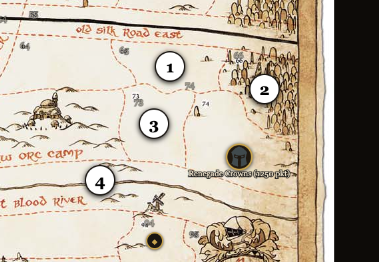
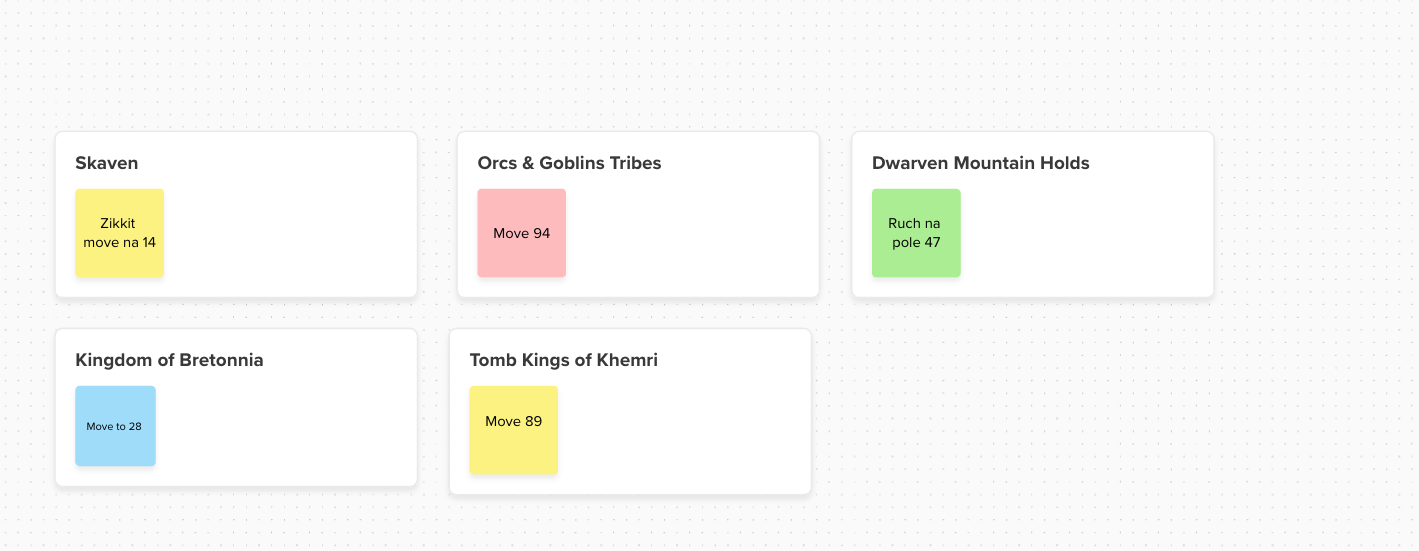
And, importantly, the Renegades moved to field 73.
That’s the sort of tiny sentence that suddenly makes everything feel real.
Armies are already becoming themselves
Even in these very early stages, the factions are already starting to develop personality.
Wilini settled on Alberic de Bordeleaux as his first general, with Bordeleaux as the capital name that fit better than going full Arthurian. The backstory direction is also excellent: a Bretonnian crusade in search of new lands, with a very personal hatred of Skaven after previous campaigns left deep scars.
That immediately got a reaction from Michał, who noted that the Bretonnian lot were getting dangerously close to Skrikvolt. To which Wilini basically replied that yes, the trauma from Total War means the ratmen are absolutely going to be hunted.
That is exactly how campaign grudges should be born.
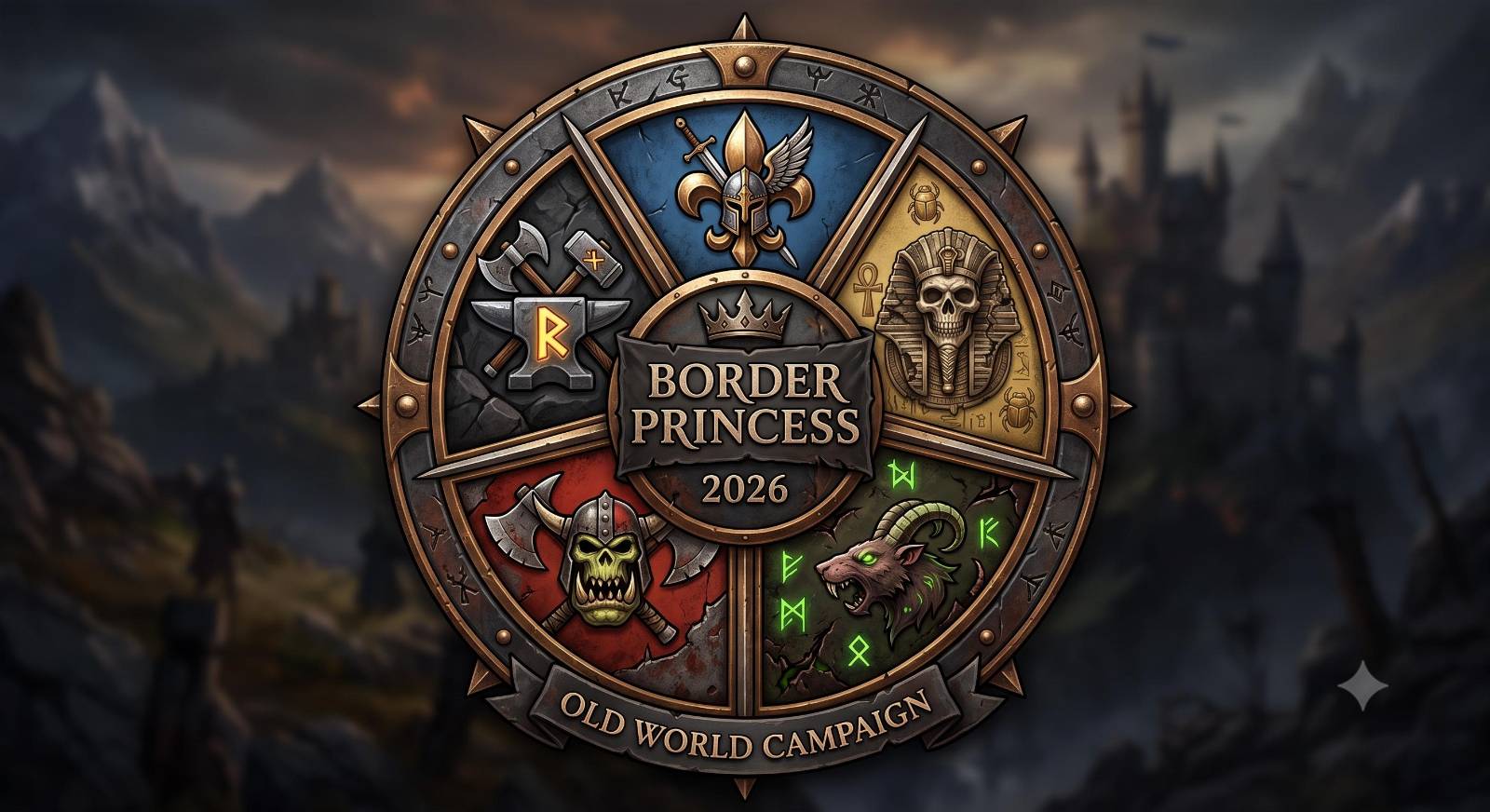
On Pegie’s side, we also got a lovely little extra: a working heraldic emblem for the campaign of the bipolar princess.

Early events are already emerging naturally
One thing we really like already is that the campaign is producing story hooks almost on its own.
Stas announced that goblin wolf scouts had spotted an ancient Lizardmen temple on field 94, and his as-yet-unnamed Orc warboss immediately decided to attack. Which is, frankly, the most correct possible Orc response.
At the same time, we were still learning the practical rhythm of hidden movement, anonymous orders, and timing reveals around actual battles happening between turns. There was even a reminder that if someone had already submitted a move, we should all politely pretend not to know where they were going.
Again: perfect campaign energy.
Where things stand now
Right now, the campaign already has:
- a live rules draft,
- a functioning interactive dashboard,
- randomized landmarks,
- moving NPC elements,
- a working-if-slightly-scuffed hidden orders solution,
- a dedicated campaign chat structure,
- first movement on the map,
- early lore for capitals and generals,
- and the first proper faction grudges.
In other words: it’s alive.
And maybe the best part is that this doesn’t feel like a polished corporate campaign pack dropped from above. It feels like ours. It’s being built in real time, corrected in real time, argued over in real time, and enriched by every silly name, every bug report, every piece of improvised lore, and every tactical misunderstanding that accidentally becomes part of the campaign’s character.
We’re genuinely excited to see where Border Princes 2026 goes next.
For now, we’ll leave you with the phrase that may already define this campaign’s tone better than anything else:
Bordeleaux Boom Boom.